

Education has always thrived on engagement, and nothing captivates learners more than seeing their favorite characters or historical figures come alive to explain complex concepts. Traditional educational videos often rely on voiceovers or static images, creating a disconnect between the visual elements and the audio narrative. This is where lip sync ai technology becomes transformative. By synchronizing character movements with educational narration, lip sync ai enables educators to create immersive learning experiences where Albert Einstein explains relativity, Marie Curie discusses radioactivity, or animated mascots guide students through mathematics. This technological advancement bridges the gap between entertainment and education, making knowledge acquisition more memorable and engaging for learners of all ages.
Why AI Lip Sync Generator Excels in Educational Content
Educational content demands precision, engagement, and accessibility. An ai lip sync generator addresses all these requirements while offering unique advantages that traditional video production methods cannot match.
Cost-Effective Content Production
Creating educational videos with professional voice actors and video synchronization traditionally requires significant financial investment. Hiring actors to portray historical figures or experts, along with extensive post-production work, can cost thousands of dollars per video. An ai lip sync generator dramatically reduces these costs by automating the synchronization process. Educators can use existing images or 3D models of characters and instantly sync them with educational audio content, whether pre-recorded or generated through text-to-speech technology. This democratizes high-quality educational content creation, making it accessible to schools, independent educators, and educational organizations with limited budgets.
Rapid Content Updates and Iterations
Educational content must evolve with new discoveries and curriculum changes. Traditional video production makes updates cumbersome and expensive. With lip sync ai free tools and premium solutions, educators can quickly modify narration scripts and regenerate synchronized videos within minutes. If a science teacher needs to update a video about planetary discoveries or a history instructor wants to refine explanations based on student feedback, they can simply adjust the audio script and re-sync the character’s lip movements. This agility ensures educational content remains current and accurate without requiring complete video reproduction.
Multilingual Learning Accessibility
One of the most powerful advantages of ai lip sync generator technology is its ability to serve diverse linguistic communities. Educators can create a single character model—perhaps a friendly robot guide or historical figure—and sync it with narration in multiple languages. A video explaining photosynthesis can feature the same animated plant character speaking English, Spanish, Mandarin, or Arabic, with perfectly synchronized lip movements for each language. This capability breaks down language barriers in education and makes quality learning materials accessible to global audiences without the need to hire multilingual actors or create separate video productions for each language.
Use Cases and Implementation Strategies
The applications of lip sync ai in educational settings are vast and varied. Understanding specific use cases helps educators leverage this technology effectively.
Historical Figures Explaining Their Discoveries
Imagine Abraham Lincoln delivering the Gettysburg Address with accurate lip synchronization, or Leonardo da Vinci explaining his inventions in his own “voice.” Using lipsync ai technology, educators can create compelling historical content where famous figures appear to speak directly to students. The implementation process involves selecting or creating a portrait or 3D model of the historical figure, scripting educational content in their voice, and using an ai lip sync generator to synchronize the visual with the audio narration. This approach transforms history lessons from dry recitations of facts into engaging encounters with the people who shaped our world.
Animated Mascots as Subject Guides
Many educational institutions and programs develop mascot characters to represent their brand or specific subjects. A biology program might have a friendly cell character, while a mathematics course could feature a geometric shape mascot. Lip sync ai brings these mascots to life as interactive guides. Teachers can script lessons where the mascot explains concepts, answers common questions, or guides students through problem-solving processes. The synchronized lip movements make the mascot feel like a genuine instructor rather than a static cartoon, increasing student engagement and creating a consistent learning companion throughout the curriculum.
Interactive Language Learning Content
Language education particularly benefits from ai lip sync generator technology. Students learning pronunciation and conversation skills need to see proper mouth movements and hear corresponding sounds. Educators can create videos featuring native speaker avatars whose lips move in perfect synchronization with phrases and sentences. Students can observe how specific sounds are formed, practice mimicking the movements, and receive visual reinforcement of pronunciation patterns. This visual-audio connection significantly enhances language acquisition compared to audio-only lessons.
Science Concept Demonstrations
Complex scientific concepts often require visual demonstrations combined with detailed explanations. Using lip sync ai, educators can create videos where scientists or animated representations explain phenomena while demonstrating them. A chemistry teacher could create a video where a scientist character discusses chemical reactions while synchronized animations show molecular interactions. The scientist’s explanation remains perfectly synced with their lip movements, creating a professional presentation that holds student attention and clarifies complex topics through coordinated visual and verbal communication.
Virtual Guest Lectures
Budget constraints often prevent schools from inviting expert guest speakers, and scheduling conflicts make live appearances challenging. Lipsync ai enables the creation of virtual guest lectures where experts record audio presentations that are then synchronized with their images or avatar representations. A marine biologist could provide a lecture on ocean conservation, a software engineer could discuss coding principles, or an author could explain creative writing techniques—all delivered through perfectly synchronized video presentations that students can access anytime. This expands learning opportunities beyond the physical classroom.
Personalized Learning Paths
Advanced implementations of ai lip sync generator technology can support personalized education. Educators can create multiple explanation videos for the same concept at different difficulty levels, each featuring a synchronized character guide. As students progress through adaptive learning systems, they encounter appropriately leveled content delivered by familiar characters whose consistent presence provides comfort and continuity. The ability to rapidly generate synchronized content for various learning paths makes personalized education more feasible and engaging.
Key Features of AI Lip Sync Generator Tools
Modern ai lip sync generator platforms offer sophisticated features specifically valuable for educational content creation.
Precise Phoneme Mapping
Quality educational content requires accurate lip synchronization that matches not just general speech patterns but specific phonemes—the distinct units of sound in speech. Advanced lip sync ai tools analyze audio tracks and map individual phonemes to corresponding viseme shapes (visual representations of speech sounds). This precision ensures that when an educational character says “photosynthesis,” viewers see the lips form “f” sounds, “th” sounds, and sibilant “s” sounds accurately. This attention to detail maintains credibility and supports language learners who rely on visual cues for pronunciation.
Emotion and Expression Control
Educational content isn’t monotonous—effective teachers express enthusiasm, concern, emphasis, and curiosity to maintain engagement. Leading ai lip sync generator platforms now incorporate emotion recognition and expression synthesis. The technology analyzes voice tone, pace, and emphasis to add appropriate facial expressions beyond just lip movements. When an educational character excitedly explains a scientific breakthrough, the system adds widened eyes and raised eyebrows. When discussing a serious historical event, the expression becomes more somber. These emotional nuances make educational content feel more human and relatable.
Multiple Character Support
Many educational scenarios benefit from dialogue between characters—a student asking questions and a teacher answering, or historical figures debating ideas. Advanced lip sync ai systems can handle multiple characters simultaneously, synchronizing different voices to different character models within the same scene. A history lesson might show Thomas Jefferson and Alexander Hamilton debating federalism, each with properly synchronized lip movements for their respective dialogue. This multi-character capability enables more dynamic and engaging educational narratives.
Accessibility Features Integration
Education must be inclusive, and modern ai lip sync generator tools increasingly incorporate accessibility features. Synchronized captions can be automatically generated and displayed alongside lip-synced characters, supporting deaf and hard-of-hearing students. The visual clarity of lip movements also supports lip-reading, providing an additional access channel for students with hearing differences. Some platforms allow adjustment of speaking pace without distorting synchronization, accommodating students who need more time to process information. These built-in accessibility features ensure that engaging lip-synced educational content serves all learners.
Conclusion: Transforming Education Through Synchronized Storytelling
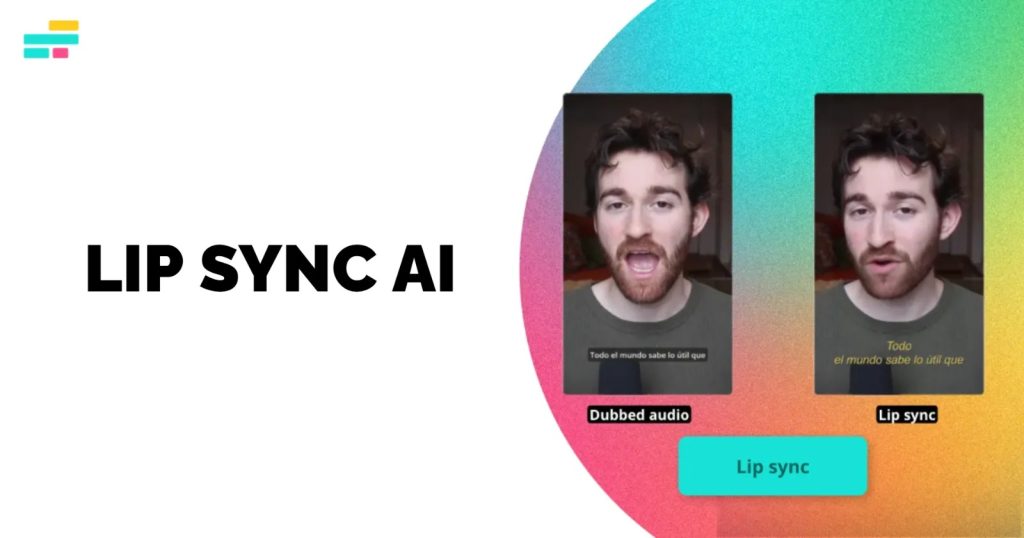
The integration of ai lip sync generator technology into educational content creation represents more than a technical advancement—it’s a pedagogical revolution. By enabling characters and historical figures to “personally” explain knowledge through perfectly synchronized speech, educators create memorable learning experiences that transcend traditional teaching methods. Students no longer passively consume information; they engage with dynamic characters who guide them through complex concepts with human-like presence and expression.
The advantages are clear: reduced production costs make high-quality content accessible to more educators, rapid iteration keeps materials current, and multilingual capabilities serve diverse learning communities. From historical figures explaining their legacies to animated mascots guiding students through mathematics, lip sync ai technology opens creative possibilities limited only by educational imagination.
As these tools become more sophisticated and accessible, with both premium and lip sync ai free options available, we stand at the threshold of a new era in educational content. Every subject can have its voice, every concept its character, and every student can learn from engaging guides that speak directly to them. The future of education is not just visual or auditory—it’s synchronized, personalized, and profoundly human, even when delivered through digital characters brought to life by artificial intelligence.
Educators who embrace lipsync ai technology today are investing in more than efficient content production; they’re investing in student engagement, knowledge retention, and the democratization of quality education. As we continue to explore and expand these technological capabilities, one truth becomes evident: when knowledge is delivered through characters that speak with life and purpose, learning transforms from obligation to inspiration.
