

Celery Seed vs Celery Juice for Uric Acid Support is a useful question because these two options are not interchangeable. They come from the same plant, but they differ in concentration, serving size, convenience, and how they fit into a daily routine. If you want a clear answer, this article explains what each option may offer, where the limits are, and how to think about uric acid support without overpromising results.
What is the short answer?
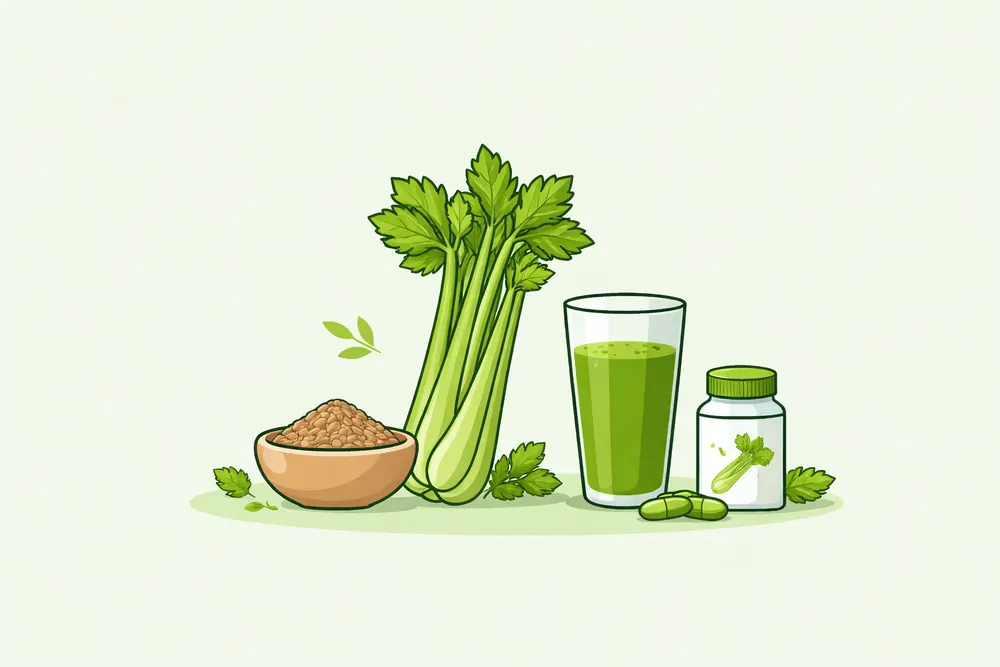
Celery seed is usually the more targeted option for uric acid support because it is used in a more concentrated form. Celery juice is usually the more practical option for hydration and habit-building. If your goal is a focused botanical product, celery seed makes more sense. If your goal is a simple daily drink that supports fluid intake, celery juice makes more sense. Neither one should be treated as a replacement for medical evaluation, especially if you already have gout, kidney issues, or repeated flares.
Why does uric acid matter?
Uric acid is a natural waste product formed when the body breaks down purines. Purines are found in the body and in many foods. In a healthy balance, uric acid dissolves in the blood, passes through the kidneys, and leaves the body in urine. Problems start when the body produces too much uric acid, removes too little, or both.
Why high uric acid gets attention
When uric acid levels stay high, crystals can form in joints and tissues. That process is linked with gout. High uric acid may also overlap with other issues such as excess body weight, insulin resistance, high alcohol intake, dehydration, kidney impairment, and certain dietary patterns. This is why most discussions about uric acid support go beyond one herb or one drink. The bigger picture matters.
What is celery seed?
Celery seed usually refers to the dried seeds of Apium graveolens or to extracts made from them. In the supplement space, celery seed is sold as capsules, powders, extracts, and sometimes tinctures. It is often discussed in relation to joint comfort, fluid balance, and traditional herbal use.
Why people choose celery seed
People usually choose celery seed because it is more concentrated than eating celery stalks or drinking celery juice. It is also easier to standardize in a daily routine. One capsule takes seconds. A glass of juice takes more effort and more volume. From a practical standpoint, that difference matters.
What is celery juice?
Celery juice is the liquid pressed from fresh celery stalks. It is widely used as a morning wellness drink. Some people like it because it feels light, fresh, and easy to pair with broader diet changes.
Why people choose celery juice
Celery juice appeals to people who prefer food-based habits over supplements. It also adds fluid, which matters because hydration supports normal uric acid handling. That does not mean celery juice directly lowers uric acid in a predictable way. It means the hydration part of the habit may be useful within a broader routine.
How do celery seed and celery juice compare for uric acid support?
The main difference is concentration versus hydration. Celery seed gives you a smaller, more focused botanical intake. Celery juice gives you volume, fluid, and a food-first format. These are different tools.
| Feature | Celery Seed | Celery Juice |
|---|---|---|
| Form | Seed, powder, capsule, extract | Fresh pressed vegetable juice |
| Concentration | Higher | Lower |
| Main advantage | More targeted botanical use | Hydration and simple food-based habit |
| Preparation | Minimal | Requires fresh celery and juicing |
| Daily convenience | High | Moderate |
| Likely role | Supplement routine | Diet and hydration routine |
Which one has the stronger logic for uric acid support?
Celery seed has the stronger logic if you are specifically looking for a botanical product connected to this topic. That is because seeds and seed extracts contain concentrated plant compounds, while juice is mostly water with a lighter concentration of those compounds. This does not prove that celery seed will change lab values or symptoms in a predictable way. It simply explains why many people view it as the more focused option.
Where celery juice still has value
Celery juice still has a role. Many people with uric acid concerns do not drink enough fluids. In that context, celery juice may support a better hydration pattern than no structured fluid habit at all. It may also replace sugary drinks, which is helpful because high intake of fructose-sweetened beverages is commonly discussed in relation to uric acid management.
What does the evidence actually support?
The strongest evidence around uric acid and gout does not center on celery. It centers on hydration, weight management, alcohol moderation, lower intake of sugar-sweetened drinks, and careful review of overall diet and health status. Some herbal and food ingredients are still being explored, but the evidence is not at the same level as these established lifestyle factors.
How to read the topic realistically
A realistic view looks like this. Celery seed may be a reasonable supportive option within a broader plan. Celery juice may be a reasonable supportive habit if it improves fluid intake and displaces less helpful drinks. Neither option should be described as a direct substitute for diagnosis, prescription therapy, or medical monitoring.
Does celery juice lower uric acid because it is a vegetable juice?
Not automatically. A vegetable juice is not the same as a tested uric acid intervention. Celery juice may help some people build a healthier pattern, but that is different from claiming a direct effect on uric acid. The most defensible benefit of celery juice in this context is support for hydration and routine.
Does celery seed work faster than celery juice?
There is no solid basis for promising that. Celery seed may be more concentrated, but concentration alone does not guarantee faster or better results. Uric acid is influenced by several variables at once. A person who changes hydration, alcohol intake, weight, and dietary pattern may see a different outcome than someone who only adds one supplement.
What are the practical pros and cons?
| Option | Pros | Cons |
|---|---|---|
| Celery Seed | Compact, concentrated, easy to take daily, more supplement-like | Less food-based, variable product quality, may not suit everyone |
| Celery Juice | Hydrating, food-first, can replace less helpful drinks, familiar format | Less concentrated, more prep, short shelf life, harder to standardize |
Who may prefer celery seed?
Celery seed may fit better if you want a simple capsule-based routine, do not want to juice vegetables every day, and prefer a more concentrated product. It may also suit people who already have good hydration habits and are not looking for another beverage.
Best fit profile
This option often makes more sense for people who value convenience, consistency, and lower daily effort. It also fits people who already use supplements and want a cleaner routine with fewer steps.
Who may prefer celery juice?
Celery juice may fit better if you prefer food-based approaches, want to increase fluid intake, and enjoy building health habits around meals and drinks rather than capsules. It can also be useful for people trying to move away from soda, sweetened beverages, or highly processed morning routines.
Best fit profile
This option often makes more sense for people who enjoy fresh foods, already own a juicer, or want a habit that feels less like supplementation and more like a simple nutrition practice.
What else matters more than either option?
For many readers, this is the most important section. Uric acid support is usually not decided by one celery product. It is more strongly shaped by the basics.
Key factors that often matter more
- Staying well hydrated
- Reviewing alcohol intake, especially beer and spirits
- Reducing sugar-sweetened beverages
- Improving body weight if needed
- Looking at overall dietary pattern, not one ingredient
- Checking kidney health and medication interactions with a clinician
Checklist for choosing between celery seed and celery juice
- Choose celery seed if you want a more concentrated option.
- Choose celery juice if you need help drinking more fluids.
- Choose celery seed if convenience matters most.
- Choose celery juice if you prefer food-based habits.
- Do not rely on either one as a stand-alone fix.
- Track the full routine, not just one ingredient.
- Talk to a clinician if you have gout, kidney disease, or repeated joint pain.
Are there safety points to keep in mind?
Yes. Even simple wellness choices can have limits. Celery products may not suit everyone. People with kidney conditions, medication use, allergies, pregnancy concerns, or a history of gout flares should be cautious with self-directed changes. It is also wise to remember that severe joint pain, redness, swelling, or recurring attacks deserve medical attention.
Why this matters
Readers often frame uric acid support as a small nutrition question. Sometimes it is. Sometimes it is a sign that a larger issue needs proper care. That is why caution matters more than trend-based advice.
Can you combine celery seed and celery juice?
Some people do, but more is not always better. Combining them may increase complexity without adding much value if the rest of the routine is weak. In many cases, choosing one approach and using it consistently makes more sense than stacking multiple celery-based habits.
What is the best way to think about this comparison?
The best way is to separate supportive habits from clinical claims. Celery seed belongs in the supplement category. Celery juice belongs in the food and hydration category. If you want a targeted botanical, celery seed is the stronger match. If you want a drink that supports fluid intake and a cleaner morning routine, celery juice is the stronger match. That is the clearest way to read the comparison.
FAQ about Celery Seed vs Celery Juice for Uric Acid Support
Is celery seed better than celery juice for uric acid support?
Usually yes, if you want a more concentrated botanical option. Celery juice is less concentrated but may still help as part of a hydration routine.
Can celery juice replace uric acid medication?
No. Celery juice should not be viewed as a replacement for prescribed care or medical monitoring.
Is celery seed a cure for gout?
No. It may be used as a supportive option, but it should not be framed as a cure.
Does hydration matter more than celery products?
For many people, yes. Good hydration is one of the most practical parts of a uric acid support plan.
Can I use celery seed every day?
Some people do, but daily use should still be matched to personal tolerance, product quality, and medical context.
Is celery juice enough on its own?
Usually no. It works best as one part of a broader routine, not as a stand-alone strategy.
Who should be more careful with self-treatment?
People with gout, kidney disease, severe symptoms, or medication use should be more careful and get medical guidance.
Glossary
Uric Acid
A waste product formed when the body breaks down purines.
Purines
Natural compounds found in the body and in many foods.
Gout
A condition linked with uric acid crystal buildup in joints.
Hydration
The process of keeping the body supplied with enough fluids.
Botanical Extract
A concentrated preparation made from part of a plant.
Apium graveolens
The botanical name for celery.
Dietary Pattern
The overall way a person eats across days and weeks.
Supplement Routine
A regular pattern of using products such as capsules or extracts.
Food-First Approach
A preference for using foods and drinks before adding supplements.
Conclusion
In the Celery Seed vs Celery Juice for Uric Acid Support comparison, celery seed is usually the more focused option, while celery juice is the more hydration-friendly option. The better choice depends on your routine, but the real foundation still comes from hydration, diet quality, weight management, and proper medical care when needed.
Sources
General overview of gout and uric acid, Gout basics — cdc.gov/gout
Clinical overview of gout, symptoms, causes, and management, Gout — mayoclinic.org/diseases-conditions/gout
Dietary and health context for gout, Gout and diet guidance — arthritis.org
Evidence-based uric acid and gout information, Gout topic review — niddk.nih.gov
Nutrition and purine background, Purines and uric acid overview — nhs.uk
Botanical reference for celery, Apium graveolens profile — ncbi.nlm.nih.gov
