

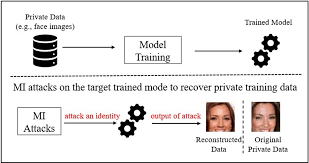
Machine learning models are transforming industries. From healthcare to finance, businesses rely on predictive systems trained on massive datasets. However, as models become more powerful, new security risks emerge. One of the most concerning threats is data inversion attacks.
These attacks expose sensitive information hidden inside trained models. Even if raw data is never shared publicly, attackers can still reconstruct private details. This creates serious privacy and compliance risks for organizations.
In this article, we will explore what data inversion attacks are, how they work, why they matter, and how to defend against them.
Understanding Data Inversion Attacks
Data inversion attacks occur when an attacker attempts to reconstruct training data by exploiting access to a machine learning model. Instead of directly stealing the dataset, the attacker queries the model and analyzes its outputs.
The goal is to reverse-engineer sensitive information.
For example:
- Reconstructing facial images from a facial recognition system
- Recovering medical attributes from a health prediction model
- Extracting personal data from financial risk models
Even if the model only provides prediction probabilities, attackers can use mathematical optimization techniques to estimate original inputs.
How Data Inversion Attacks Work
Model Access and Querying
Attackers first gain access to a trained model. This could be:
- Public API endpoints
- SaaS platforms
- Leaked internal systems
- Open-source deployed models
They then submit carefully crafted queries.
Output Analysis
The attacker studies prediction probabilities rather than just labels. These probabilities contain more information than most developers realize.
For example:
- Confidence scores
- Class probabilities
- Gradients (in white-box scenarios)
Using optimization algorithms, attackers iteratively adjust input guesses until the output matches target patterns.
Reconstruction of Sensitive Data
Over time, the attacker refines their input to reconstruct:
- Approximate images
- Text sequences
- Structured personal data
This process does not require direct access to training data.
Why Data Inversion Attacks Are Dangerous
Violation of Privacy
Organizations assume that once data is trained into a model, it becomes safe. However, inversion attacks show that models can memorize and leak training information.
This is especially dangerous for:
- Healthcare systems
- Biometric systems
- Financial risk engines
- Identity verification platforms
Regulatory Risks
Data protection regulations such as GDPR and other global privacy laws require strict protection of personal information. If a model leaks personal data indirectly, companies may still be liable.
Business Reputation Damage
A successful inversion attack can damage trust. Customers expect their information to remain confidential. Even indirect leakage can harm brand credibility.
Real-World Scenarios
Facial Recognition Systems
Researchers have demonstrated reconstruction of recognizable faces from trained models. If a company stores biometric data and exposes prediction APIs, attackers could reconstruct user identities.
Healthcare Predictive Models
Medical models trained on patient records can leak sensitive attributes. An attacker could infer health conditions by carefully analyzing outputs.
Language Models
Large language models trained on proprietary documents may reveal memorized fragments of sensitive content.
Relationship Between Data Inversion and Other Attacks
Data inversion is often confused with other machine learning attacks. However, there are important differences.
Model Extraction Attacks
These aim to replicate the model itself.
Membership Inference Attacks
These determine whether a specific data point was used in training.
Data Inversion Attacks
These reconstruct actual training data samples.
While distinct, these attacks often overlap in techniques.
Role of Data Engineering in Security
Strong data pipelines and secure model deployment practices reduce risks significantly. Organizations offering robust data integration engineering services help ensure that data flows, storage, and model environments follow strict governance standards. Secure architecture limits exposure and reduces opportunities for attackers to exploit model outputs.
Companies such as brickclay.com emphasize structured data management strategies that align machine learning deployment with enterprise-grade security controls. Proper engineering foundations are critical in minimizing privacy leakage risks.
Defense Strategies Against Data Inversion Attacks
Protecting machine learning systems requires layered defenses.
Differential Privacy
Differential privacy adds controlled noise to training processes. This prevents models from memorizing specific training examples.
Benefits:
- Reduces leakage risk
- Provides mathematical privacy guarantees
- Suitable for sensitive datasets
Output Limitation
Restrict model outputs.
Instead of returning full probability distributions:
- Return only predicted labels
- Limit confidence scores
- Apply threshold-based outputs
Less information means fewer opportunities for attackers.
Regularization Techniques
Overfitting increases leakage risk. Proper regularization reduces model memorization.
Techniques include:
- Dropout
- Weight decay
- Early stopping
Access Control and Monitoring
Implement:
- API rate limiting
- Query monitoring
- Anomaly detection
Repeated structured queries may signal inversion attempts.
Secure Model Deployment
Avoid exposing internal gradients or white-box access in production. Use model wrappers and secure serving infrastructure.
Best Practices for Organizations
Conduct Security Audits
Perform adversarial testing to evaluate whether your models leak information.
Minimize Data Retention
Only collect and store necessary data. Less data reduces exposure.
Encrypt Sensitive Data
Ensure encryption at rest and in transit across all pipelines.
Implement Governance Policies
Create clear documentation around:
- Data collection
- Model training
- Deployment practices
- Monitoring procedures
Security must be integrated from development to deployment.
The Future of Privacy in Machine Learning
As AI adoption increases, attackers will develop more advanced techniques. Data inversion attacks will evolve with improvements in optimization and model interpretability.
Organizations must move beyond traditional cybersecurity approaches. Machine learning security requires specialized knowledge and proactive strategies.
Privacy-preserving AI will become a competitive advantage. Businesses that invest early in secure architectures and privacy-enhancing technologies will gain customer trust and regulatory confidence.
Conclusion
Data inversion attacks expose a hidden vulnerability in machine learning systems. Even without direct access to training datasets, attackers can reconstruct sensitive information through intelligent querying.
This threat highlights an important lesson: models are not just algorithms. They are containers of data.
To stay protected, organizations must implement differential privacy, limit model outputs, strengthen access controls, and invest in secure data engineering practices. Proactive defense is far more effective than reactive damage control.
