

Electric dirt bikes have surged in popularity among adult riders seeking thrilling off-road experiences without the noise and emissions of gas-powered machines. As the technology matures, enthusiasts are no longer asking whether electric bikes can compete — they’re asking which configuration delivers the best performance on the trail.
At the heart of this debate are two critical technologies: brushless motors and high voltage battery packs. Both influence how a bike accelerates, handles rough terrain, and sustains performance across a full ride. Understanding the differences between them can mean the gap between a satisfying session and a frustrating one. Beyond raw power, features like eco mode are reshaping how riders think about battery efficiency and range management.
This article breaks down the core performance metrics that matter most to adult riders, compares brushless motors against high voltage systems across real-world scenarios, and explains how eco mode can extend your battery life on longer rides. Whether you’re shopping for your first electric dirt bike or looking to understand your current machine better, this analysis gives you the tools to make a confident, informed decision.
The Fundamentals of Electric Dirt Bike Performance
Understanding what makes an electric dirt bike perform well starts with four core metrics: torque, speed, range, and power delivery. Torque determines how quickly a bike responds when you twist the throttle, especially critical when climbing steep inclines or navigating loose terrain. Speed reflects the motor’s peak output capability, while range measures how far you can ride before needing a recharge. Power delivery — how smoothly and consistently that energy reaches the rear wheel — separates a composed ride from a jerky, unpredictable one.
Unlike gas-powered bikes, electric systems eliminate the combustion cycle entirely, replacing it with direct electrical energy conversion. This means no gear-dependent power bands, no warm-up time, and near-instant throttle response. Two components sit at the center of this system and influence every metric above: the motor and the battery pack. Brushless motors govern how efficiently mechanical power is generated and sustained, while high voltage packs determine how much energy is available to feed that motor. Together, they define the performance ceiling of any electric dirt bike.
Brushless Motors: Technology and Benefits
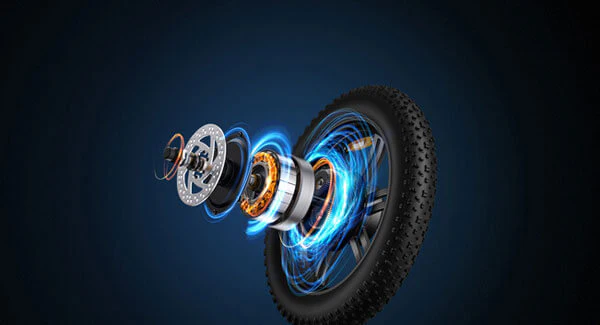
Brushless motors represent a fundamental shift in how electric dirt bikes generate and deliver power. Unlike their brushed counterparts, these motors use electronic controllers to energize stationary coils around a rotating magnet assembly, eliminating the physical brush contact that traditionally transferred current. Without that mechanical friction point, energy conversion becomes dramatically more efficient, and the components that typically wear out fastest simply don’t exist in the same form. For adult riders pushing hard through technical terrain, this translates into a motor that stays responsive and consistent whether you’re on lap one or lap twenty.
The advantages extend well beyond just durability. Brushless motors produce higher torque relative to their size, meaning a compact unit can punch well above its weight class when acceleration demands spike. Power delivery is also noticeably smoother — the electronic commutation process creates a more linear throttle response compared to the sometimes abrupt surges associated with brushed designs. This matters enormously when you’re navigating loose rock or threading through tight switchbacks where precise throttle control separates clean lines from costly mistakes.
How Brushless Motors Enhance Electric Dirt Bike Performance
On the trail, brushless motors deliver three concrete performance advantages. First, instant acceleration becomes genuinely usable — the motor reaches peak torque almost immediately from a standstill, letting riders punch out of corners or crest obstacles without waiting for power to build. Second, heat dissipation improves significantly because the absence of brush friction reduces the primary source of thermal buildup, keeping performance stable during extended aggressive riding sessions. Third, maintenance demands drop considerably. Without brushes to inspect, replace, or clean, riders spend more time riding and less time wrenching. For adult enthusiasts who want a machine that performs reliably across seasons without constant attention, brushless motors deliver a compelling combination of raw capability and long-term practicality.
High Voltage Packs: Power and Efficiency
High voltage packs have become the defining battery architecture for serious electric dirt bike performance. By operating at higher electrical potential — typically ranging from 60V to 84V in performance-oriented models — these systems push more energy through the motor at any given moment, directly translating into greater output without requiring physically larger or heavier battery cells. The result is a bike that feels more responsive at the top end of the throttle range and maintains that responsiveness deeper into a ride session.
The performance benefits are most visible in two areas: top speed and sustained range. Higher voltage reduces the current required to deliver equivalent power, which means less heat generated in the wiring and motor windings during hard riding. This thermal efficiency allows the system to maintain peak output longer before protective throttle-back mechanisms engage. Riders who push through extended technical sections or open desert runs notice the difference — power stays consistent rather than tapering off as the pack warms up.
For adult enthusiasts, charging and safety considerations deserve equal attention. High voltage packs require compatible chargers rated for the system voltage, and using mismatched equipment risks both battery degradation and safety hazards. Most modern systems, including those found on Cemotobike’s adult electric dirt bike lineup, include battery management circuits that monitor cell balance and temperature, cutting off charge or discharge when thresholds are exceeded. Understanding your pack’s voltage rating and respecting the manufacturer’s charging guidelines protects both the investment and the rider over the long term.
Head-to-Head: Performance Metrics Comparison
Torque and Acceleration Comparison
Brushless motors deliver torque almost instantaneously from a dead stop, making them exceptionally responsive in situations where split-second acceleration matters — launching out of a berm, clearing a log crossing, or recovering traction on loose gravel. High voltage packs complement this by sustaining that acceleration harder and longer, feeding the motor consistent energy that prevents the power curve from flattening mid-throttle. Where a standard voltage system might feel sluggish during a prolonged uphill climb, a high voltage pack keeps the motor operating in its optimal efficiency window, translating into acceleration that feels strong from the bottom of the hill to the crest.
Speed and Range Analysis
Top speed favors high voltage configurations decisively. Higher electrical potential allows the motor to spin faster without demanding excessive current, pushing peak speeds meaningfully higher than lower voltage equivalents. Range tells a more nuanced story. Brushless motors extract more usable energy from every charge cycle due to their superior conversion efficiency, effectively stretching the pack’s capacity further per ride. High voltage packs address range from the supply side, storing more total energy to begin with. Riders prioritizing maximum distance benefit most from pairing both technologies together rather than relying on either alone.
Durability and Maintenance
Brushless motors win the maintenance comparison outright. Without brushes degrading under continuous friction, the motor’s internal components remain largely stable across hundreds of riding hours. Inspection intervals are longer, and failures are less frequent. High voltage packs introduce their own upkeep demands — cell balancing, temperature management, and storage protocols all require attention to preserve capacity over time. Neglecting proper charging habits accelerates degradation noticeably. The practical takeaway for adult riders is straightforward: budget less time for motor servicing but invest that time instead in disciplined battery care routines to protect long-term range and reliability.
Eco Mode: Enhancing Battery Life and Efficiency
Eco mode is a rider-selectable power setting that intentionally caps the motor’s output, drawing less current from the battery pack to stretch available energy across a longer ride. Rather than letting the system operate at full throttle ceiling, eco mode establishes a softer power curve — enough performance for trail riding and technical navigation, but calibrated to reduce the aggressive energy spikes that drain a pack quickly during hard acceleration. Most modern electric dirt bikes implement this through the electronic controller, making it a simple toggle rather than a mechanical adjustment.
The practical benefits are significant for adult riders managing longer sessions or remote routes where recharging isn’t immediately accessible. By reducing peak current draw, eco mode also decreases heat generation in both the motor and battery cells, which directly slows degradation over repeated charge cycles. Riders covering mixed terrain — open sections where full power matters, followed by technical climbs where controlled delivery is more valuable — can switch between modes strategically rather than committing to one approach for the entire ride. For anyone looking to extend battery life without sacrificing the core experience, activating eco mode during less demanding trail segments is one of the most effective and underused range management tools available.
Practical Guide: Choosing Your Electric Dirt Bike
Selecting the right electric dirt bike comes down to matching the machine’s core strengths to your specific riding habits. Start by honestly assessing your terrain and ride style. Riders who frequent tight, technical trails with frequent stops and starts benefit most from brushless motor efficiency and low-end torque responsiveness. Those covering open desert or longer cross-country routes should prioritize high voltage pack capacity to ensure consistent power delivery across the full session without degradation.
When comparing models, focus on three practical checkpoints. First, verify the motor type — brushless configurations should be the baseline expectation for any serious adult performance machine. Second, confirm the battery voltage rating and check whether the included charger matches that specification. Third, look for built-in eco mode as a standard feature rather than an afterthought, since this single function meaningfully extends usable range on longer rides without requiring hardware changes.
Before committing to a purchase, test ride whenever possible. Electric dirt bike performance on paper rarely captures how power delivery feels through your hands and feet on real terrain. Pay attention to throttle linearity, how the bike behaves mid-corner, and whether the seat height and ergonomics suit your build for extended sessions. Brands like Cemotobike have built their adult e-bike models around exactly this balance — pairing brushless motor responsiveness with high voltage pack energy reserves and integrated eco mode for range-critical moments — giving riders a configuration that performs confidently across the widest range of conditions.
Brushless Motors, High Voltage, and Eco Mode: Making the Right Choice
Electric dirt bike performance ultimately comes down to how well its core technologies work together. Brushless motors deliver the reliability, torque, and low-maintenance durability that adult riders need across demanding terrain and extended sessions. High voltage packs supply the energy headroom required for genuine top-end speed and consistent power delivery throughout a full ride. Neither technology operates in isolation — their combined strengths define what a modern electric dirt bike is capable of achieving.
Eco mode ties these systems together practically. By intelligently managing how aggressively the motor draws from the pack, it extends usable range without requiring hardware changes or compromising the fundamental riding experience. For riders covering varied terrain or pushing into remote areas, this single feature can be the difference between completing a planned route and walking a bike back to the truck.
As battery chemistry improves and motor controllers grow more sophisticated, the performance gap between electric and gas-powered dirt bikes will continue to narrow. The riders who understand these technologies now — how brushless motors behave under load, how voltage affects sustained output, and when to engage eco mode — will be best positioned to extract maximum performance from whatever the next generation of machines delivers. Apply these insights to your next purchase decision and you’ll ride with both confidence and capability.
