

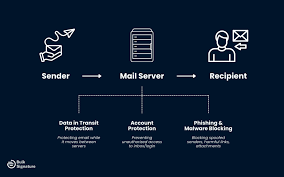
Email encryption is really important for keeping digital communication safe. A lot of people still don’t really get what it actually does. Some people think encryption means total privacy. Some people think it can stop all kinds of email attacks. Encryption only covers certain parts of a message and doesn’t get rid of all risks.
The basics of email encryption would help individuals understand this difference better. Generally, it is defined as the practice of encoding information so that unauthorized individuals cannot access it. This means that when individuals intercept the emails, they cannot access anything from it, unless they have the right keys to unlock it. It would thus help individuals protect their information as it is being sent or stored.
The confusion arises from the fact that various methods of encryption happen at various levels. There are some emails that still remain protected even as they are being sent. There are individuals who ensure that even as they send a message, its content is still protected so that even the server cannot access it. Not all emails are equal when it comes to their level of privacy.
This guide would help individuals understand how email encryption works, what it protects, and where it fails to protect individuals when communicating.
How Email Encryption Works
Email encryption is a way to keep your emails safe. It works by changing your text into a secret code that only certain people can understand. This is the core idea behind Encrypted Email, where message content is protected from unauthorized access during transmission and storage.
Most email systems use something called key cryptography. This means that each person has two keys: one that everyone can see and one that is private. The public key is used to lock the email. The private key is used to unlock it. Since only the person getting the email has the key the email is safe while it is being sent.
When you send an encrypted email you first write your message. Then before the email leaves your computer or phone the system mixes it up using the key of the person getting the email or a special way of keeping it safe. After that the email goes through the internet in code.
When the email gets to the person their system uses their private key to unmix the message and make it readable again. This keeps people from reading the email as it goes from one computer to another.
So encrypted email is a way to keep your messages private while they are being sent. How safe your emails are depends on what kind of encryption’s used which is something we will talk about later. Email encryption is very important for keeping your emails safe and secure.
The Two Main Types of Email Encryption
Email encryption usually relies on two main approaches. Each protects different parts of the communication process. Therefore, understanding these models is essential when evaluating real security outcomes.
TLS Encryption
The way this works for email systems today is that they use something called TLS encryption. This is also known as Transport Layer Security. This helps keep emails safe while they are being transmitted between servers. This way, if someone is monitoring the emails, they will not be able to read them.
When someone wants to send an email, their email server makes a connection to the other person’s server. This connection is secure, and they check to make sure they are actually sending the email to the correct server. Once they are sure everything is fine, they send the email via this secure connection. This helps keep the email safe while it is being transmitted across the internet.
Many email servers use this kind of encryption because it is so easy to do. This means the people sending the emails do not have to do anything to make this happen. They do not have to do anything to their methods of operation, so this is why TLS encryption is such an important tool for email to help keep things private.
Tls encryption only helps when the email is being sent. Once the email gets to the server of the person it is being sent to it might not be encrypted anymore. The people who run the email service might be able to read it. Someone might get into the account and read it. So even though TLS encryption helps it does not mean that the email is completely private. TLS encryption helps reduce the risk of someone intercepting the email. It does not guarantee that only the right person will read it. The email is protected by TLS encryption when it is being sent. Tls encryption does not protect it after that.
End-to-End Encryption (E2EE)
This end-to-end encryption keeps the message secure as only those who are supposed to see it can do so. The message is locked up right on the sender’s device. The message stays locked up until the person it is sent to unlocks it on their own device.
The people who are communicating with each other have the keys to encrypt and decrypt the messages, not the company they use. The company cannot access the messages to decrypt them and therefore cannot see what is going on. This is based on the fact that no one should be able to access these messages. This keeps things very private.
When sending an email with end-to-end encryption, it is kept safe even after it is stored on the company’s servers. If someone manages to hack into the email company, they still cannot view the messages without the keys to decrypt them. The end-to-end encryption keeps your messages private, not just the servers.
However you might need to use tools or set things up in a certain way to use end to end encryption. You have to manage the encryption keys yourself or use a service that is made for end to end protection. With these extra steps end to end encryption is still one of the best ways to keep your messages safe.
What Email Encryption Actually Protects
Email encryption keeps the message content private during sending and delivery. When it’s set up right the email body becomes unreadable to anyone who shouldn’t see it. So someone who intercepts the message can’t read it.
It mainly protects the message text. Encryption turns readable information into coded data before the message leaves the sender’s side. So even if the message goes through lots of servers or networks, outsiders can’t make sense of it.
Attachments get the same protection. Documents, images and other files included with the message are encrypted along with the email body. That means sensitive stuff like contracts, financial statements or internal reports stays protected while it travels.
It also defends against interception. Email often passes through many servers and networks on the way to the recipient. Encryption cuts the chance that attackers watching the network can grab readable data. That matters, especially on public networks.
But how much protection you get depends on the method. Some methods only protect the transmission channel. Others encrypt the message so servers can’t read it. Knowing the difference lets organizations judge how well encryption actually protects their communications.
What Email Encryption Does NOT Protect
Although email encryption protects the content of an email, it does not eliminate all risks. Many risks target the user, their device, or their account rather than the email content itself during transmission, and therefore, encryption will not guarantee safety.
Compromised devices continue to be a significant vulnerability. Malware that infects a computer or smartphone can capture the content of an email prior to it being encrypted or after it has been decrypted; thus, data breaches can occur regardless of encryption because the device has already been compromised.
Phishing also limits encryption use. While encryption keeps the contents of the email private, it does not authenticate the sender’s identity. Therefore, attackers may send phishing emails that appear legitimate and convince recipients to provide login credentials or authorize payments that are fraudulent.
Account takeover is another area where encryption does not provide any protection. If an attacker compromises an account and obtains credentials, they can read the contents of the email in the mailbox; hence, encryption cannot prevent this because the attacker is already inside the legitimate account.
Lastly, the metadata associated with email communication will continue to be available to outsiders during the transmission of the email. In particular, the sender, recipient, date/time stamps, and subject line will be revealed as part of the email transmission; thus, while the email content may be encrypted, patterns of communication could still provide useful insight to an outside observer.
Finally, some systems allow email provider access to stored messages. When providers manage encryption keys or store messages in decrypted form, internal systems may still view content. Understanding these limitations helps organizations use email encryption more effectively within a broader security strategy.
Common Email Encryption Mistakes
Many businesses use encryption, but they are unaware of its drawbacks. They thus produce a false sense of security. Knowing the fundamentals of email encryption helps prevent errors that compromise security.
Assuming encryption ensures complete privacy is a frequent error. Although message content is protected by encryption, phishing, credential theft, and compromised devices are not prevented by it. Therefore, rather than serving as the sole defense, encryption should be used as one layer of a larger defense strategy.
Using TLS encryption exclusively is another problem. Messages are safeguarded during transmission between servers by transport security. It does not, however, stop mailbox compromise or provider access. As a result, companies that rely solely on TLS might miss significant confidentiality vulnerabilities.
Ignoring endpoint security also creates serious exposure. Even strong encryption cannot protect data on infected devices. Malware, keyloggers, or screen capture tools may intercept messages before or after encryption occurs. Therefore, maintaining device security remains essential.
Another threat is that of improper key management, especially in a setting that incorporates end-to-end encryption. When there is encrypted communication, there is a threat of users losing their private keys or storing them in an improper fashion. Moreover, there is a threat to the encryption model itself in terms of improper storage of keys.
These problems are also a result of improper authentication methods. An attacker can gain direct access to decrypted messages in the mailbox if he is able to obtain login credentials. Such a problem can be avoided with the help of proper authentication methods.
These problems also point to an important lesson that is being taught. Encryption is not a stand-alone solution to a problem, and it is combined with identity protection, device security, and monitoring in order to provide email security best practices. Organizations can reduce risks in communication significantly when they incorporate a broader framework of encryption.
Email Security Best Practices Beyond Encryption
This is where confidentiality is boosted through encryption, although this is just one part of it. It is integrated with identity protection, monitoring, and awareness, which are part of effective email security best practices. For organizations to do this more effectively, there is a need for these components to work together.
One of the most important measures is multi-factor authentication. This prevents instant access to an account, which is possible if attackers are able to acquire login credentials. As a result, it significantly reduces the risk of mailbox compromise. For this reason, it is necessary to have this alongside an encrypted email.
Phishing awareness is another important part of it. The employees are often attacked and not the infrastructure. For this reason, it is essential to have employees trained to verify requests, especially those related to sensitive data and financial issues. This is often encouraged through simulation.
Defenses are further strengthened by monitoring and verification. Unusual device access, suspicious forwarding rules, and unusual login patterns can all be identified by security systems. Administrators can look into attacks before they cause harm when alerts are triggered promptly.
The system cannot be put in peril because of any one failure, thanks to the layered defense. The monitoring and authentication measures can prevent the phishing attempt, even if the phishing email succeeds. Encryption will also protect the content of the messages being conveyed.
By integrating these security measures, businesses are creating a security environment in which the use of encrypted email is part of the overall strategy, not the only strategy.
Why Email Infrastructure Matters for Encryption
The effectiveness of email encryption depends heavily on the architecture behind it. Even strong encryption methods can fall short if the surrounding system allows unnecessary access to message content. As a result, infrastructure design plays a critical role in determining how private email communication actually is.
The goal of architecture-level security is to limit who has access to private information. This is why some providers rethink how encryption is implemented at the system level, and why the Atomic Mail company focuses on reducing provider-side access to message content through architectural design rather than relying only on surface-level features.
In many traditional systems, providers retain some level of access to stored messages, whether through key management or internal processing. This creates additional exposure, especially in cases of internal misuse or external compromise. Reducing this visibility strengthens confidentiality and limits how much sensitive data can be accessed in a worst-case scenario.
Zero-access models address this challenge more directly. In these setups, only the sender and recipient control the keys needed to read message content. Because of that, even the service provider cannot decrypt stored emails. This significantly reduces the risk of unauthorized access, even if infrastructure is breached.
Infrastructure decisions also affect how encryption works alongside authentication and monitoring. When these elements are built into the system rather than layered on top, security becomes more consistent and easier to maintain. Instead of relying on users to make the right decisions every time, the system enforces protection by default.
Ultimately, strong email security comes from how well these layers work together. Encryption alone protects content, but architecture determines who can access it, when, and under what conditions. Organizations that evaluate infrastructure—not just features—are better positioned to reduce long-term risk and improve overall communication security.
Conclusion: Encryption Is Only One Layer of Email Security
Email encryption serves as essential protection for contemporary digital communication. Complete security solutions should not include this technology as their permanent solution. Encryption safeguards message content during both transmission and storage yet other security threats remain active.
Phishing attacks and stolen credentials together with compromised devices enable attackers to bypass encryption protection. Organizations need to implement security measures through multiple layers instead of relying on a single technological solution.
The organization establishes a protected environment through strong authentication measures and phishing training programs and monitoring systems and detailed operational procedures. The combination of these elements increases the effectiveness of encrypted communication. The system operates without the necessary components because it requires all elements to function properly with encryption.
Business enterprises need to understand these restrictions because they enable better implementation of encryption technology. They should use encryption as a part of their security system which decreases their operational security dangers.
Organizations should assess how their communication infrastructure performs together with authentication methods and encryption standards during their strategic review. An organization can boost its privacy protection while enhancing system transparency and developing a stronger email security system through a comprehensive evaluation.
