

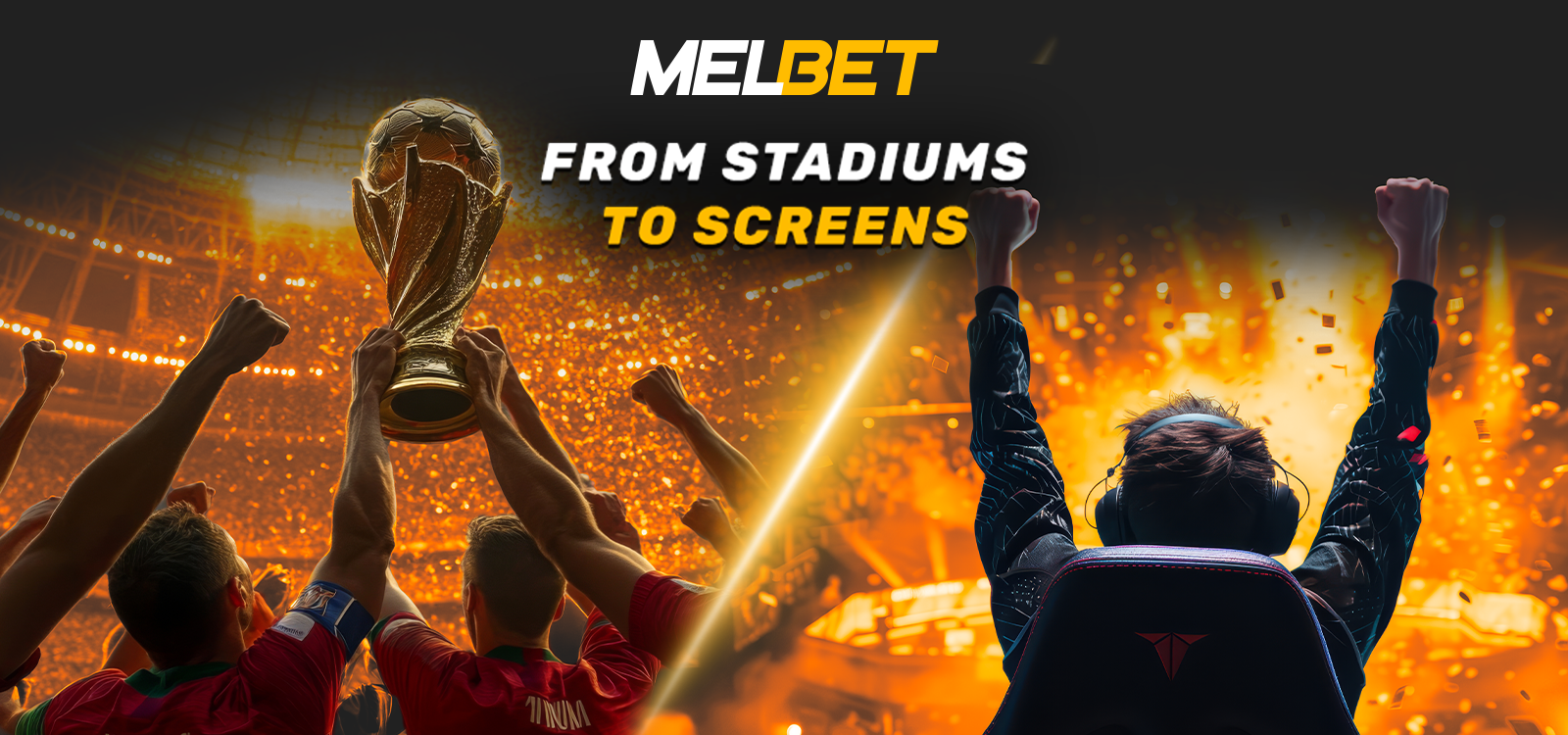
In this article, we explore why esports is becoming part of fans’ everyday lives, how the culture of sports content consumption is transforming, and which trends are shaping a new audience. Using MelBet as an example, we analyze how technological platforms support the growth of digital disciplines and influence the sports industry as a whole.
A digital continent changing the rules
When the decisive match of the League of Legends World Championship attracts more viewers than the NBA Finals, it raises a question: what is happening to modern fans?
The young audience in the Middle East and North Africa is not ready to write off traditional competitions. They are simply expanding the boundaries, and esports is becoming a new continent on this map.
Global figures for 2025 make you think: according to Esports Charts, more than 640 million people follow virtual clashes. While the average football fan is around 45 years old, the average esports viewer is just 25. However, this gap does not mean hostility – these two worlds coexist harmoniously, united by a shared competitive passion.
In this context, the MENA region is confidently claiming the status of a new global capital. The Esports World Cup 2025 held in Riyadh delivered impressive results: 750 million viewers, 350 million hours watched, and a record-breaking $70 million prize pool over eight weeks of competition.
Generation Z: Different speeds, new formats
To understand why esports has so naturally become part of everyday life for young audiences in the Middle East, it’s enough to look at how they consume content. The overwhelming majority of Gen Z (98%) watch YouTube, 84% regularly use TikTok, and 57% have reduced their consumption of traditional television due to these platforms’ influence. The role once held by classic sports channels like Sky Sports has now been taken over by Twitch – a convenient platform for next-generation live broadcasts.
The format of digital competitions perfectly aligns with the fast-paced digital consumption habits of a generation that grew up with smartphones in hand. Matches are easily broken down into highlights, clips, and memes. They fit comfortably into both 30-second TikTok videos and multi-hour streaming marathons. The viewer is no longer a passive observer – they vote in chats, and content creators respond in real time. It’s no surprise that over 90% of Gen Z and Alpha are involved in the gaming ecosystem, which is strategically important for the young MENA region.
New titans and veterans with an iron grip
The Arab region audience is currently focusing on three industry-defining disciplines.
League of Legends
League of Legends remains the leader – a 5v5 entertainment by Riot Games that requires intense teamwork and years of practice. The strategic complexity of this discipline draws major attention. In the first quarter of 2025, fans watched a total of 230 million hours of content, while the 2024 World Championship final peaked at a record 6.9 million viewers.
Valorant
Next is Valorant – a tactical shooter whose Masters Madrid 2024 final set a genre record with 1.69 million concurrent viewers. Its tactical depth and well-structured global tour system ensure consistent international visibility for teams.
Fortnite
The Fortnite scene is no less impressive – a highly dynamic battle royale that has become a true cultural phenomenon. Bugha’s success, who earned $3 million at the first World Cup in 2019, became a defining moment for Gen Z, comparable to Pelé’s debut at the 1958 FIFA World Cup for older generations.
Dota 2 and Counter-Strike 2
While younger audiences storm the rankings, classic disciplines rely on their established, loyal fan bases. Dota 2, as a pioneer of the MOBA genre, is historically known for record-breaking prize pools (over $370 million in total payouts) and consistently high server activity in the Middle East. Counter-Strike 2 also maintains its position, topping prize pool rankings in 2025 with $32.2 million. In the Arab world, Counter-Strike serves as a key entry point into the professional scene: the Saudi squad Team Falcons is striving for success in international tournaments, while organizations from Saudi Arabia and the UAE, such as NASR Esports and Nigma Galaxy, continue to strengthen their presence in global leagues and competitions.
Given the sharp shift in audience preferences, the industry itself is also transforming. The MelBet bookmaker, one of the first to recognize changing user interests, is a prime example of adapting to these new realities. The company offers fans a full range of services: from following matches and analyzing statistics in football, basketball, or tennis, to diving into the biggest esports tournaments in League of Legends, Valorant, Fortnite, Dota 2, and CS2. Being at the center of both the sports and esports worlds is now conveniently possible in one place.
A new format breaking stereotypes
The main argument against the idea that esports is replacing traditional sports lies in the actions of major clubs from classic disciplines themselves. They are actively investing in esports projects. For example, Paris Saint-Germain and Manchester City established their esports structures back in 2016. The Bundesliga went even further by requiring all top-division clubs to have professional esports teams.
At the same time, bridges are being built from both sides: in April 2025, G2 Esports launched its own football club in the Kings League. Sports legends like David Beckham and Shaquille O’Neal are also diversifying their portfolios by investing in areas where a new generation of fans is emerging. Meanwhile, recognition from the International Olympic Committee, which officially approved the Olympic Esports Games 2027 in Riyadh, has effectively put an end to debates about the industry’s status.
Today’s young fan in cities like Dubai, Cairo, or Riyadh sees no contradiction in enjoying a Real Madrid match recap on YouTube in the morning, watching a one-hour Valorant stream on Twitch during the day, and cheering for their favorite team in a live CAF Champions League clash in the evening. Virtual competitions are not replacing traditional sports – they are expanding the boundaries of what we consider sport. The MENA region, fueled by growing infrastructure and significant investment, is now at the very center of this large-scale transformation.
Get the most out of each game with MelBet
When a match keeps you on edge, you want to immerse yourself in the game. Whether it’s football or the final of an esports tournament, the experience becomes even more intense with a reliable platform. New users often ask: is MelBet trusted? The answer is yes. It is an international company that has been operating for over 15 years. The brand has earned global trust, with more than 800,000 monthly users worldwide. Its reliable reputation means you won’t encounter any MelBet complaints.
Real excitement leaves no room for doubt, which is why MelBet’s international standards guarantee full financial security and predictability. MelBet withdrawal processes are fast and transparent, allowing you to stay focused on the most thrilling moments of your favorite tournaments.
For a confident start, new users can take advantage of profitable welcome bonuses for sports and casino, as well as promos tied to esports events, expanding opportunities to explore the platform. With this approach, every fan experiences the match more vividly and feels like part of the game.
