

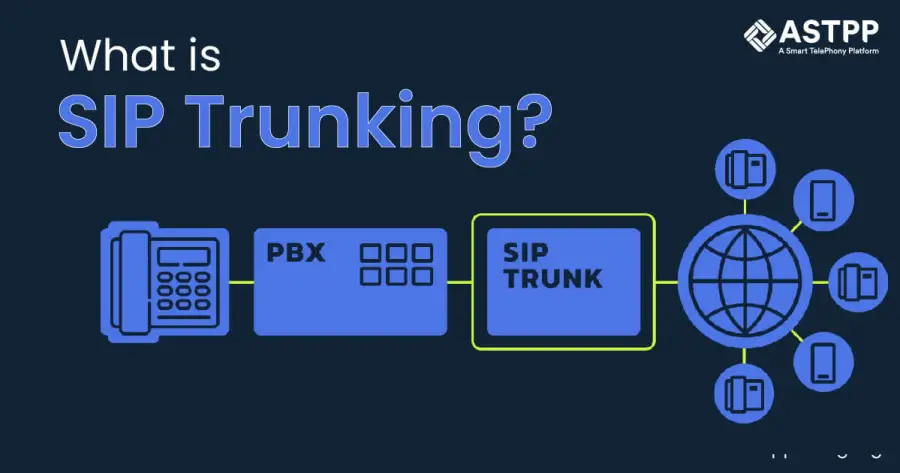
The busy business world demands effective communication to keep everything running smoothly, thus achieving business success. As organizations seek to improve connectivity while keeping costs to a minimum, the shift from conventional phone lines to Session Initiation Protocol (SIP) trunking has proved to be a revolutionary move. Traditional telephony, based on a circuit-switched network, often proves to be inadequate in addressing the ever-changing communication needs of organizations. SIP trunking, on the other hand, presents a more efficient, scalable, and cost-effective solution to conventional telephony, which utilizes an internet connection to support voice communication and other multimedia sessions. The shift from conventional phone lines to SIP trunking, therefore, not only improves communication processes but also integrates with existing Voice over Internet Protocol (VoIP) systems, thus allowing organizations to take advantage of sophisticated communication features, including unified messaging, video conferencing, and efficient call management. As organizations increasingly appreciate the need to incorporate flexibility and efficiency into their communication systems, SIP trunking presents a smarter way to stay connected. In this article, the reader will learn of the various advantages of SIP trunking over traditional phone lines, its influence on business, and its significance in the creation of a connected work environment, which has come to be characterized by the rise of digital transformation. Let us take a journey through this revolution in communication, which promises to shape the future of communication in organizations.
– The Downsides of Traditional Phone Lines
Traditional phone lines, although a mainstay in communication in the past, have a number of disadvantages that may work against businesses in today’s fast-moving world. First off, phone lines are not as scalable as other communication solutions, which may be a major drawback for businesses, especially for those whose communication needs may be constantly changing. Phone lines may also be easily damaged, as they consist of a number of copper wires that may be easily damaged.
Additionally, traditional phone lines may not be as advanced as other communication solutions, which may be a major drawback for businesses in today’s fast-moving world. For instance, SIP trunking solutions may be of great advantage to businesses, as a reliable SIP provider may be able to increase business communication capabilities by integrating voice, video, and data services into a single network, thereby greatly improving business productivity. On the other hand, phone lines may not be as advanced as SIP trunking solutions, which may be a major drawback for businesses, as it may not be able to provide the necessary tools for business success.
– Exploring SIP Termination and Its Importance
It is apparent that SIP termination is a vital part of communication in today’s world, as it allows for the connection of Voice over Internet Protocol (VoIP) calls to the Public Switched Telephone Network (PSTN). This allows businesses to communicate with other phone lines while enjoying the advantages of a digital communication system. This has helped many businesses save money on communication costs, as SIP termination has relatively lower rates compared to traditional communication methods. Additionally, it has helped improve the quality of communication, as SIP trunking has advanced technologies that ensure reliable communication services.
The importance of SIP termination is not just in saving costs but also in the flexibility and scalability that a business can achieve. As a business grows, so do its communication needs, and this is where SIP termination plays a vital role. It allows for easy modifications without having to invest in expensive hardware. This is especially useful for a business that has fluctuating call volume. Working with a reputable SIP provider allows a business to take full advantage of the benefits of SIP termination, including top-notch service.
– Choosing the Right SIP Provider for Your Needs
In terms of the selection of a SIP service provider, it is vital to consider the communication needs of the organization in order to ensure the effective delivery of the services. This is in the sense that not all SIP service providers are able to provide the same level of SIP trunking, SIP termination, and SIP origination services, which is a vital aspect in the effective delivery of telecommunication services. Some of the factors to consider in the selection of a SIP service provider include the reliability and quality of service, as well as the costs involved.
It is important to consider the provider’s security policies, as well as their compliance with industry standards. This is especially important, considering that most organizations are increasingly opting to utilize cloud-based communication systems. Ensuring data integrity, as well as protection from possible threats, is of utmost importance. Working with a SIP provider with excellent support capabilities will greatly enhance your organization’s communication systems. The right decisions will help you create a reliable communication system that meets your business needs.
The change from traditional phone lines to SIP trunking can be regarded as a major step towards the evolution of communication technology, which provides businesses with a better, more efficient, and cost-effective means of communication. In the pursuit of better business operations and the need to conform to the changing and highly digitalized world, SIP trunking can be regarded as the smarter choice, which not only provides businesses with the benefits of better communication but also allows them to explore the benefits of better collaboration tools, thereby ensuring their success in the highly competitive market.
