

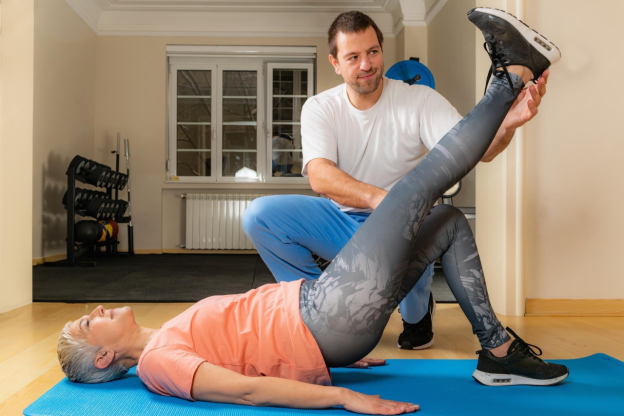
After knee replacement surgery, the right exercises make a huge difference in how quickly you heal. Strengthening your knee muscles, improving flexibility, and walking confidently again all depend on doing exercises after knee replacement surgery properly.
This guide explains the top 10 best exercises after knee replacement, when to start them, how to do them step-by-step, and how these exercises help you recover faster and safer. Let’s begin your pain-free movement journey!
H2: What Are Exercises After Knee Replacement & Why They Matter?
Exercises after knee replacement are medically designed movements that help the knee recover properly. They prepare the new joint to function smoothly and support your body weight again.
They help you:
- Reduce knee pain and swelling
- Improve flexibility and bending
- Strengthen knee and leg muscles
- Prevent stiffness in the knee joint
- Support normal walking after knee replacement
A disciplined exercise routine is the most important & valuable part of healing — helping you sit, stand, climb stairs, and return to an active lifestyle comfortably.
H2: When to Start Exercises After Knee Replacement Surgery?
Most patients begin basic exercises within 24 hours of surgery, under the guidance of a physiotherapist.
Early movement helps:
- Prevent blood clots
- Reduce stiffness
- Improve blood circulation
As healing improves, exercises become slightly more advanced and help you walk normally again.
H2: Top 10 Best Exercises After Knee Replacement
Do these exercises after knee replacement daily — unless your physiotherapist advises otherwise.
H3: 1. Ankle Pumps — First Exercise After Knee Replacement
This is the very first movement you start after surgery to keep the leg active.
How to do it
- Lie down or sit comfortably
- Move your foot up and down slowly
- Repeat 20–30 times, 3–4 times a day
Why it helps
- Improves blood circulation
- Reduces swelling
- Prevents blood clots after knee replacement
H3: 2. Quadriceps Sets — Most Important Strength Exercise
This helps activate thigh muscles that support your new knee.
How to do it
- Keep the leg straight
- Press the knee down to tighten the thigh muscle
- Hold 5–10 sec, repeat 10–15 times
Why it helps
- Strengthens thigh muscles
- Improves walking stability
- Helps prevent knee buckling
H3: 3. Straight Leg Raises — Builds Strength for Walking
This helps restore leg control so walking becomes easier.
How to do it
- Lie straight and lift your leg 30–40°
- Keep the knee fully straight
- Repeat 10–15 times, twice a day
Why it helps
- Improves leg control
- Supports a normal walking pattern
- Strengthens the hip and knee together
H3: 4. Heel Slides — Helps Knee Bending After Surgery
This exercise improves early knee motion.
How to do it
- Slide your heel toward your hips slowly
- Bend the knee as comfortably as possible
- Repeat 10–15 times
Why it helps
- Increases range of motion
- Reduces stiffness after knee replacement
- Helps in sitting/standing movements
H3: 5. Knee Extension Stretch — Prevents Limping
Straightening fully is more important than bending early on.
How to do it
- Place a rolled towel under your heel
- Let the knee straighten and relax
- Hold for 1–2 minutes
Why it helps
- Achieves full knee straightening
- Prevents long-term limping
- Supports proper joint alignment
H3: 6. Glute Bridges — Strengthens Hip & Leg Muscles
Stronger hips = better walking balance.
How to do it
- Lie on your back
- Lift hips upward, keeping knees bent
- Hold 5 sec, repeat 10 times
Why it helps
- Supports the knee during walking
- Improves balance and stability
- Strengthens the buttock muscles
H3: 7. Seated Knee Bending — Improves Daily Movements
Great for activities like sitting, standing & stair climbing.
How to do it
- Sit on a chair
- Bend your knee backwards under the chair
- Hold 5 sec, repeat 10–15 times
Why it helps
- Improves knee flexibility
- Better movement in daily activities
- Reduces stiffness after knee replacement
H3: 8. Step-Ups — For Stair Climbing Confidence
(Start after 3–6 weeks, depending on your recovery)
This exercise prepares you for stairs and uneven surfaces.
How to do it
- Step up on a low step using the surgical leg
- Step down slowly
- Repeat 10–12 times
Why it helps
- Builds functional strength
- Improves balance and coordination
- Enhances confidence in daily tasks
H3: 9. Hamstring Stretch — Reduces Tightness
Tight hamstrings limit walking comfort after knee replacement.
How to do it
- Sit with one leg straight
- Lean forward slowly
- Hold 20–30 sec, repeat 3 times
Why it helps
- Reduces stiffness
- Improves walking stride
- Helps proper hip-knee movement
H3: 10. Stationary Cycling — Best Advanced Exercise
(Usually after 4–6 weeks)
A full-leg strengthening exercise for long-term success.
How to do it
- Use a cycle with low resistance
- Ride for 10–20 minutes daily
Why it helps
- Improves range of motion
- Builds strength in the whole leg
- Boosts endurance for everyday activities
H2: Exercises to Avoid After Knee Replacement
After knee replacement, some high-impact movements can strain the implant and delay healing. Knowing what NOT to do is just as important as knowing what to do.
Avoid these exercises after knee replacement surgery:
- Running or jogging (high impact on the implant)
- Deep squats or kneeling (too much pressure on the knee joint)
- Jumping or heavy weight lifting (risk of implant loosening)
- Twisting movements (may affect knee alignment)
Staying away from these activities protects the knee replacement implant, prevents unnecessary pain, and ensures long-term success of your recovery.
H2: Bonus Tips for Faster Recovery After Knee Replacement
Small daily habits can speed up healing and improve long-term movement after knee replacement surgery.
Helpful recovery tips:
- Maintain good posture while walking
- Use ice regularly to reduce knee swelling
- Increase exercise intensity gradually
- Eat a protein-rich diet to support muscle healing
These simple steps make a big difference — reinforcing strength, comfort, and confidence after knee replacement.
H2: FAQs — Exercises After Knee Replacement
H3: Q1: When can I start exercises after knee replacement?
Exercise starts within 24 hours after surgery, starting slowly with guided physiotherapy exercises.
H3: Q2: How many times a day should I do exercises?
Most exercises after knee replacement should be done 2–3 times a day for best results.
H3: Q3: Which exercises help me walk normally after knee replacement?
Straight-leg raises, quad sets, knee extension stretch, and step-ups are great for walking confidence.
H3: Q4: What exercises should I avoid after knee replacement?
Avoid high-impact exercises like jumping, running, and deep squats — they strain the implant.
H3: Q5: When does knee pain reduce after surgery?
Pain steadily reduces after 2–3 weeks and continues improving over 3–6 months as you exercise regularly.
H2: Final Words
Recovery after knee replacement depends as much on your exercises as on your surgery. The more consistently you do these exercises after knee replacement, the better your strength, mobility, and walking ability will become.
Stay disciplined & focused, follow medical advice, and celebrate little progress — every step is a win toward your active, pain-free life again!
