

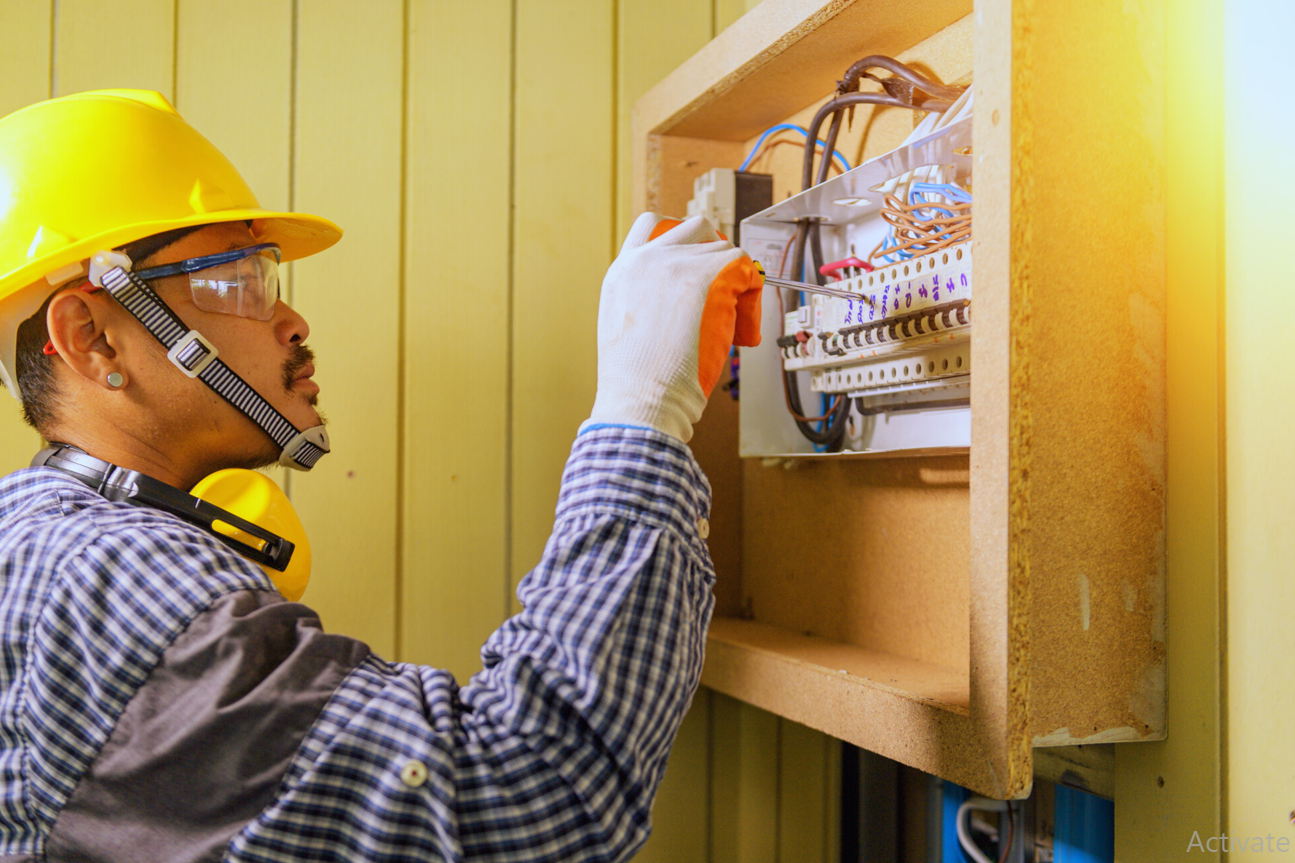
Electrical work is one of those things most of us do not think about until something goes wrong. The lights suddenly flicker when the aircon kicks in. A power point in the kitchen stops working for no obvious reason. You want to install ceiling fans before summer hits and realise the existing wiring is probably not up to the job. And suddenly you are scrolling through your phone trying to find someone qualified to come out and sort it, preferably someone who will not charge you a small fortune or leave the job half finished.
Here is the thing though. Unlike hiring a painter or a gardener, hiring the wrong electrician can have genuinely serious consequences. We are talking about electricity running through your walls, ceilings, and under your floors. Dodgy work can cause fires, electrocution risks, and damage to expensive appliances. It can also leave you with illegal, non-compliant installations that come back to bite you when you eventually sell the house. This is not an area where you want to cut corners or chase the cheapest quote without doing a bit of homework first.
This guide is going to walk you through everything you need to know before booking a sparky for your next job. We will cover what a proper residential electrician actually does, the licensing and qualifications that separate the professionals from the cowboys, the questions you should be asking before any work begins, and the warning signs that tell you to keep looking. Whether you need a quick repair, a major renovation wire-up, or just someone reliable to put in your phone for future use, there is plenty here to help you make a smart choice.
What a Residential Sparky Actually Does
Before diving into how to choose one, it helps to understand what the trade actually involves. A lot of people have a pretty narrow idea of what these tradies do, usually centred on changing light fittings and fixing dead power points. The reality is much broader, and a qualified professional can handle an impressive range of work across your home.
If you are curious about the trade and how it has evolved over the years, there is a thorough overview on Wikipedia’s electrician page that covers the history, the training involved, and how the profession has changed as technology has advanced. It is a decent read if you want to appreciate just how much skill and knowledge goes into the work these professionals do every day.
Modern homes are packed with electrical systems that would have seemed like science fiction just a few decades ago. Solar panels, battery storage, smart home controls, automated lighting, electric vehicle charging, ducted air conditioning, networked appliances, and sophisticated safety systems have all become standard features. Each of these brings its own challenges and requires someone who genuinely understands what they are doing.
Common Jobs You Can Expect Them to Handle
• General repairs including faulty power points, switches, light fittings, and circuits that keep tripping for no obvious reason.
• Safety switch installation and testing, which is a legal requirement in most parts of Australia and genuinely life-saving equipment.
• Switchboard upgrades to replace old fuse boxes with modern circuit breakers and protection devices that can handle today’s electrical loads.
• New power point installation, whether you need extra points in the kitchen, outdoor power for the pool pump, or dedicated circuits for appliances.
• Lighting design and installation, from simple replacements through to LED downlights, outdoor lighting, and sophisticated smart lighting setups.
• Ceiling fan installation, which sounds straightforward but actually requires proper wiring and mounting to be done safely.
• Data and communications cabling for internet, TV, and home entertainment systems that need reliable connections throughout the house.
Specialised Services Many Sparkies Offer
Beyond the bread and butter work, many electricians also handle specialised installations that require extra training and equipment. This might include solar panel and battery systems, electric vehicle charger installation, home automation and smart home integration, security and CCTV systems, or major renovation and new build wiring. Not every job needs these capabilities, but if you are planning something more ambitious, it is worth finding a tradie who has experience in the specific area you need.
Why Licensing and Qualifications Really Matter
Here is where electrical work genuinely differs from a lot of other trades. In Australia, it is illegal for anyone to do electrical work in a home without being properly licensed. This is not a formality or a bureaucratic hurdle. It is a safety requirement that exists because badly done electrical work kills people and burns down houses every single year. If someone offers to do electrical work at your home without a valid licence, you need to say no and find someone else, even if they are a mate or a relative trying to do you a favour.
A properly licensed electrician has completed a four-year apprenticeship combining on-the-job experience with formal study, passed the required exams, and maintains their licence through ongoing professional development. They know the wiring rules, they understand the relevant Australian Standards, and they carry insurance in case something goes wrong. None of these things are true of an unlicensed operator, no matter how confident they sound.
Verifying a licence is easy. Every state and territory has an online register where you can look up electrical contractors and individual workers. Before hiring anyone, take two minutes to check that their credentials are current and valid. A legitimate tradesperson will be happy for you to do this. Anyone who gets defensive or makes excuses about providing their licence number is telling you everything you need to know.
How to Find a Trustworthy Residential Electrician
So you know why qualifications matter. Now let us talk about how to actually find someone good in your area. A few approaches work better than others, and combining them gives you the best shot at making a smart choice.
Personal Recommendations From People You Trust
Word of mouth is still the most reliable way to find good tradies. Ask friends, neighbours, colleagues, and family members who they use and whether they would hire them again. Pay attention to why they recommend someone. “They were cheap” is not nearly as useful as “they turned up on time, explained everything, did a tidy job, and charged exactly what they quoted.” The second answer tells you about the quality of the operation, not just the price.
If you are new to an area or do not have many local connections, community groups on social media can be useful for crowdsourced recommendations. Take individual opinions with a grain of salt, but watch for patterns. When the same name keeps coming up with consistently positive feedback, there is usually a good reason.
Reading Reviews and Checking Credentials
Online reviews can be genuinely helpful if you read them carefully. Look for businesses with plenty of recent reviews rather than a handful of ancient ones. Watch for specific details in the reviews rather than vague praise. A reviewer describing exactly what work was done, how the tradie communicated, and what the experience was like gives you far more useful information than someone just writing that they were good.
Pay attention to how the business responds to any negative feedback. A professional operation handles complaints gracefully, acknowledges mistakes when they happen, and works to put things right. A defensive or dismissive pattern of responses is a warning sign in any service trade.
Beyond reviews, check for membership of professional bodies like Master Electricians Australia, which hold their members to standards and provide additional accountability. Membership is not a guarantee of quality, but it is a positive sign that the business takes its reputation seriously.
If you are in the Perth area and looking for qualified electricians, it is worth reaching out to VJ Electrical to see what services they offer and whether they would be the right fit for your home. Working with a local specialist who understands the unique needs of Perth properties makes a real difference to both the process and the outcome.
Questions to Ask Before Hiring Anyone
When you contact a potential sparky for the first time, take a few minutes to ask the right questions. A professional will welcome this because it shows you are taking the job seriously. Anyone who gets annoyed or evasive is telling you something important about how they operate.
1. Can you provide your electrical contractor licence number? This should be an immediate, confident answer. Write the number down and verify it later through your state regulator’s online register.
2. Do you have public liability insurance and how much coverage do you carry? Insurance is non-negotiable for any tradie working in your home, and a professional will have no issue sharing these details.
3. Can you give me a written quote before starting work? Written quotes protect both parties and should be standard practice for anything beyond the smallest emergency callouts.
4. Do you provide a compliance certificate after the work is done? Most electrical work requires a certificate confirming it meets the relevant standards, and this document is important for insurance and future property sales.
5. What warranty do you offer on your work? Quality tradies stand behind what they do and typically offer reasonable warranties on labour and the parts they supply.
6. Will you clean up after yourself? This sounds minor but it reflects professionalism. A good tradie leaves your home in the same condition they found it, not buried under dust, offcuts, and packaging.
Understanding Quotes and What to Expect to Pay
Pricing in the electrical trade varies based on the complexity of the job, the materials required, your location, and whether it is a standard weekday call or after hours. Rather than chasing the cheapest quote, focus on value for money. A slightly more expensive tradie who does the job properly, uses quality materials, and provides a compliance certificate is almost always better value than a cheap operator who cuts corners.
When comparing quotes, make sure they cover the same scope of work. A quote that seems dramatically lower than the others is usually missing something important, whether that is certain materials, testing, clean up, or the certification paperwork. Ask any tradie to break down their quote so you can see exactly what is included and what is not.
Typical costs vary widely, but as a rough guide, small jobs like power point repairs or simple installations might run from around one hundred fifty dollars for basic work. Larger jobs like switchboard upgrades, rewiring sections of a house, or complete electrical fit-outs for renovations can easily run into thousands of dollars. Emergency callouts after hours always carry a premium, so if a job is not urgent, booking during normal business hours saves you money.
Red Flags That Should Have You Looking Elsewhere
Certain warning signs come up again and again when homeowners end up with bad experiences. Knowing what they are helps you spot trouble before the work starts.
• Reluctance or refusal to provide a licence number. This is the single biggest red flag you can encounter, and it should end the conversation immediately.
• Cash only with no invoice or receipt. Legitimate businesses provide proper paperwork because they need it for their own accounting and tax obligations.
• No written quotes and vague verbal estimates that magically inflate once the work begins. Any surprise at invoice time is a sign of poor practice or worse.
• Pressure to start the job immediately or to approve additional work on the spot without giving you time to think. Good tradies respect your right to make informed decisions.
• No fixed address, no company details, and only a mobile number with no online presence. While plenty of sole traders operate legitimately, a complete absence of verifiable business information is worth questioning.
• Reluctance to provide the compliance certificate after the work is done. This document is legally required for most electrical work, and skipping it suggests the work may not have been done to standard.
• Poor communication before the job starts. If they are slow to return calls or vague with answers now, it will not get any better once they have your money.
Safety First: When to Call for Help Immediately
Some electrical issues can wait until a tradie has availability. Others need immediate attention, and knowing the difference can protect your home and family. Any time you smell burning from a power point, switch, or light fitting, turn off the power at the switchboard and call a sparky straight away. Sparks, crackling sounds, or visible damage to wiring are also signs that you need help now, not next week.
If your safety switches are tripping repeatedly and you cannot identify an obvious cause like a faulty appliance, get a professional to investigate. Repeated tripping often indicates a genuine fault in the wiring, and ignoring it or bypassing the safety switch is asking for trouble. Similarly, if you experience tingles from taps or appliances, or if lights are flickering or dimming regularly, these can all indicate serious electrical problems that need prompt attention.
For anything that feels urgent, do not wait. Reputable sparkies offer emergency services, and the callout fee is a small price to pay for peace of mind and safety.
Building a Long-Term Relationship
Once you find a home electrician you trust, keep their number handy and use them consistently. There are real benefits to building a relationship with the same team over time. They become familiar with your property, they have a record of past work and any quirks, and they have a reputation with you worth protecting. When something goes wrong down the track, you have someone you can ring without having to start the research process from scratch.
A good sparky is not just someone you call when things break. They can also help you plan for future upgrades, advise you on improvements that will add value to your home, and keep you informed about developments in areas like solar, batteries, and smart home technology that might benefit your property. Over the years, this kind of relationship delivers far more value than picking a different tradie for every job based on whoever has the cheapest quote this week.
Making the Final Call
When you have done your research, checked credentials, gathered quotes, and thought about what you really need, trust your judgement. The technical qualifications matter, but so does how you feel dealing with the person. If you feel comfortable asking questions, if they explain things clearly in plain English, and if their quote seems fair for the scope of work, you are probably on the right track.
If something feels off, even if you cannot quite put your finger on what it is, give yourself permission to keep looking. There are plenty of good tradies out there, and finding the right fit is worth the extra effort. A qualified, trustworthy sparky is one of the most valuable contacts you can have as a homeowner, and it is absolutely worth taking the time to choose well. Your safety, your home, and your peace of mind are worth the small additional effort up front.
Frequently Asked Questions
How do I verify that an electrician is properly licensed?
Every state and territory in Australia has an online register where you can look up electrical contractors and individual licence holders. Ask the tradie for their licence number and their full name, then search the relevant register for your state. The check takes about two minutes and confirms whether their credentials are current and valid. A professional will be happy for you to do this, and anyone who gets defensive about providing these details should be avoided.
What is a compliance certificate and why do I need one?
A compliance certificate, sometimes called a Certificate of Electrical Compliance or similar depending on your state, is a document confirming that the electrical work carried out meets the relevant Australian Standards and regulations. It is legally required for most electrical work and is important for insurance purposes, property sales, and your own peace of mind. Always make sure you receive and keep this document when work is completed.
Can I do any electrical work myself legally?
In Australia, the scope of electrical work homeowners can legally perform is extremely limited. In most states and territories, almost all electrical work must be done by a licensed electrician. You generally cannot legally replace a power point, install a new circuit, or do any work involving the fixed wiring of your home. This is not just bureaucratic caution. Unlicensed electrical work is dangerous, often illegal, and can void your home insurance. When in doubt, leave it to a qualified tradie.
How much should I expect to pay for basic electrical work?
Costs vary widely based on location, complexity, and the specific work involved. As a rough guide, small jobs like replacing a power point or light fitting typically start from around one hundred fifty dollars including the callout. More involved jobs like installing new circuits, upgrading switchboards, or rewiring sections of a house can run into thousands of dollars. Always get a written quote before committing to any work beyond a simple emergency repair, and make sure all quotes cover the same scope so you can compare them fairly.
How often should I have my home’s electrical system checked?
For most modern homes, a professional electrical safety inspection every five to ten years is a sensible precaution. Older homes, particularly those with original wiring dating back several decades, should be checked more frequently, as should any property that has had significant renovations or additions over the years. Safety switches should be tested monthly using the test button, and any flickering lights, tripping circuits, or unusual behaviour should be investigated promptly rather than ignored.
