

Introduction
In the fast-evolving world of nanotechnology, achieving high-quality nanomaterials efficiently is a critical goal for manufacturers and researchers alike. Bead mill machines have emerged as a cornerstone technology in this arena, offering precise particle size reduction and uniform dispersion. These machines allow industries to produce nanomaterials that meet stringent performance requirements while minimizing waste and energy consumption. By incorporating advanced bead milling processes, companies can ensure that their products are consistent, reliable, and competitive in the global market.
The production of nanomaterials demands both precision and scalability, and traditional methods often fall short in delivering the desired particle size and distribution. Bead mill machines provide a practical solution by leveraging mechanical forces to break down materials into nanometer-scale particles. The controlled milling environment ensures reproducibility, making these machines invaluable for research institutions, pharmaceuticals, coatings, and advanced material applications. In essence, bead mill machines bridge the gap between laboratory research and industrial-scale production.
Understanding the Mechanism of Bead Mill Machines
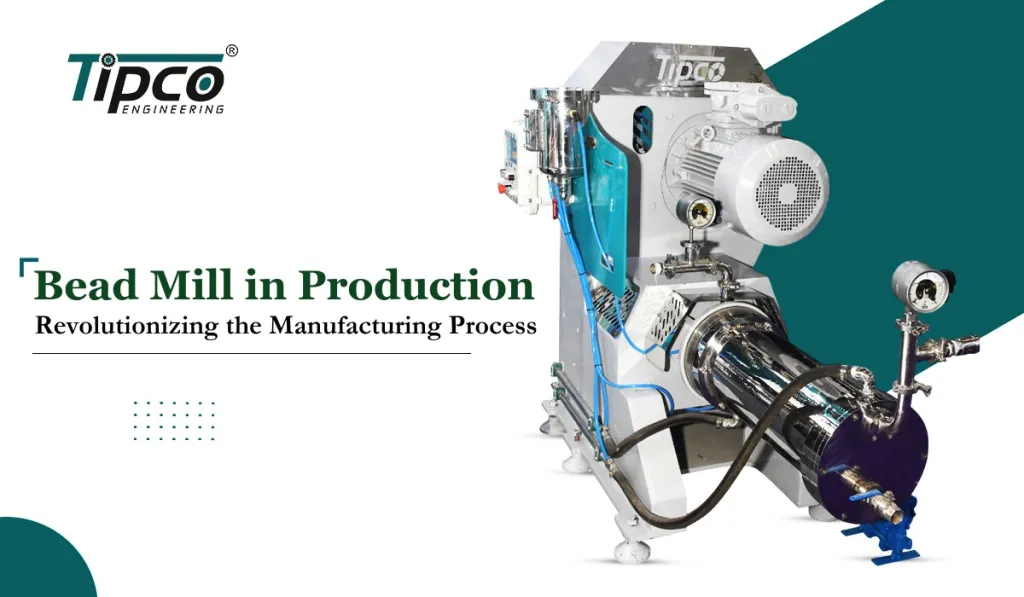
Bead mill machines operate on a simple yet highly effective principle. Inside the milling chamber, beads of varying sizes create intense shear and impact forces that reduce particle sizes and disperse materials evenly. The choice of bead type, material, and size significantly influences the final particle distribution, making customization a critical aspect of efficient milling. This precision enables manufacturers to target specific nanostructures for applications ranging from electronics to healthcare.
Another key feature of bead mill machine is their ability to maintain consistent milling conditions. Temperature, milling speed, and bead-to-material ratio are carefully controlled to prevent material degradation while achieving optimal particle size reduction. This consistency is especially important when producing high-value nanomaterials, where even slight variations can compromise product performance. By understanding the mechanism of these machines, industries can optimize production parameters for maximum efficiency and quality.
Applications of Bead Mill Machines in Nanomaterial Production
The versatility of bead mill machines makes them suitable for a wide range of nanomaterial applications. In pharmaceuticals, these machines facilitate the creation of nanoparticle suspensions that improve drug solubility and bioavailability. Similarly, in the coatings industry, bead milling ensures uniform pigment dispersion, enhancing color stability and finish quality. Electronics manufacturers also rely on bead mill machines to produce conductive inks and advanced ceramics with precise particle characteristics.
Beyond these traditional industries, bead mill machines are increasingly used in research and development settings. Scientists utilize these machines to experiment with new nanocomposite formulations and study the effects of particle size on material properties. This dual capability for both production and research highlights the strategic importance of bead mill machines in advancing nanotechnology innovations. Companies that invest in these machines gain a competitive edge by reducing production time while maintaining high-quality standards.
Advantages of Using Bead Mill Machines
One of the most significant benefits of bead mill machines is their ability to enhance process efficiency. By producing smaller, more uniform particles in less time, these machines reduce the need for repeated processing and minimize material loss. This efficiency translates into lower production costs and faster turnaround times, which are essential in industries with tight deadlines and high material costs.
In addition to efficiency, bead mill machines offer exceptional versatility. They can process a wide variety of materials, from soft polymers to hard ceramic powders, without compromising performance. The flexibility to adjust bead sizes, milling speeds, and processing times allows manufacturers to achieve tailored results for specific applications. Moreover, the scalability of modern bead mill machines ensures that laboratory successes can be reliably replicated at industrial scales, bridging the gap between research and commercial production.
Optimizing Performance for Maximum Efficiency
To fully leverage the potential of bead mill machines, operators must focus on optimizing key parameters. Factors such as bead material, milling speed, and cycle duration play a crucial role in achieving desired particle sizes. Understanding the relationship between these variables allows manufacturers to fine-tune their processes and reduce energy consumption while maintaining product quality.
Regular maintenance and proper handling of bead mill machines are also critical for sustaining efficiency. Routine inspections, cleaning, and timely replacement of worn parts prevent unexpected downtime and ensure consistent milling performance. Furthermore, investing in automated control systems can enhance precision and reduce operator error, further improving the overall efficiency of nanomaterial production. By combining careful process optimization with proactive machine management, industries can maximize both output and quality.
Challenges and Considerations in Bead Milling
While bead mill machines offer numerous benefits, there are also challenges to consider. The selection of appropriate bead sizes and materials requires expertise, as incorrect choices can lead to suboptimal particle sizes or contamination. Additionally, certain nanomaterials are sensitive to heat or shear forces, necessitating careful monitoring of milling conditions to avoid degradation.
Environmental and safety considerations also play a role in bead mill operations. Proper handling of nanomaterials, dust containment, and energy-efficient practices are essential to ensure safe and sustainable production. By addressing these challenges through training, process monitoring, and equipment upgrades, manufacturers can maximize the benefits of bead milling while minimizing risks. The careful balance between efficiency and safety is a hallmark of responsible nanomaterial production.
Future Trends in Bead Mill Technology
Advances in bead mill machine technology continue to drive improvements in nanomaterial production. Innovations such as smart sensors, automated process control, and energy-efficient designs are making these machines more precise, reliable, and environmentally friendly. As demand for high-performance nanomaterials grows, manufacturers are increasingly seeking bead mill solutions that offer scalability without compromising quality.
Additionally, research into novel bead materials and milling techniques promises to expand the capabilities of bead mill machines. Enhanced understanding of particle dynamics at the nanoscale enables engineers to design processes that achieve unprecedented levels of uniformity and performance. The ongoing evolution of bead mill technology underscores its central role in advancing nanomaterial production, providing industries with tools to meet the challenges of tomorrow’s high-tech applications.
Conclusion
Bead mill machines have transformed the landscape of nanomaterial production by offering precision, efficiency, and scalability. From pharmaceuticals to electronics, these machines enable the creation of high-quality nanomaterials with consistent properties, reducing waste and production time. By understanding their mechanisms, optimizing operational parameters, and addressing potential challenges, manufacturers can fully harness the benefits of bead milling technology.
As the demand for advanced materials continues to grow, investing in bead mill machines ensures that companies remain competitive and capable of meeting evolving industry standards. With ongoing technological advancements, these machines will continue to play a vital role in shaping the future of nanomaterial production, making them an indispensable tool for innovation and efficiency.
