

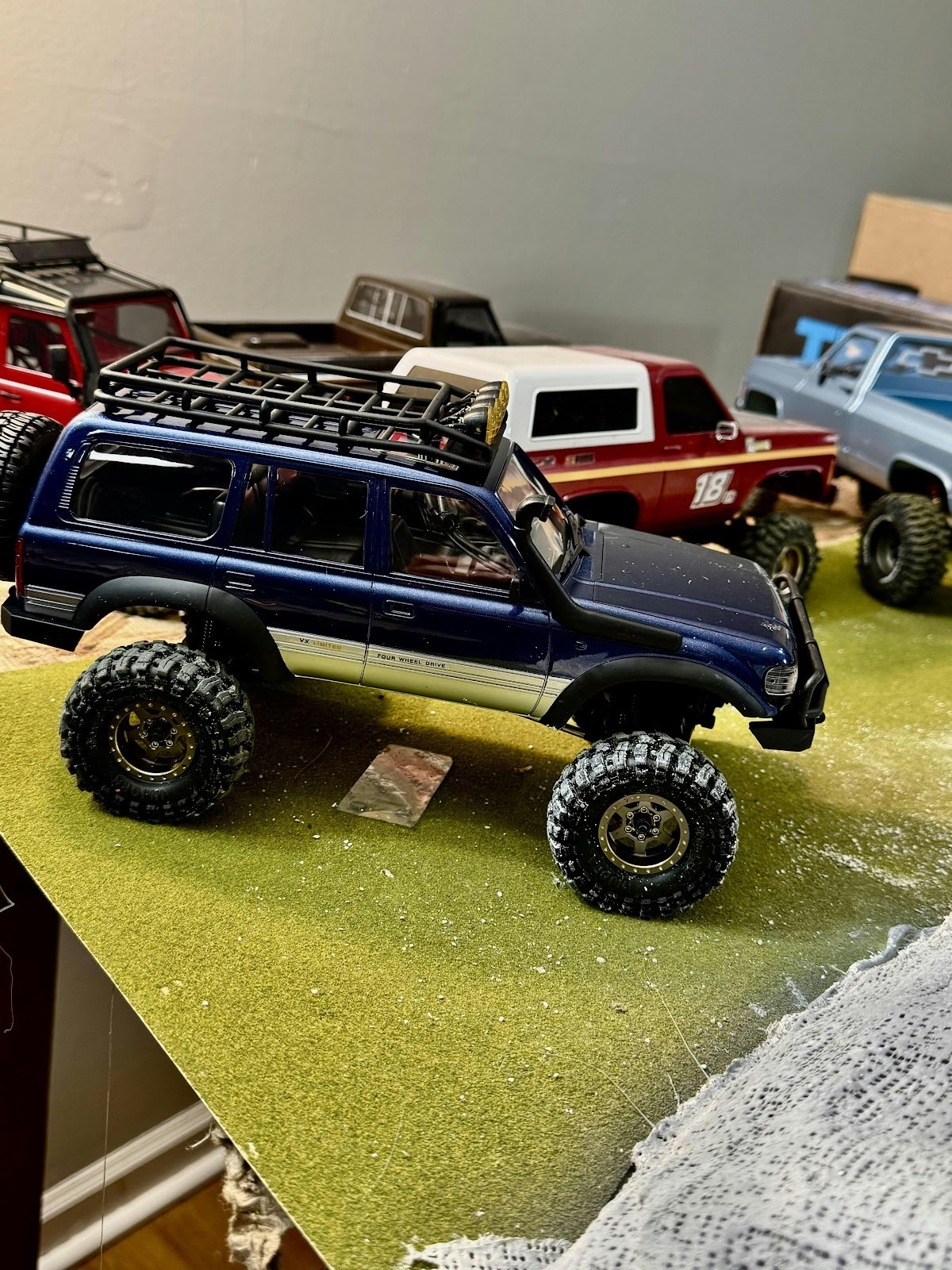
Pushing an rc car to its performance limits reveals a fundamental challenge: maintaining control when power, speed, and terrain conspire against you. Whether navigating a tight hairpin at race pace or launching off a jump, the suspension system becomes the critical interface between chassis and ground. Enter the four-link suspension—a sophisticated engineering solution transplanted from full-scale motorsports into the palm of your hand. This system tackles the delicate equilibrium between vehicle stability and traction by precisely controlling axle movement through four strategically positioned links. Unlike simpler suspension designs, the four-link architecture offers unparalleled tunability and performance, enabling a low center of gravity that transforms handling dynamics. For automotive engineers and serious RC enthusiasts seeking to understand how mechanical design translates into measurable performance gains, the four-link represents a masterclass in applied vehicle dynamics. This deep dive explores the engineering principles behind its effectiveness, revealing how four carefully positioned rods can fundamentally alter your RC car’s behavior on track.
Understanding the Fundamentals of Four-Link Suspension
A four-link suspension system employs four separate bars—two upper links and two lower links—to connect the rear axle to the chassis, creating a rigid yet articulating geometric framework. Each link pivots at both ends, allowing the axle to move vertically while the link arrangement constrains its motion along specific paths. This architecture differs fundamentally from simpler designs: leaf springs combine structural support with suspension function but offer limited adjustability, while trailing arms use only two links, providing less control over axle behavior during dynamic maneuvers. The four-link’s sophistication lies in its ability to independently tune multiple suspension characteristics through link positioning. Central to understanding this system is the concept of the “instant center”—the theoretical point where the upper and lower links’ centerlines intersect when viewed from the side. This virtual pivot point dictates how the axle responds to forces during acceleration, braking, and cornering. By adjusting link angles and mounting locations, engineers can relocate this instant center to modify anti-squat behavior, roll axis height, and lateral stability characteristics. The four-link essentially creates a virtual swing arm whose length and position can be precisely tailored without physical constraints, offering tuning flexibility that simpler suspensions cannot match. This geometric control forms the foundation for the stability and traction improvements that follow.
The Engineering Behind Enhanced Vehicle Stability
Vehicle stability in RC cars hinges on controlling unwanted axle movements that disrupt chassis balance, and the four-link suspension excels by imposing strict geometric constraints on axle motion. During hard acceleration, traditional suspension designs allow axle wrap—a rotational twisting motion where the axle attempts to rotate opposite the wheel direction—causing erratic power delivery and chassis pitch. The four-link’s parallel bar arrangement resists this twisting by distributing forces across four pivot points, maintaining consistent driveline geometry even under maximum throttle. Similarly, during braking or high-speed cornering, lateral forces attempt to shift the axle sideways relative to the chassis. The triangulated geometry formed by the upper and lower links creates a virtual lateral constraint, preventing side-to-side axle wandering that would otherwise destabilize the car mid-corner. Body roll—the chassis tilting outward during turns—diminishes significantly because the link angles can be configured to raise the roll center, reducing the leverage that cornering forces exert on the chassis. This controlled roll axis means the car transitions into corners predictably, without the sudden weight transfers that unsettle simpler suspensions. At high speeds on straights, the four-link maintains axle alignment parallel to the chassis, eliminating the oscillations and steering vagueness common in loosely controlled systems. The result manifests in tangible performance: cleaner corner entries, reduced mid-corner corrections, and confidence-inspiring composure when transitioning between acceleration and braking zones. For competitive racing scenarios where lap times hinge on consistency, this predictable behavior allows drivers to exploit the car’s full performance envelope without fear of sudden instability.
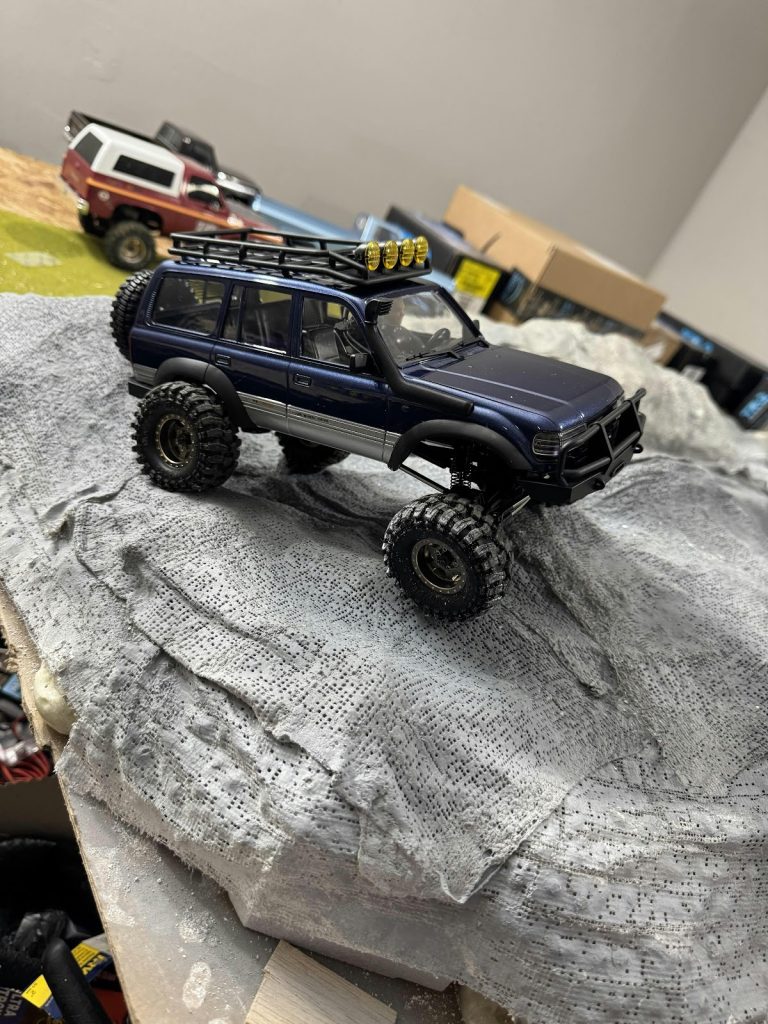
Practical Application: Tuning Link Geometry for Desired Stability
Adjusting four-link geometry begins with roll center height, controlled by the intersection angle of the upper and lower links when viewed from the front. Raising the roll center by angling links upward reduces body roll but can induce a nervous, darty feel; lowering it increases roll but enhances progressive handling. For oversteer correction, widen the rear link separation at the axle end to increase roll resistance, or lower the front roll center to shift weight bias forward. Understeer responds to narrowing rear link spacing or raising anti-squat percentage—calculated as the angle between the lower link and ground at static ride height—which plants the rear under acceleration. Anti-dive, adjusted via front suspension link angles, controls nose-dive under braking; increasing it maintains aerodynamic balance but can reduce front-end compliance. Measure changes incrementally, testing one adjustment per session to isolate effects, and document settings with a suspension geometry tool or smartphone inclinometer for repeatability across track conditions.
Maximizing Traction Through Precise Axle Articulation
Traction fundamentally depends on maintaining tire contact with the surface, and the four-link suspension achieves this through controlled axle articulation that adapts to terrain irregularities without compromising chassis stability. When an RC car encounters uneven ground—bumps, ruts, or off-camber sections—the axle must move independently to keep both wheels planted while the chassis maintains its intended attitude. The four-link’s pivoting geometry permits vertical axle travel along a predetermined arc, allowing one wheel to compress while the other extends, conforming to surface variations without binding or forcing the chassis to follow every contour. This articulation occurs within geometric boundaries set by link angles, preventing excessive movement that would destabilize the car while ensuring sufficient compliance for grip. Minimizing unsprung weight—the mass of components that move with the axle rather than being supported by the suspension—amplifies this benefit, as lighter axles respond more quickly to terrain changes. Four-link designs inherently reduce unsprung weight by eliminating heavy leaf springs or bulky trailing arm assemblies, using slender links and separate shock absorbers that mount directly to the chassis. During hard acceleration, the system’s anti-squat geometry transfers weight to the rear axle progressively, loading the tires to increase grip without inducing wheel hop—the rapid bouncing that breaks traction when power overwhelms suspension control. The lower links’ angle relative to the ground creates a forward force component that counteracts chassis squat, effectively using acceleration forces to preload the suspension and maintain tire contact. This dynamic load management means power translates directly into forward motion rather than dissipating through suspension oscillation or tire slip, particularly critical when exiting corners where traction determines lap times and competitive advantage.
The Critical Role of a Low Center of Gravity
A low center of gravity stands as one of the most fundamental principles in vehicle dynamics, directly influencing rollover resistance and cornering performance. When the center of gravity sits closer to the ground, the moment arm through which lateral forces act during cornering becomes shorter, reducing the tipping force that attempts to lift inside wheels off the surface. This translates into higher cornering speeds before weight transfer overcomes grip, allowing sharper turns without sacrificing stability. The four-link suspension enables a significantly lower overall center of gravity compared to bulkier alternatives by eliminating the vertical space consumed by leaf spring packs or massive trailing arm assemblies. Its slender link construction allows the chassis to sit mere millimeters above the axle, positioning heavy components like batteries and electronic speed controllers closer to ground level without interference. The separated shock absorbers mount directly to the chassis at optimal angles, further reducing the vertical packaging envelope. This compact architecture creates opportunities for strategic weight placement: batteries can nestle between frame rails at the lowest possible point, while the motor mounts low and centered, concentrating mass near the geometric center. The cumulative effect becomes apparent during aggressive maneuvers—reduced body roll means tires maintain optimal camber angles throughout corner transitions, maximizing contact patch area and available grip. When combined with the four-link’s inherent stability advantages, a low center of gravity transforms handling characteristics from merely competent to genuinely confidence-inspiring, allowing drivers to attack corners with precision that higher-mounted systems simply cannot match.
Solution Steps: Implementing a Low-CG Design in Your RC Car Build
Begin by selecting a chassis specifically designed for low center of gravity, featuring dropped frame rails or recessed battery trays that position the power source below the axle centerline. Manufacturers like FMS Model have increasingly incorporated low-CG principles into their chassis designs, recognizing the performance advantages these configurations deliver across various RC platforms. Mount your LiPo battery as the foundation, securing it in the lowest available position with the heaviest cells oriented horizontally to minimize vertical mass distribution. Choose low-profile shock bodies and mount them at aggressive angles that reduce overall suspension height while maintaining adequate travel. Install the electronic speed controller flat against the chassis floor rather than vertically, using thermal pads for heat management without adding height. Select tires with smaller overall diameter when rules permit, as reducing tire radius effectively lowers the entire chassis relative to the contact patch. Position the receiver and servo tray at mid-height, balancing accessibility with CG concerns. The primary trade-off involves ground clearance: ultra-low configurations excel on smooth surfaces but sacrifice off-road capability, so match your CG strategy to your primary racing environment. Measure your final setup using a corner-weight scale and CG calculation tool, targeting a CG height below 30mm for on-road applications, adjusting component placement iteratively until achieving optimal balance between low mass center and practical clearance requirements.
Engineering Excellence in Miniature Form
The four-link suspension represents far more than an incremental upgrade—it fundamentally redefines how RC cars manage the eternal conflict between stability and traction. Through its sophisticated geometric control, this system transforms unpredictable axle behavior into precise, tunable motion that keeps tires planted while maintaining unwavering chassis composure. The four carefully positioned links create a mechanical intelligence that responds to acceleration forces, terrain irregularities, and cornering loads with engineered precision, eliminating the compromises inherent in simpler designs. When paired with strategic component placement to achieve a low center of gravity, the four-link suspension unlocks handling dynamics that mirror full-scale motorsports engineering principles, condensed into palm-sized packages. This synergy between controlled axle articulation and optimized mass distribution delivers measurable performance gains: faster corner speeds, consistent power delivery, and the confidence to exploit every fraction of available grip. As RC technology continues its relentless march toward replicating real-world vehicle dynamics, the four-link suspension stands as proof that fundamental engineering principles scale across all dimensions. For those willing to understand and harness its capabilities, this system doesn’t just improve performance—it transforms the very nature of what an RC car can achieve on track.
