

As blockchain adoption grows, networks face increasing pressure to handle more users, more transactions, and more complex applications. This is where Layer 2 blockchain scaling becomes critical. Instead of forcing base blockchains to process every transaction, Layer 2 solutions move activity off the main chain while still relying on it for security. This approach significantly improves transaction speed and reduces costs without compromising decentralization.
Understanding what is Layer 2 scaling is essential for businesses building decentralized applications, enterprise blockchain platforms, or Web3 products. From DeFi to gaming and payments, Layer 2 scaling solutions are now a core part of modern blockchain infrastructure. In this article, we break down how Layer 2 scaling works, explain why it matters, and demonstrate how it enables faster and cheaper transactions for real-world blockchain use cases.
The Scalability Challenge in Layer 1 Blockchains
Layer 1 blockchains, such as Ethereum, Bitcoin, and others, were designed with security and decentralization as top priorities. While this foundation is strong, it comes with trade-offs.
Common Layer 1 limitations include:
- Limited transactions per second
- Network congestion during peak usage
- High transaction (gas) fees
- Slower confirmation times
When demand spikes, users compete to get their transactions processed. This drives fees higher and slows down the network. For businesses and end users, this creates friction and limits scalability.
This is where layer-2 scaling technology becomes essential.
What Is Layer 2 Scaling?
Layer 2 scaling refers to solutions built on top of an existing blockchain, known as Layer 1, that are designed to improve performance without altering the core protocol. These solutions handle most transactions off-chain while still relying on the main blockchain for final settlement and security guarantees. This approach preserves decentralization while addressing the speed and cost limitations of Layer 1 networks.
Instead of processing every transaction directly on the base blockchain, a Layer 2 scaling solution groups transactions together or executes them outside the main chain. Only the final result or proof is submitted back to Layer 1. This significantly reduces the amount of data and computation required on the main network.
In simple terms:
- Layer 1 focuses on security, consensus, and final settlement.
- Layer 2 focuses on transaction speed, scalability, and lower fees.
By separating these responsibilities, blockchain networks can scale efficiently without requiring redesign of their underlying architecture or compromising security.
How Layer 2 Scaling Solutions Work
While different Layer 2 scaling solutions employ various technical approaches, they all aim to alleviate the processing burden on the main blockchain. The core idea is to move frequent or complex transactions off-chain and utilize Layer 1 only when necessary.
Common mechanisms include:
- Transaction batching, where multiple transactions are grouped into a single submission to the main chain.
- Off-chain execution, allowing transactions to be processed outside Layer 1 and verified later.
- Periodic settlement on Layer 1, ensuring final states are recorded securely on the base blockchain.
- Cryptographic proofs, which validate that off-chain transactions were executed correctly without revealing all transaction details.
By shifting most activity off-chain, Layer 2 networks reduce congestion, increase throughput, and lower transaction fees. This makes blockchain applications faster, more affordable, and better suited for real-world adoption.
Types of Layer 2 Scaling Solutions
Understanding the main types of layer 2 scaling solutions helps businesses choose the right approach.
1. Rollups
Rollups bundle multiple transactions into a single transaction before submitting it to Layer 1.
They offer strong security and high efficiency.
- Optimistic Rollups
- Zero-Knowledge (ZK) Rollups
2. State Channels
State channels allow users to transact off-chain and only settle final results on the blockchain.
They are fast and cost-effective for repeated interactions.
3. Sidechains
Sidechains are separate blockchains connected to the main chain.
They offer flexibility but rely on their own security models.
Each layer 2 scaling solution suits different business needs depending on performance, security, and decentralization requirements.
How Layer 2 Scaling Improves Transaction Speed
One of the biggest benefits of layer-2 scaling technology is speed.
Here’s how it improves transaction throughput:
- Fewer transactions compete for Layer 1 block space
- Transactions execute instantly on Layer 2
- Final settlement happens in batches
- Reduced network congestion
Users experience:
- Near-instant confirmations
- Faster app interactions
- Smoother user experience
For applications like DeFi trading, NFT minting, or gaming, speed is critical. Layer 2 makes these use cases practical at scale.
How Layer 2 Scaling Reduces Transaction Costs
High fees are one of the biggest barriers to blockchain adoption. Layer 2 scaling addresses this directly.
Cost reduction happens because:
- Multiple transactions share one Layer 1 fee
- Less data is stored on the main chain
- Users avoid bidding wars for block space
As a result:
- Microtransactions become viable
- Businesses save on operational costs
- Users pay a fraction of Layer 1 fees
This makes blockchain accessible to a wider audience, especially in high-volume use cases.
Layer2 Blockchain Architecture and Security
A common concern is whether layer2 blockchain solutions compromise security. In most cases, they do not.
Modern Layer 2 solutions:
- Inherit security from Layer 1
- Use cryptographic proofs
- Allow dispute resolution on Layer 1
- Maintain transparency through public data
This design ensures that even if something goes wrong on Layer 2, users can fall back on the security guarantees of the base blockchain.
Enterprise Use Cases for Layer 2 Scaling
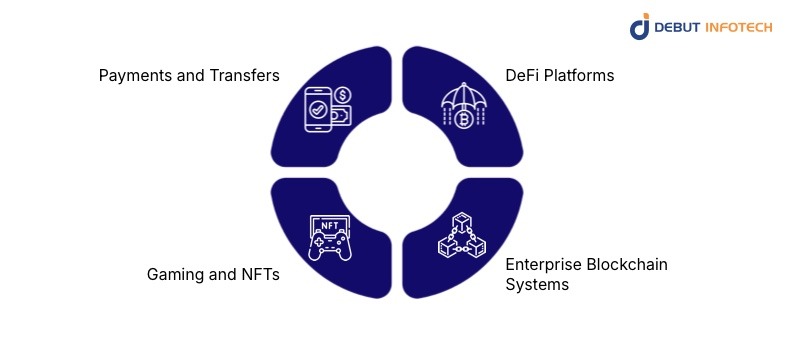
Businesses across industries are increasingly adopting layer 2 scaling solutions to overcome the performance and cost limitations of traditional blockchain networks. These solutions make it possible to support high-volume transactions while maintaining security and reliability.
1. Payments and Transfers
Fast and low-cost transactions make Layer 2 an excellent choice for payment platforms, remittance services, and digital wallets. Businesses can process thousands of transfers quickly, even during peak demand, without exposing users to high transaction fees.
2. DeFi Platforms
Decentralized finance applications rely heavily on speed and cost efficiency. With Layer 2 scaling, activities such as high-frequency trading, lending, borrowing, and yield farming become more accessible. Users can interact with DeFi protocols more frequently without worrying about excessive gas fees.
3. Gaming and NFTs
Blockchain-based games and NFT marketplaces require a high volume of transactions within a short period. Layer 2 enables these platforms to handle in-game actions, NFT minting, and asset transfers smoothly, ensuring users are not priced out by network congestion.
4. Enterprise Blockchain Systems
Enterprises utilize Layer 2 solutions to scale internal workflows, including data sharing, record management, and cross-departmental transactions. These systems maintain strong security and auditability while supporting higher transaction volumes and faster processing.
Because of these advantages, many blockchain consultants now recommend Layer 2 as the default architecture for scalable, business-ready blockchain solutions.
Why Businesses Need Layer 2 Scaling in 2025 and Beyond
As blockchain adoption accelerates, scalability is no longer optional.
Without layer 2 scaling, businesses face:
- Poor user experience
- High operational costs
- Limited growth potential
- Reduced competitiveness
Layer 2 enables:
- Mass adoption
- Global scalability
- Sustainable blockchain infrastructure
For companies building long-term blockchain products, Layer 2 is a strategic requirement.
Challenges in Implementing Layer 2 Scaling
While powerful, layer-2 scaling technology comes with challenges.
Common considerations include:
- Choosing the right Layer 2 architecture
- Integrating with existing smart contracts
- Managing cross-layer communication
- Ensuring user education and onboarding
These challenges are why many organizations rely on experienced blockchain development services rather than building everything in-house.
Role of Blockchain Consultants in Layer 2 Adoption
Implementing a layer 2 scaling solution requires deep technical expertise.
Blockchain consultants help by:
- Evaluating scalability requirements
- Selecting the right Layer 2 framework
- Designing secure architectures
- Ensuring compliance and interoperability
- Reducing implementation risks
For enterprises, this guidance is crucial in avoiding costly mistakes.
How Debut Infotech Helps with Layer 2 Blockchain Scaling
Debut Infotech supports businesses looking to adopt Layer 2 blockchain scaling with confidence. As an experienced Enterprise Blockchain Development Company, Debut Infotech helps organizations design, build, and deploy scalable blockchain systems tailored to real-world needs.
The team provides:
- Layer 2 architecture design
- Integration of rollups, sidechains, and state channels
- Smart contract optimization for Layer 2
- End-to-end blockchain development services
- Support for enterprises looking to hire blockchain developers
By working with Debut Infotech, businesses reduce technical risk, accelerate deployment, and ensure their Layer 2 solutions are secure, scalable, and future-proof.
Future of Layer 2 Scaling Solutions
The future of layer 2 scaling solutions is closely tied to mass blockchain adoption.
Key trends include:
- Improved interoperability between Layer 2 networks
- Better developer tooling
- Enhanced user experience
- Enterprise-grade Layer 2 platforms
- Deeper integration with Layer 1 upgrades
As innovation continues, Layer 2 will remain a cornerstone of scalable blockchain ecosystems.
Conclusion
Scalability has always been one of blockchain’s biggest challenges. Layer 2 scaling addresses this by enhancing transaction speed and reducing costs without compromising security or decentralization. Through smart architectural design and off-chain execution, Layer 2 solutions make blockchain practical for everyday use.
For businesses, adopting layer-2 scaling technology is no longer a technical experiment—it is a strategic move. With the right implementation partner, companies can unlock faster transactions, lower fees, and better user experiences. Debut Infotech helps organizations navigate this transition with expert guidance, reliable development services, and scalable blockchain solutions built for long-term success.
