

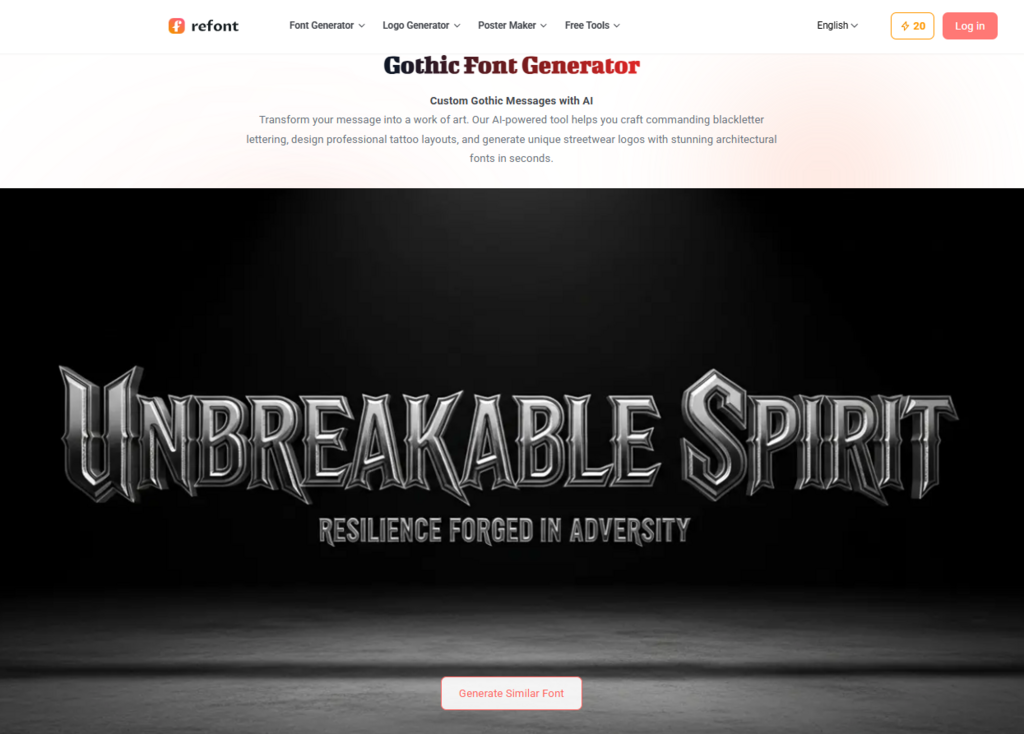
In the world of game design and Tabletop Role-Playing Games (TTRPGs), immersion is the invisible thread that holds the player’s experience together. From the ambient soundtrack to the texture of a digital map, every asset serves a narrative purpose. However, one of the most overlooked elements in world-building is typography. Whether you are an indie developer crafting a dark fantasy interface or a Dungeon Master (DM) creating handouts for your next session, the choice of lettering can either ground the player in your world or shatter the illusion. For those seeking to evoke a sense of ancient history, mystery, or dread, a gothic font generator is no longer just a luxury—it is a vital tool for technical storytelling.
The Psychological Power of Typography in Gaming
Every font carries an emotional weight. In gaming, fonts act as a subtle guide for the player’s subconscious. A clean, modern sans-serif suggests high-tech sci-fi, while a rugged, angular script whispers of forgotten ruins and medieval warfare. This is why many creators struggle with standard “off-the-shelf” fonts. They often feel too polished or too generic, failing to capture the unique “grit” required for high-stakes adventure games.
When a player opens a treasure map or views a character sheet, they shouldn’t just read the words; they should feel the era. By utilizing a gothic font generator, creators can bypass the sterile look of system fonts and generate text that feels like it was inked by a scribe in a candlelit tower. This level of detail increases the perceived value of the game and builds trust with an audience that values authenticity.
Leveling Up Your Game UI with a Gothic Font Generator
Building a User Interface (UI) is a balancing act between aesthetics and functionality. For indie developers, the cost of hiring a custom calligrapher for every menu item is prohibitive. Yet, using the same free fonts seen in a thousand other games leads to “visual fatigue” and a lack of brand identity.
1. Narrative Consistency Across Factions
One of the most effective ways to use a gothic font generator is to differentiate factions within your game. Imagine a world where the “Holy Empire” uses a clean, architectural Rotunda gothic style, while the “Underdark Cult” uses a sharp, distorted Blackletter. This visual shorthand tells the player who they are dealing with before they even finish reading the dialogue.
2. Balancing Legibility and “The Vibe”
A common mistake in RPG design is choosing a font that looks great but is impossible to read at 1080p or on a small mobile screen. Modern generators solve this by allowing for granular adjustments. When you use a high-quality gothic font generator, you can experiment with letter spacing and stroke thickness to ensure that your quest logs remain readable while maintaining their medieval edge.
3. Avoiding “Asset Overlap”
In the indie scene, many developers use the same popular asset packs. This results in games that look remarkably similar. Using a generator ensures that your typography is unique to your project. Since AI-driven generators create variations based on your specific input, the likelihood of your titles looking exactly like a competitor’s is significantly reduced.
Enhancing TTRPG Maps and Handouts
For Dungeon Masters, the goal is “The Reveal.” Handing a physical or digital prop to your players is a highlight of any session. If that prop uses a font clearly recognizable as “Microsoft Word Art,” the tension evaporates.
The Cartographer’s Secret
Maps are the most used assets in any RPG. The labeling of a map should feel like part of the terrain. By using a gothic font generator for major locations—like “The Forbidden Peaks” or “The Cathedral of Bones”—you create a hierarchy of information. Smaller villages might use a simpler script, but your primary landmarks deserve the soaring, dramatic lines of a Gothic Blackletter.
Character Sheets and Narrative Flavour
Character sheets are the player’s primary interface with their persona. Customizing headers or specific “Legacy Items” with unique Gothic lettering makes the character feel more “owned” by the player. It transforms a list of statistics into a historical document.
How to Optimize Gothic Lettering for Digital Screens
Digital displays present unique challenges for complex fonts. Gothic styles are famous for their “verticality” and “thick-to-thin” transitions, which can sometimes lead to pixelation on lower-resolution screens. Here is a professional workflow for ensuring your generated text remains sharp:
- The 20% Negative Space Rule: Always ensure there is enough breathing room between the complex vertical strokes of a Gothic font. If the letters are too tight, they will blur into a “black smudge” during fast-paced gameplay or when viewed on a phone.
- High Contrast is King: Gothic typography thrives on contrast. For Game UI, use bright parchment-colored text on a dark background, or deep ink-black text on a light, textured background.
- Scale Testing: Before finalizing your UI, generate your text in three sizes. If the Gothic elements disappear at the smallest size, consider using the generator to create a “Simplified Gothic” version for sub-menus and a “Grand Gothic” version for titles.
For Streamers: Branding Your Digital Dungeon
The rise of “Actual Play” shows on Twitch and YouTube has created a new niche for typography. Streamers need “overlays” that match the tone of their campaign. A generic overlay looks amateurish. A customized Gothic overlay—used for “Starting Soon” screens, “New Follower” alerts, and “Quest Trackers”—creates a professional, cinematic atmosphere that attracts more viewers.
By integrating a gothic font generator into your OBS (Open Broadcaster Software) setup, you can create a cohesive brand. Your social media headers, your video thumbnails, and your live stream text should all share the same “visual soul.” This consistency is a key driver of growth in the competitive streaming market of 2026.
Conclusion: The Final Word in World-Building
In the modern digital landscape, the difference between a “good” game and a “great” game often lies in the polish. Typography is the bridge between the player and the narrative. By embracing the power of a gothic font generator, you are not just choosing a style; you are choosing to respect the history and the atmosphere of your story.
Don’t let your UI be an afterthought. Whether you are coding the next indie hit, preparing for a Friday night D&D session, or building a gaming brand on social media, remember that every stroke matters. Elevate your project from a simple game to a living, breathing world where even the letters tell a story.
