

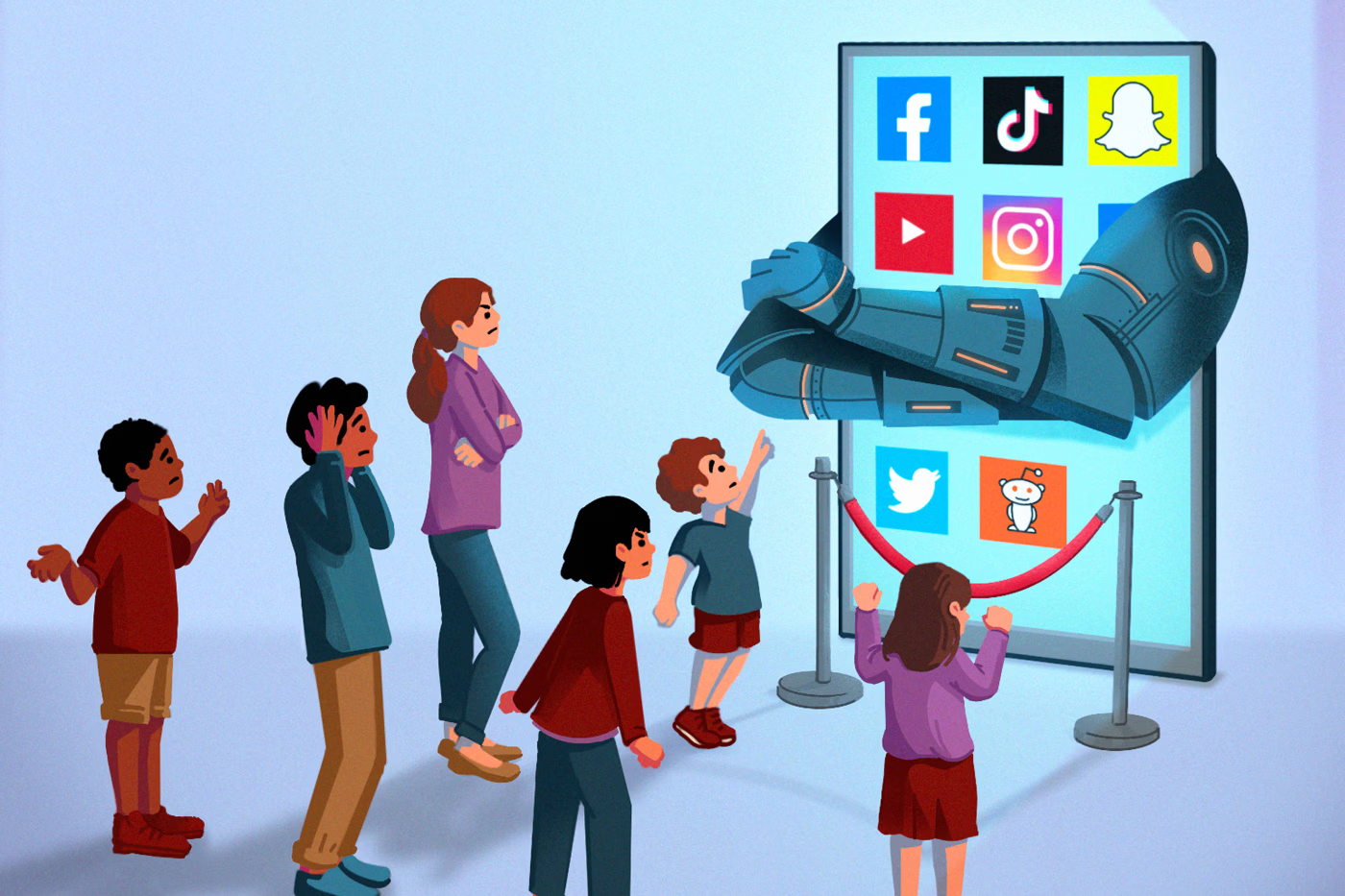
Teenagers are all over the social media platforms. But, are teen years the right time for their presence on a network so vast? It is no easy question both to make and to answer. Yet, parents and different governments find themselves on the same page when it comes to it all the same. One of the first countries to make a concrete move was Australia. The land down under has installed a ban on social media platforms for all teens under the age of 16. The aim is to keep the younglings as safe as possible on the internet.
It’s been a while since the idea was flaunted around but now the ban has become a reality for young people in Australia. Kids under 16 are not allowed to create and use profiles on major social media platforms in Australia, with a few exceptions not falling under the ban. The restrictions are underway but their full extent is yet to be seen both in Australia and in other parts of the world where a similar idea is close to becoming a reality.
Why did Australia Take Such Measures?
For one, Australia has been putting work forth in this domain for some time now. The results we’re seeing now are all done under the wing of their eSafety Commissioner who is tasked with protecting Australians of all ages online. The government of this country is more than aware that there are a lot of pressures and risks that users face every day while browsing the web and using social media platforms. The regulatory body discovered that at times social media platforms create features both accidentally and intentionally that aim to keep the users engaged for prolonged periods.
With the ban having noble and honest intentions, the Australian government expects them to be fully adopted down the road, and to have a positive influence on the entire society. The aim is not to forbid the teens to have the accounts, but just to delay their creation in order for kids to have more time to be kids in their most fragile years. Considering that Australia is one of the countries where online gambling is a popular activity, keeping teens from social media platforms where gambling is advertised is smart decisions. While grownups can take accountability for their actions, and fully enjoy a few rounds of plinko, teenagers should really wait until they are fully grown to start exploring all the perks of the world wide web, social media platforms, and everything that comes with it.
What Social Media Platforms Fall Under The Ban?
It is not just social media platforms under the general representation but also a couple of streaming services too. The ban started on December 10th, and it includes outlets such as Facebook, Instagram, Snapchat, Threads, TikTok, X (Twitter), YouTube, Reddit, Kick, and Twitch. The Australian government is expecting these platforms to provide aid and take reasonable steps in finding the existing accounts created and used by teenagers under the age of 16. These accounts are required to be deactivated and removed from the said platforms. Furthermore, they need to do a thorough job on not allowing teens to create new accounts from December 10th onward.
While most major social media platforms have been covered under this ban, many outlets do not fall under the jurisdiction of the said ban. Those that have been omitted include WhatsApp, YouTube Kids, Steam, Discord, Google Classroom, LEGO Play, Messenger, Roblox, and Pinterest. When you think about it, if one person needs to be fully grown to open an account on let’s say Stake.com, which is a reputable online casino and sportsbook, similar restrictions should also be put on social media platforms, and Australia is taking this story in the right direction.
The Decision Behind Including/Excluding Platforms
The decision is made by the higher ups in the Australian government. It all comes down to the purpose of the named website. The main criteria used for determining which platforms should be banned were:
- Is the platform used for interaction between one or more users.
- Does it have restrictions on interaction between one user and the rest of members.
- Whether it allows users to share audio/video/photo or other type of material.
As you can notice the platforms that have been omitted from the ban are mostly used for pure messaging, sending emails, voice or video calling. Other platforms that are not included are deemed as being aimed at supporting education or health, and/or professional development. Platforms that are predominantly being used by schools or educational institutions also do not fall under the ban. What everyone needs to know is that the list of platforms under the ban is not final. Some platforms, if they change their direction and initial purpose, might be omitted from the list while others that are not currently on it could be added if their purpose changes. Of course, public content from social media that can be seen without having an account or being logged into one will still be available to teens.
What Turning 16 Means for Teenagers and Social Media Platforms?
For all teens who were present on social media platforms the steps to get removed were laid out in a simple manner. In a cooperation with the online platforms they’ve been using they’ve been given instructions on how to download their information. Once that was done, the accounts created before turning 16 were deactivated and removed.
Some platforms provided the option of deactivating and freezing the accounts which could be later activated upon meeting the age requirement. While this is a fair option too, the Australian government warned the users not to rely on this option, but to remove and later create new accounts when age allows it. The wise thing advised to teens was to download and remove everything tied to their now illegal profiles on social media platforms including photos, chats, posts and connections, for which actions the government provided more than enough time leading up to 10th of December.
As far as chatting goes, eSafety advised teens to save their chats from social media platforms that were banned and transfer them to one of the apps that have been omitted from the list if they find any of the data worth preserving, valuable, or are simply fond of memories.
The Way the Ban is Being Enforced
The important thing to know is that there is no punishment for the kids who break the rules of the latest ban. As far as parents go, they will also not be restricted as far as penalties go or their business careers. The focus will be on social media companies to act responsible and take all the necessary steps in order to keep teens under 16 away from their platform. Companies that fail to comply and breach the rules on more occasions will be subjected to fines that could reach up to A$49.5m (US$32m, £25m).
The Australian government and their eSafety offices have taken a stance that parents and their kids cannot be held responsible for age certification and that the social media platforms need to have multiple age assurance tools at hand to prevent opening of new accounts for the kids aged under the 16 year old ban. The suggestions provided by the government are inclusion of government IDs as the first step of defence, voice and face recognition software, age interference techniques. The sign that none of this is an impossible task is Meta, under whose wing we have Facebook, Threads, and Instagram, started deleting accounts as early as on December 4th, and so far are doing a fine job.
The UKs Approach on Social Media Platforms Ban
The UK has brought forth a legislation called the Online Safety Act which is a document upon which platforms such as TikTok, YouTube, and Facebook are regulated as far as their user base and general operations go. The rules in the UK are aimed at protecting citizens younger than 18 from harmful online content which at times can be found on social media platforms. The focus was put on hate speech and violence and has been in power since July of 2025. Also, all kinds of measures have been put online for kids of all ages to be secluded from all kinds of harmful content which includes adult films, suicide related issues, and online posts that could potentially encourage self harm.
As far as technology used to help the Online Safety Act work as intended the UK government uses photo ID, facial scans, and credit cards checks among other methods to verify the users real age upon trying to create an social media account.
How’s The World Reacting?
Europe is leading the race in limiting the use of social media for teenagers as one could have guessed. While laws are being put in place, in most counties they are nowhere close to being enforced. One of the countries that wants to take a stricter approach is France, where the government wants to ban social media for all teens under the age of 15. In 2023 a law passed that only allows the creation of given platforms to kids under 15 with their parental consent. Another country on the same path is Denmark where the goal is also to ban social media for everyone not age over 15. Denmark wants to make the rules a bit more loose where parents could allow their kids to hold accounts from the age of 13, while the overall age where kids could gain access to these platforms would be from 13-16.
While Denmark is taking things slowly and steadily their Prime Minister Mette Frederiksen was harsh in describing modern times stating that things such as smartphones and social media platforms are stealing childhood from the younger generations. Other places such as Germany and Spain are also doing their fair share of work. In Germany teenagers aged 13-16 can only use social media platforms under the supervision of their parents. At the same time, the Spanish government has drafted a law that would raise the age necessary to open a social media account from 14 to 16.
The same work is being put underway in the USA too, but as it is usually the case, the situation differs from state to state. Those that have taken the biggest leaps forward have legislated that teenagers need to be at least 16 in order to open their social media platforms accounts.
Best Advice For Parents
In the end it all starts at home. Parents need to introduce their children to social media platforms in a way they can understand. It is all about having an open conversation on a regular basis with all the pros and cons always available on hand. The best approach is to have a dialogue rather than to give the younglings a lecture. A lesson is best learned when it’s coming from the right place backed with arguments. While younger generations are exposed to new technologies early on and one could argue they handle some matters online better than the grownups, the age of 12 or 13 is still too early for them to be exposed to everything that runs through social media platforms.
While parents and governments are all pro ban, the big companies behind these social media networks such as Google and Meta deem the ban too harsh, extreme and claim that it was implemented too fast. While they have their users’ safety and well being at the forefront of their operation , due to millions and millions of daily users, it is becoming harder to comply with everything on such a short notice. With this battle just starting, we ought to hear more about it in the coming months and years, all up until the moment all nations are on the same page, big companies complied, and end users satisfied. And that day is coming sooner rather than later.
