

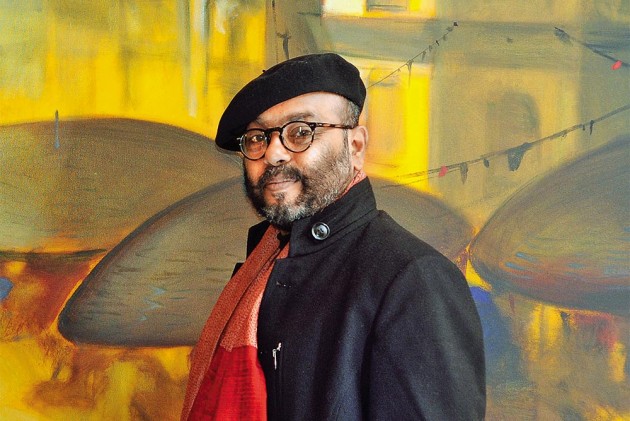
Introduction: The Visionary Voice of Indian Art
Paresh Maity sees India’s land and spirit shift and also sets those shifts down with paint. He handles color without strain – he stores feeling in each picture – he works small in watercolor or vast in steel and brick with equal ease. Because of that range, buyers who look for new Indian art treat his signature as proof of skill but also honesty
Early Life and Influences
Paresh Maity was born in 1965 in Tamluk, a small town in West Bengal. His life in art began simply. Fields and temples lay all around him and that daily scenery fastened him to nature and to bright color. He drew but also painted so often that he later entered the Government College of Art & Craft in Kolkata – after that he earned a postgraduate degree at the College of Art in New Delhi. Many artists of his time looked toward Western abstraction – yet Maity listened to local color, village festivals and everyday feeling. The plain sights of rural Bengal as well as the packed energy of the city both appear in his pictures – viewers anywhere recognize the scene – yet every part stays rooted in India.
The Evolution of His Artistic Style
Over the decades Paresh Maity changed his way of working many times. In his first years he painted landscapes with watercolour and the paper held soft light and weather in a way that seemed effortless. He painted the rivers and stone steps of Bengal but also the dry stretches of Rajasthan and with only a few brush marks he let the viewer feel the place.
Later he set watercolour aside as well as picked up oil paint, acrylic, clay, metal and whatever else a sculpture or an installation demanded. The new pictures shouted with strong colour or moved with busy shapes – they spoke of lovers, families, street festivals and the quiet storms inside the mind. That shift carried him from a young painter known in one corner of India to an artist shown also read about across the world.
Today, a Maity canvas is instantly recognisable—his blazing reds and yellows, rhythmic curves, and spontaneous brushwork create an intense visual energy, as if the entire painting were created in a single breath. His art doesn’t remain on the surface; it draws the viewer into a deep emotional dialogue, further solidifying his influence on Indian contemporary art for sale in both national and international markets.
Themes that Define Paresh Maity’s Art
Paresh Maity paints to praise being alive, the roads he has taken and the people he meets. He shows mud lanes and steel towers, temple silence and drum-beating fairs.
- Nature and Landscape – Again but also again he sets down water, a boat and sky – the watcher feels days slide forward as well as senses that people belong to earth and sky.
- Human Emotion – He paints men and women whose names he never tells. Their still looks speak of aloneness, of love also of the ache to be near someone – yet the feeling stays quiet, almost like a hush.
- Travel and Memory – Mile after mile across India and far beyond, Maity gathers shapes, smells next to tales. You will spot the smoke of Varanasi and the water glitter of Venice in the same frame.
- Color as Language – In the end, color itself tells the story. A slab of midnight indigo or a thrust of scarlet carries its own mood – the cloth becomes a song you hear with your eyes.
The Global Appeal of Indian Contemporary Art for Sale
In the past five years, people have started to buy modern Indian art in New York, London, Singapore besides Dubai and the sales happen fast. Paresh Maity’s pictures stand out in that rush. Buyers want them because the pictures look striking and because the images carry clear memories of Indian life. Christie’s and Sotheby’s have sold his canvases and large city galleries keep giving him shows. Indian art now turns into something investors treat like gold or shares or Maity gives them exactly the mix they seek – well known Indian stories painted in a style that looks fresh this day. A buyer who loves old culture and a buyer who wants the newest trend both feel satisfied with the same canvas.
Major Exhibitions and Recognitions
Paresh Maity has worked for more than forty years and has staged over eighty one man shows in India and overseas. Curators have hung his pictures in leading art venues in London, Hong Kong, Singapore besides New York.
The Government of India gave him the Padma Shri in 2014, a top civilian award, for the mark he has left on art. He paints and he also builds big objects for public places – the most famous is a wall picture seventy two feet long inside Terminal 1D of Indira Gandhi International Airport in New Delhi but also that picture belongs to the country’s largest indoor murals.
Museums and galleries show his work as well as his pictures sit in streets, stations and airports – ordinary people meet contemporary Indian art as they go about their day.
The Emotional Universe of Paresh Maity
Maity’s strongest gift is that he paints clear feelings everyone understands. A river wrapped in fog feels calm – a face caught in silence feels private. The way he places light, color and rhythm lets a person hear a silent tune or read a wordless poem. Jayasri Burman, his wife, is a well known painter – she lives in the same circle of ideas and images. Together they mix two separate ways of seeing and the blend feeds the larger stream of Indian art this day.
Beyond the Canvas: Experimentation and Innovation
Paresh Maity works with more than paint. He builds metal and clay objects, sets rooms of lights and mirrors, takes pictures and glues odds but also ends together, always looking for a fresh way to show what he sees. He changes his methods as years pass – teenagers who visit a show today still feel the work speaks their language.When he fills a whole hall with rice fields built from salt or boats the size of trucks, the size itself tells part of the tale. When he paints a single face, he studies the eyes and bones until they give up private thoughts. For him, is not a stone monument set in place – it is a long conversation between the questions he keeps asking as well as the objects that arrive as answers.
Legacy and Influence
Paresh Maity is now one of the best known artists in modern Indian art. His work encourages many young artists to respect old methods and to try new ones. He shows that Indian art stays modern while it keeps its own culture – he does this by mixing what belongs at home with what belongs everywhere.
More people now want his pictures and his ideas travel further. Buyers treat his canvases as more than items that gain price – they see them as sheets that hold India’s living imagination.
At a time when art moves easily from country to country, Paresh Maity stands for an India that trusts its own voice and speaks to the world.
Conclusion:
Paresh Maity’s art keeps moving the way the rivers did when he first painted them in watercolor. It changes shape picks up new ideas and spreads further. His pictures hold the pleasure, the secrets and the bright energy of being alive. Every canvas seems to breathe – it shows India’s hues and its people, filtered through the gaze of a man who knows his craft inside out. Anyone who looks for contemporary Indian paintings and wishes to buy one will find that a Maity canvas gives more than a pleasant sight. It ties the owner to the living tale of today’s Indian art, a tale that Maity keeps telling with each stroke of his brush.
