

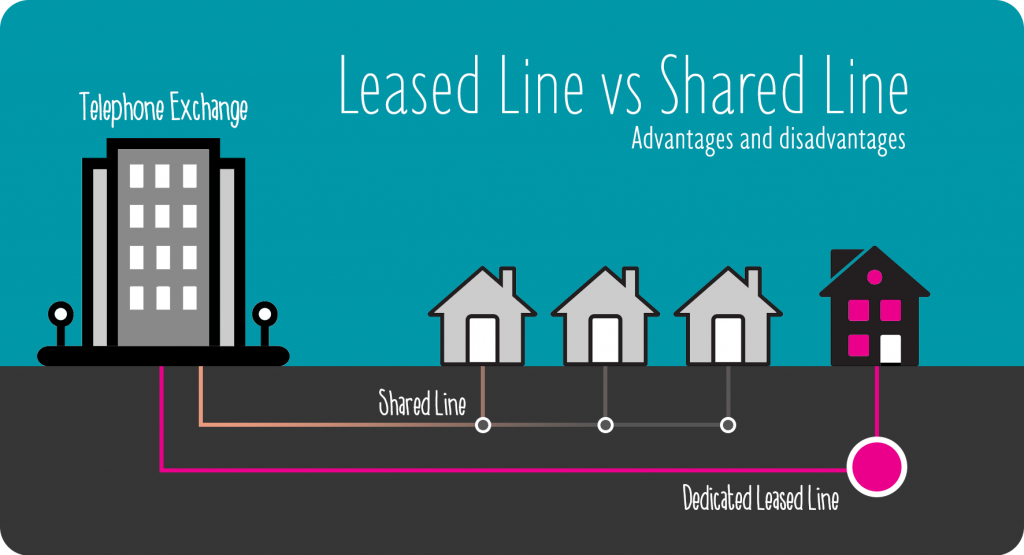
A leased internet connection gives your business a dedicated internet path that stays stable throughout the day. It works like a private route between your office and the provider. The speed stays consistent because no one else shares the bandwidth. This makes performance predictable. It also offers steady upload and download rates that help cloud apps run smoothly. Teams handle communication tools better. They move large files faster and work with fewer interruptions. It becomes a strong choice for daily digital operations.
Broadband works as a shared internet service mainly used by homes and small teams. It offers decent speed, but the performance shifts with traffic. When many users come online, the connection slows down quickly. It becomes harder to depend on. It handles basic browsing well. But it struggles with real-time tasks, video calls, and heavy workloads.
Business Benefits of Leased Line over Broadband
A broadband connection gives businesses a direct route to stable performance. It removes the fluctuations seen in shared networks and supports demanding workloads. Below is a simple comparison of how leased line services deliver stronger outcomes.
| Benefit | Leased Line | Broadband |
| 1. Bandwidth Consistency | Bandwidth remains constant throughout the day because the line is dedicated to one business. No impact from neighbourhood traffic. | Bandwidth fluctuates based on the number of users connected in the locality. Peak-hour congestion reduces speeds. |
| 2. Symmetrical Speeds | Upload and download speeds are equal, supporting video calls, backups, cloud sync, and data-heavy workflows. Ideal for enterprise tools. | Download speeds are higher, but upload speeds are lower, affecting video conferencing, file sharing, and cloud operations. |
| 3. Service Level Agreement (SLA) | Comes with strict SLAs promising uptime, response time, fault repair, and performance guarantees. Ensures predictable operations. | Usually has no SLA or only a basic one. Works on best-effort terms, so outages or slow speeds may take longer to resolve. |
| 4. Latency | Low latency due to an uncontended route. Suitable for real-time tools, trading systems, voice calls, and remote operations. | Higher latency during network load. Can disrupt real-time interactions like VoIP and online meetings. |
| 5. Security | Operates on a private, dedicated circuit with reduced exposure to external threats. Supports encrypted transfers and sensitive workloads. | Operates on a shared public network. Higher risk of interception, unauthorised access, and external threats. |
| 6. Scalability | Supports quick upgrades with minimal disruption. Bandwidth can scale as business needs grow. | Limited upgrade flexibility. May require shifting plans, new infrastructure, or may not support higher bandwidth requirements. |
| 7. Reliability | Stable and predictable performance, even during heavy business use. No slowdowns during peak hours. | Reliability depends on shared user load. Performance drops during peak periods and high-traffic days. |
| 8. Data Transfer Efficiency | Efficient for large file transfers, offsite backups, and enterprise applications. Faster and more stable throughput. | File transfers slow down during congestion. Cloud syncs may lag or fail during high-usage periods. |
| 9. Cloud and SaaS Performance | Strong support for cloud apps, remote access, centralised servers, and backup tasks. Handles continuous sync without lag. | May suffer delays while accessing cloud tools, especially when multiple users run heavy applications. |
| 10. Voice and Collaboration Quality | Offers clear and stable VoIP calls, video meetings, and collaboration sessions. Minimal jitter and packet loss. | Video calls may freeze, drop, or distort. Voice quality dips during peak usage due to unstable upload speeds. |
A dedicated leased line broadband connection supports several sectors that depend on reliable uptime and strong performance.
Choosing the Best Leased Line?
Choosing the right leased internet connection depends on your business size, daily workloads, and peak usage patterns. Start by checking how many users depend on cloud apps and real-time tools. Look at the provider’s uptime promise and how fast they respond to issues. Brands like Spectra support dedicated bandwidth that stays stable even during heavy use. Their strong SLAs help keep operations smooth. You should also check upgrade flexibility because needs change fast. Spectra adds value here, too, with proactive monitoring and quicker fixes. This makes it a reliable choice for companies handling sensitive and continuous workloads.
Conclusion
A leased line broadband setup gives businesses steady and predictable connectivity that stays secure and stable. It removes the usual instability you see in shared networks. It also supports real-time tools without slowing down. Companies that depend on cloud apps, communication platforms, and large data movement feel the difference quickly. The connection stays consistent even during busy hours, which keeps daily tasks smooth. As operations move deeper into digital workflows, choosing a reliable leased line becomes a practical investment. It improves performance, protects uptime, and helps teams work with fewer interruptions every single day.
