

Refrigeration is the most critical infrastructure in any commercial kitchen. It runs 24 hours a day, 7 days a week. It protects your food safety compliance. And when it fails — which it will, eventually — the consequences range from an inconvenient service to a full loss of stock and a forced shutdown.
Yet commercial refrigeration is consistently one of the most under-researched purchasing decisions new restaurant owners make. They agonise over their range, their oven, their fit-out aesthetic — and then buy the first fridge that fits their budget without understanding what they’re actually buying.
This guide changes that. Here’s everything you need to know to make a smart, informed decision on commercial refrigeration for your operation.
1. Commercial Refrigeration Is Not Domestic Refrigeration
This sounds obvious, but it’s a mistake that costs operators dearly. Domestic fridges — even large, high-end ones — are not built for commercial kitchen conditions. They’re not rated for continuous heavy use, they can’t cope with the ambient heat generated by cooking equipment, and they don’t meet the temperature recovery standards required under Australian food safety law.
Commercial refrigeration units are engineered for:
- Continuous operation. Commercial compressors are built to run around the clock without degrading the way domestic units do under sustained load.
- High ambient temperature tolerance. Kitchen environments regularly reach 35–40°C. Commercial units maintain safe food temperatures even in these conditions.
- Rapid temperature recovery. Every time a door opens, temperature rises inside the cabinet. Commercial units recover quickly; domestic units often can’t keep pace with a busy kitchen.
- Food safety compliance. Australian Standard AS 4674 and FSANZ Food Safety Standards set requirements for temperature maintenance that only commercial units reliably meet.
Using domestic refrigeration in a commercial kitchen is not just a performance issue — it’s a compliance risk.
2. The Main Types of Commercial Refrigeration — and When to Use Each
Commercial refrigeration covers a wide range of product types. Understanding the differences helps you build the right setup for your operation.
Upright Reach-In Refrigerators
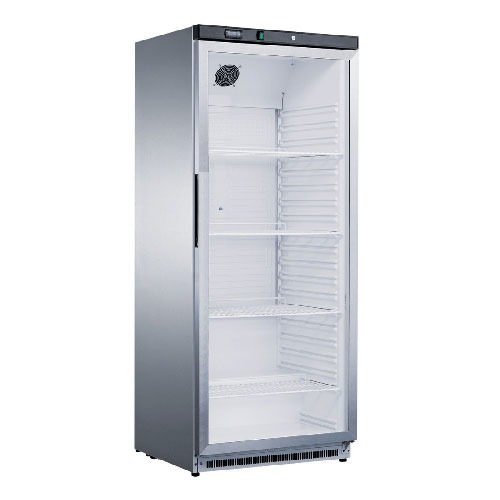
The workhorse of most commercial kitchens. Upright reach-in units offer large storage capacity in a relatively compact footprint and are available in single, double, and triple door configurations. Used for storing bulk prep ingredients, dairy, proteins, and beverages.
What to look for: self-closing doors with magnetic gaskets, fan-forced cooling for even temperature distribution, and a digital temperature display with alarm.
Underbench Refrigerators
Designed to sit beneath a prep bench or cooking line, underbench units keep service ingredients within arm’s reach during a busy service. Available with drawers or doors, and often combined with a stainless top surface to double as a prep area.
Essential for any operation doing line cooking — having cold ingredients at the point of use reduces ticket times and minimises food safety risk from ingredients sitting at room temperature.
Chest Freezers and Upright Freezers
For frozen stock storage. Chest freezers offer better energy efficiency for bulk storage; upright freezers are easier to organise and access in a busy kitchen environment. Most operations need both — a chest freezer for bulk storage and an upright reach-in for daily access.
Display Refrigerators
For cafes, bakeries, and delis that need to display chilled product to customers. Available in countertop, upright, and open-front configurations. Temperature management is critical here — displayed product must remain within safe temperature ranges while being visually accessible.
Commercial Ice Machines
A separate category, but essential for bars, restaurants, and any operation serving beverages. Commercial ice machines produce ice continuously and store it in an insulated bin. Available in modular, self-contained, and undercounter configurations. Match your ice machine output (measured in kg per 24 hours) to your peak daily demand.
3. Key Specifications to Understand Before You Buy
When comparing commercial refrigeration units, these are the specifications that matter most:
- Temperature range. Standard refrigerators operate at 1–4°C. Check the unit’s rated operating range and ensure it can maintain this in your kitchen’s ambient temperature.
- Capacity (litres). Don’t buy to your current needs — buy to your projected needs at full capacity. An undersized fridge working at maximum load will fail prematurely.
- Energy star rating. Refrigeration is your highest continuous energy cost. A one-star improvement in energy rating can save hundreds of dollars per unit per year.
- Refrigerant type. Modern commercial units use R290 (propane) or R134a refrigerants with low global warming potential. Avoid older units using R22 — it’s been phased out in Australia and servicing is expensive.
- Condenser location. Top-mounted condensers are easier to clean and less affected by floor-level heat. Bottom-mounted condensers are more accessible but require regular cleaning to prevent grease buildup reducing efficiency.
- Warranty and service coverage. In Australia, look for a minimum 2-year parts and labour warranty, and confirm the manufacturer has a national service network.
4. The True Cost of Commercial Refrigeration
Purchase price is only part of the story. When evaluating commercial refrigeration, consider the total cost of ownership over the unit’s expected lifespan (typically 10–15 years for a quality commercial unit).
- Energy costs. A commercial fridge running 24/7 can consume 2,000–4,000 kWh per year. At current Australian commercial electricity rates, that’s $600–$1,200 annually per unit. Multiply across your full refrigeration setup and energy efficiency becomes a major financial factor.
- Maintenance costs. Preventive maintenance (cleaning condensers, checking door seals, monitoring temperatures) extends unit life and prevents costly emergency callouts.
- Downtime costs. A refrigeration failure mid-service can mean losing an entire stock of protein, produce, and dairy. Factor in the cost of replacement stock when evaluating whether to invest in higher-quality units with better reliability track records.
The premium between a budget commercial fridge and a quality unit from a reputable brand is typically recovered within 2–3 years through energy savings and reduced maintenance alone.
5. Brands Worth Knowing in the Australian Market
Not all commercial refrigeration brands offer equal quality, reliability, or service support in Australia. These are the brands with established track records and national service networks:
- Hoshizaki. Japanese manufacturer with a strong reputation for reliability and efficiency, particularly in refrigeration and ice machines. Well-supported in Australia.
- Bromic. Australian brand with strong local service support. Good value across the refrigeration and display cabinet range.
- FED (Federal Hospitality Equipment). Popular across the Australian hospitality industry for offering commercial-grade quality at competitive price points.
- Scotsman. The leading brand for commercial ice machines globally, with strong availability and service support in Australia.
These brands and others are available through specialist Australian suppliers. Commercial refrigeration equipment from these manufacturers is stocked by established suppliers like Snowmaster, who have been equipping Australian kitchens since 1945 and can advise on the right specification for your operation.
6. How to Buy Smart: New, Secondhand, or Financed
Commercial refrigeration is one area where we strongly recommend buying new. Here’s why:
- Secondhand units often have degraded compressors, worn door seals, and outdated refrigerants that are expensive to service
- A new unit comes with full warranty coverage — critical for equipment that runs continuously
- Modern units are significantly more energy-efficient than models made even 5 years ago
- New units have current refrigerant compliance, avoiding future service complications
If upfront cost is a concern, financing is a smart alternative to buying secondhand. Equipment finance options including chattel mortgages, equipment leases, and rent-to-buy programs (through providers like Silver Chef) allow you to access new, warrantied equipment without draining your working capital.
7. Maintenance: Protecting Your Investment
The lifespan of commercial refrigeration is directly tied to how well it’s maintained. A quality unit that’s poorly maintained will fail years before its time; a well-maintained unit will run reliably for 15+ years.
Minimum maintenance schedule:
- Weekly: check and clean door gaskets; verify temperature readings against a calibrated thermometer
- Monthly: clean the condenser coils (top or bottom mounted); check for unusual noises from the compressor
- Annually: professional service check including refrigerant pressure, electrical connections, and thermostat calibration
Most breakdowns that result in emergency callouts are preventable with basic regular maintenance. Build a maintenance schedule into your kitchen operations from day one.
Final Thoughts
Commercial refrigeration is not the most glamorous purchase you’ll make for your kitchen. But it’s arguably the most important. Get it right — buy commercial-grade from reputable brands, specify correctly for your volume, maintain it properly, and partner with a supplier who can support you with service — and it will be the most reliable workhorse in your operation.
Get it wrong, and you’ll be reminded of that decision every time your compressor struggles on a hot service night.
Anchor text: “commercial refrigeration equipment” | Target: snowmaster.com.au/commercial-ice-makers | ~1,500 words
