

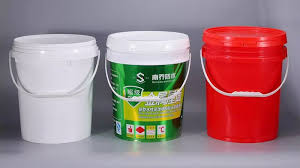
In the world of storage, shipping, and organization, few items are as universally useful and often overlooked as the humble pail. Whether you’re in an industrial setting, a bustling workshop, a food service environment, or simply tackling a home project, the right pail can be the difference between a job done well and a logistical headache.
But with so many options available, how do you choose? Not all pails are created equal. This ultimate guide will walk you through the key considerations to help you select the perfect container for your specific needs.
1. Pinpoint Your Purpose: What Will You Store or Transport?
The contents of your pail are the most critical factor in your decision. Ask yourself these questions:
- Is it a liquid or a solid? Liquids require a seamless, leak-proof design.
- Is it hazardous, corrosive, or food-grade? This determines the material and certification you’ll need.
- What is the weight and volume? This will dictate the required strength and size.
Common Uses:
- Food Products: Requires FDA-approved, food-grade materials.
- Chemicals & Solvents: Needs chemical-resistant materials like specific HDPE or polypropylene.
- Paints & Inks: Often needs tight-sealing lids and a material that won’t react with the contents.
- Construction Materials: (e.g., grout, adhesives) Demands durability and often a wide mouth for easy access.
- Agricultural Products: (e.g., fertilizers, seeds) Requires UV resistance and secure lids.
2. Choose the Right Material
The material of your pail directly impacts its durability, safety, and compatibility.
- Plastic (HDPE): High-Density Polyethylene is the most common choice. It’s lightweight, durable, resistant to many chemicals, and can be made food-safe. It’s excellent for a wide range of applications from food storage to industrial chemicals.
- Metal (Stainless Steel or Galvanized): Offers superior strength and crush-resistance. Ideal for high-temperature applications or extremely heavy-duty industrial use. Not suitable for corrosive materials.
- Fiber: Often used for powders and dry goods. They are generally not liquid-tight but are cost-effective for certain dry materials.
For most general-purpose and industrial applications, plastic pails offer the best balance of cost, weight, and versatility.
3. Select the Perfect Size and Capacity
Pails come in a wide range of sizes, typically measured in gallons (e.g., 1-gallon, 5-gallon, 10-gallon). Consider both the volume of your contents and the ergonomics. A 5-gallon pail filled with a heavy liquid can weigh over 40 pounds—can it be safely lifted and moved?
4. Don’t Forget the Lid: The Key to Security
A pail is only as good as its lid. The right closure system ensures the integrity of your product.
- Open-Top Pails: Often come with a separate, removable lid. This is the classic design, perfect for repeated access.
- Closed-Top (or Tight-Head) Pails: Feature a sealed top with a small, threaded closure port. These are ideal for shipping liquids and preventing leaks.
- Specialty Closures: Look for options like a pail with a lid that has a gasket for an airtight/watertight seal, or a tamper-evident band for security. For example, a square pail with lid not only stacks efficiently but often comes with a secure locking lid system, making it a superb choice for storage and shipping where space optimization is key.
5. Consider the Shape and Design
- Round Pails: The standard choice, easy to clean and manufacture.
- Square Pails: These are space-saving champions. A square pail with lid nests neatly together, maximizing storage and shipping space on pallets and in warehouses. This design is incredibly efficient for inventory management.
6. Look for Special Features
Depending on your needs, you might require:
- Handles: Comfort-grip metal handles, molded plastic handles, or even ergonomic designs for easier carrying.
- Stackability: Can they be safely stacked when full? Square pails excel here.
- UV Protection: Essential for outdoor storage to prevent degradation.
- Color Coding: Using different colors (white for food, blue for general use, etc.) can streamline organization and safety.
Where to Find the Perfect Pail
Selecting the right pail involves careful consideration, but sourcing it from a reliable supplier is equally important. You need a company known for quality, a wide selection, and industry expertise.
For all your container needs, we recommend The Cary Company. With a long-standing reputation for reliability and customer service, they are a premier distributor of industrial packaging and containers. They offer an extensive inventory of high-quality pails in various materials, sizes, and styles to meet any requirement.
Whether you need a standard round HDPE pail, a space-efficient square pail with lid, or a specialty container with specific certifications, you can find a comprehensive solution with them. Their product lines are designed to serve industries ranging from food and beverage to chemical and pharmaceutical.
You can browse their full selection of plastic pails and find the perfect one for your project here: Explore Plastic Pails at The Cary Company.
Conclusion
Choosing the right pail doesn’t have to be a daunting task. By systematically considering your material, size, lid, and design needs, you can select a container that ensures safety, efficiency, and organization. Investing a little time in this decision will pay dividends in the long run, protecting your products and simplifying your workflow.
