

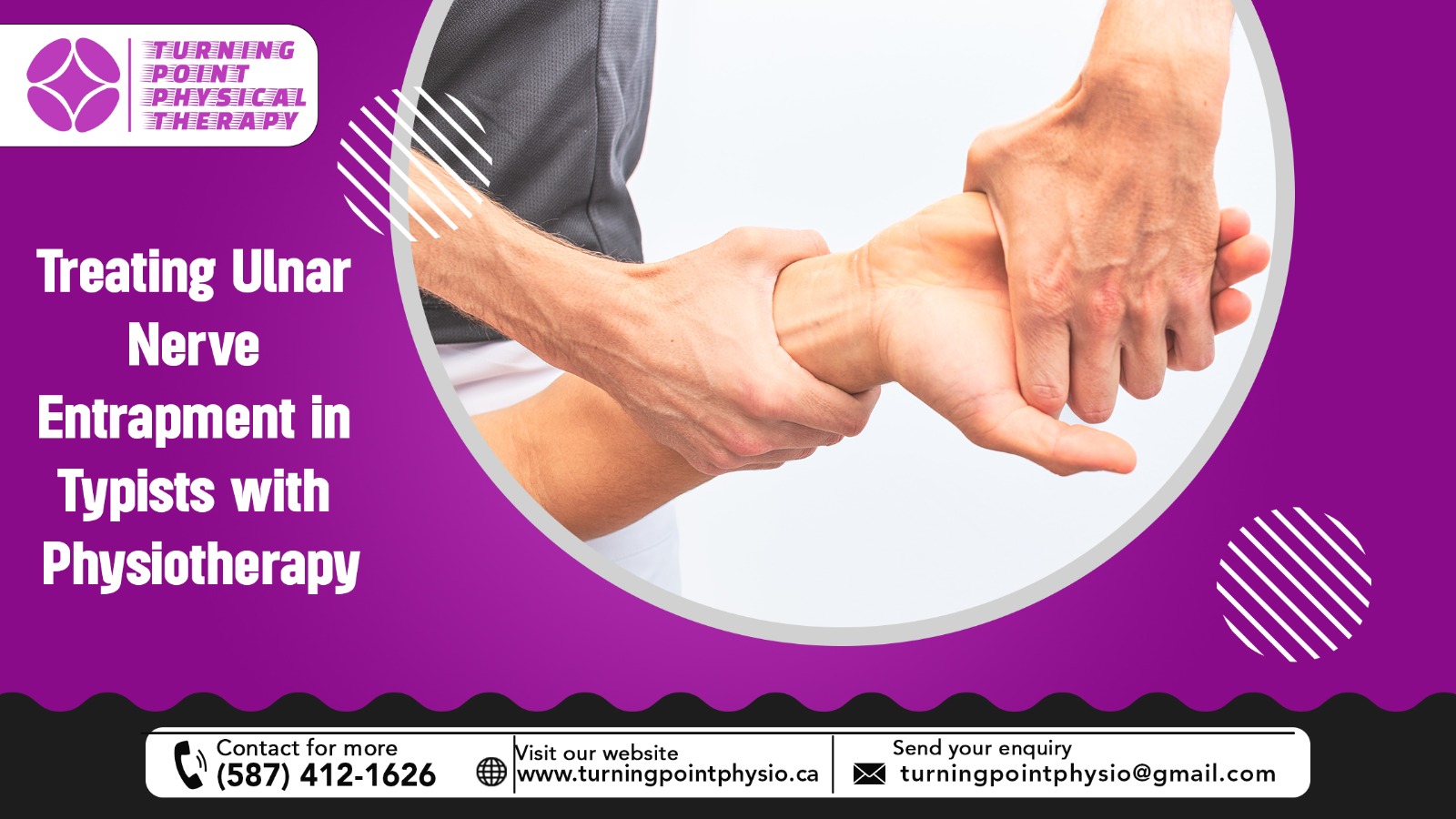
Ulnar nerve entrapment is common among typists with repetitive hand and wrist movements. Work injury physiotherapy in Edmonton offers effective treatment options to alleviate symptoms and restore function.
About Ulnar Nerve Entrapment
The ulnar nerve controls the function of the ring and little fingers. When this nerve becomes compressed, it can lead to various symptoms, including tingling or numbness in these fingers, reduced hand grip strength, pain along the inner side of the elbow, and difficulty with precise tasks like typing. Typists are especially vulnerable to ulnar nerve entrapment due to prolonged keyboard use, poor ergonomics, and repetitive movements that exert stress on the elbow and wrist.
Physiotherapy Techniques And Exercises For Ulnar Nerve Entrapment
Ulnar nerve entrapment, often experienced by typists and those who engage in repetitive hand activities can lead to significant discomfort and functional limitations. Work injury physiotherapy in Edmonton offers a range of techniques designed to alleviate symptoms, restore function, and prevent future issues.
Manual Therapy
Manual therapy reduces pain, improves joint mobility, and enhances overall tissue function. For ulnar nerve entrapment, manual treatment includes:
- Myofascial Release: Myofascial release involves applying gentle pressure to the tissues to release muscle knots and restore proper movement. By addressing trigger points and reducing muscle tightness, this technique helps decrease strain on the ulnar nerve. Cross-friction massage is another method that applies pressure across muscle fibres to break down scar tissue and adhesions, improving tissue elasticity and reducing discomfort.
- Joint Mobilizations focus on improving the elbow joint’s range of motion and reducing mechanical pressure on the ulnar nerve. Grade I-IV Mobilizations are a series of graded movements applied to the elbow joint. Grade I and II mobilizations involve small, gentle movements that target pain relief and enhance joint lubrication. In contrast, Grade III and IV mobilizations use more significant, forceful movements to increase the range of motion and restore joint function.
Exercise Therapy
Nerve Gliding Exercises
Nerve gliding exercises are crucial for maintaining the ulnar nerve’s mobility and alleviating entrapment symptoms. These exercises help the nerve move freely within its surrounding structures, reducing the likelihood of further compression.
- Wrist Extension with Elbow Flexion is particularly effective for improving the glide of the ulnar nerve through the cubital tunnel, where entrapment often occurs. Start with the elbow bent and the wrist and fingers extended. Slowly straighten the elbow while maintaining wrist extension. This technique facilitates the ulnar nerve’s smooth movement through the cubital tunnel, which helps reduce pressure on the nerve and alleviates symptoms associated with ulnar nerve entrapment, thereby improving overall function and comfort.
Strengthening Exercises
Strengthening exercises are crucial for maintaining the muscles around the elbow and forearm, which support the ulnar nerve and help prevent further injury.
- Grip Strengthening aims to enhance overall hand strength and function, which can alleviate strain on the ulnar nerve. Individuals achieve this using hand grips, resistance bands, or stress balls. Exercises such as stress ball or performing resisted fist clenching improve grip strength and support the muscles involved in hand function.
- Forearm Strengthening focuses on building strength in the forearm muscles to support the elbow joint and reduce strain on the ulnar nerve. Essential techniques include wrist curls with a dumbbell or resistance band to target the forearm flexors and reverse wrist curls to strengthen the forearm extensors. Individuals should do both exercises with controlled movements and appropriate resistance.
Stretching And Flexibility Exercises
These exercises help to maintain the elasticity of muscles and tendons around the elbow, thereby reducing pressure on the ulnar nerve.
- Triceps Stretch helps reduce tension in the triceps muscle, which can impact the elbow joint and ulnar nerve. To perform this stretch, reach one arm across the body and use the opposite hand to gently pull the elbow towards the chest. Hold the stretch for 15-30 seconds before relaxing.
- Forearm Flexor Stretch targets the forearm flexors to reduce tension on the ulnar nerve. Extend the arm in front with the palm facing up and gently pull the fingers back with the opposite hand. Hold this stretch for 15-30 seconds. These stretches help alleviate tightness and improve elbow flexibility and nerve function.
Ergonomic Adjustments
Ergonomic adjustments are crucial in preventing and managing ulnar nerve entrapment by reducing strain and maintaining optimal positioning during repetitive activities.
- Ergonomic Keyboard and Mouse adjustments ensure that the wrists remain neutral, minimizing strain on the ulnar nerve during typing and mouse use. To further reduce strain, keep the keyboard and mouse at a height position that keeps the wrists straight and the elbows at a comfortable angle.
- Chair and Desk Height adjustments are also crucial for maintaining proper posture and minimizing stress on the elbows. Individuals should set the chair and desk so that the forearms are parallel to the ground and the elbows are at a 90-degree angle, ensuring optimal ergonomic posture and reducing strain on the elbow joint.
Bracing and Support
Bracing and support are effective strategies for immobilizing the elbow and preventing excessive movement that can exacerbate symptoms of ulnar nerve entrapment.
- Elbow Splints: It maintain the elbow in a slightly flexed position, which helps reduce pressure on the ulnar nerve during rest or sleep and alleviates symptoms.
- Wrist Braces. Wrist braces will keep the wrist neutral during typing and other activities, which helps alleviate strain on the ulnar nerve and reduce discomfort. Both methods are instrumental in supporting proper alignment and minimizing nerve compression.
Take Control of The Comfort Today
Contact Turning Point Physiotherapy Edmonton to schedule a consultation and discover how tailored physiotherapy can aid in regaining hand function and alleviating pain. With expert care and personalized treatment, the path to recovery begins. Turning Point Clinic offers a comprehensive approach to managing and treating ulnar nerve entrapment in typists through Work Injury Physiotherapy in Edmonton. Turning Point Physiotherapy also offers specialized WCB physiotherapy services. These services help to address work-related injuries and support recovery under the Workers’ Compensation Board (WCB) program.
Keywords:
work injury physiotherapy Edmonton, work injury physiotherapy, WCB physiotherapy, Turning Point physiotherapy Edmonton
