

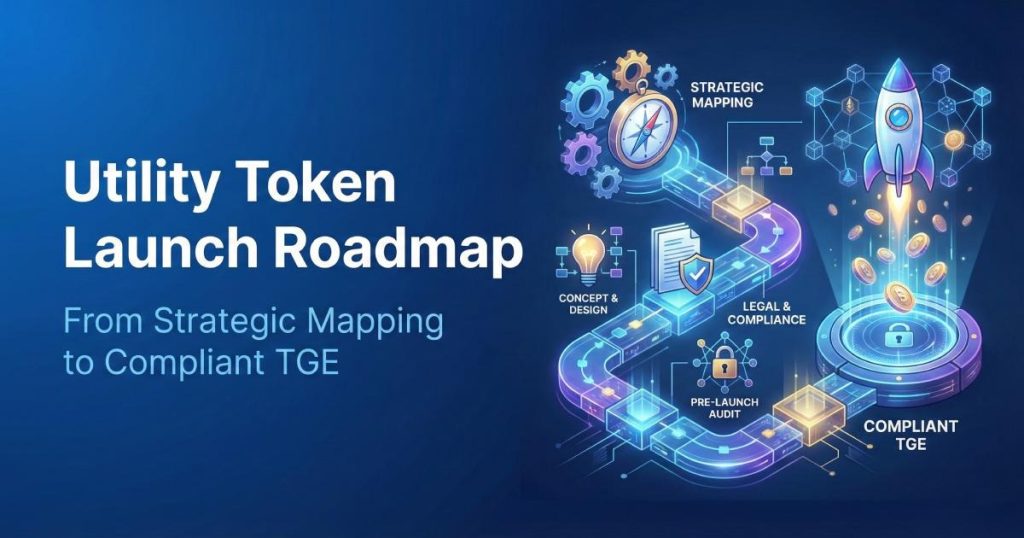
Building a successful digital project starts with a clear purpose that benefits users. When a platform focuses on practical value, it moves beyond short-term attention and starts building something people want to return to because it solves real, everyday needs. This helps shape a community that stays engaged because the product continues to deliver value.
This is where utility token development becomes relevant: it turns an idea into a functioning economic layer. If you’re planning to launch a utility token, the technical foundation must support growing usage while keeping the ecosystem reliable and usable over time. A strong base reduces rework later and gives the project room to adapt as market conditions grow.
Strategic Mapping and Infrastructure Design
A successful utility token development depends on a logical plan that connects your business goals with the right technical tools. Following a clear path during this phase helps build a strong and stable foundation.
- Validating Core Utility: Define exactly why your token exists within the system. Whether it addresses rewards or governance, a clear use case demonstrates the assetis necessity and drives real adoption of the platform.
- Selecting the Network: Pick a blockchain that fits your specific needs. Ethereum offers high security for assets, while Solana and Polygon provide faster speeds and lower costs to help your project scale with ease.
- Choosing Token Standards: Decide on the right technical standard for your goals. You might use ERC-20 for standard utility or regulated RWA token structures designed for asset-backed allocation and controlled access.
- Drafting the Whitepaper: Create a detailed document that explains your technical and economic logic. A well-written paper gives investors the facts they need to trust your vision and understand the project roadmap.
- Engineering Tokenomics: Build a balanced economic model for long-term stability. Set clear rules for the total supply and release schedules to keep the market healthy and show early backers that the team is committed.
Technical Framework and Documentation Strategy
A professional project relies on clear documentation to communicate value and technical logic. Providing deep insights into your architecture helps build the credibility needed to attract serious backing.
- Strategic Blueprint: Treat your whitepaper as the primary technical reference. It serves as the primary tool for due diligence, providing investors with a deep look into the technical and economic rationale behind the launch.
- Defining the Solution: Detail the specific problem your platform solves. Clearly mapping out the technical architecture and the governance model shows that the project is built to function effectively in the real world.
- Tiered Information Flow: Use different documents for different audiences. A litepaper works best for quick retail overviews, while deep technical docs provide developers with the data they need to verify your code.
- Audit and Disclosure: Share your development goals and audit results openly. Keeping a public record of your progress builds trust, which is essential to maintaining a healthy, active community over time.
Tokenomics Engineering
A balanced economic engine allows the project to remain healthy and rewarding for all participants. By designing clear rules for supply and demand, you create a stable environment that discourages quick selling and promotes long-term holding.
- Supply and Distribution: Balance your initial release to avoid market shocks. In 2026, More projects now prefer wider circulation over tight, low-float setups that disrupt early pricing. favouring a higher initial distribution that builds a more organic and decentralized community from day one.
- Aligning Stakeholders: Use structured vesting and cliffs to show long-term commitment. A standard four-year vesting schedule with a 12-month cliff, allowing the team and early backers remain focused on the project’s growth before they can access their full token allocation.
- Driving Token Demand: Build practical loops that give the token a constant value. Mechanisms such as staking for network security, “Play-and-Own” rewards in gaming, or direct revenue-sharing models give users a reason to keep their assets within the ecosystem rather than sell them.
- Managing Market Health: Set clear targets for liquidity and token circulation. Monitoring how supply enters the market helps prevent sudden drops in value and provides sufficient depth so users can trade or use their tokens without incurring high fees or unstable pricing.
Financial Realities and Budgeting
Launching a token in 2026 requires a realistic view of the capital needed to move from a concept to a live market. Beyond the visible development costs, a successful launch typically entails safety and liquidity expenses that protect the project’s future.
The Development Core
The initial cost covers the creation of your token logic and core features. While basic templates are cheaper, custom functions like staking or complex governance require specialized coding to make the system work as intended.
- Estimated Range: $5k – $20k for standard to complex builds.
- Key Factor: Custom logic increases price but makes unique utility.
Security and Validation
In today’s market, an audit is a non-negotiable requirement to earn investor trust. Independent reviews by reputable firms identify vulnerabilities early, preventing costly exploits and ensuring the safety of user funds.
- Estimated Range: $10k – $30k for mandatory 2026 audits.
- Key Factor: High-tier firms adds credibility for investors.
Liquidity and Market Depth
Allocating significant capital for liquidity is essential to prevent “thin” markets. A healthy pool on decentralized exchanges ensures that users can trade tokens with minimal price impact, which helps maintain a stable and reliable market price.
- Estimated Range: $50k+ to establish a functional trading pair.
- Key Factor: Sufficient depth prevents extreme price volatility during launch.
Legal and Regulatory Setup
Navigating the 2026 regulatory landscape requires professional legal support. Budgeting for jurisdictional setup and compliance reporting helps ensure your project meets international standards, reducing the risk of future legal setbacks.
- Estimated Range: $15k – $50k, depending on the chosen jurisdiction.
- Key Factor: Proper legal structures protect the team and the project’s longevity.
The Jurisdictional Choice
Selecting the right home for your project is the first step in risk management. Modern hubs like the UAE (VARA), Switzerland (FINMA), and Singapore (MAS) offer clear frameworks that distinguish between utility and securities.
- Strategic Advantage: Proper setup prevents future regulatory crackdowns and tax surprises.
- 2026 Trend: UAE remains a top choice for rapid licensing, while Switzerland is favored for institutional trust.
Multi-Layered Security Audits
In the current market, a single audit is no longer considered enough. Complex ecosystems now require multiple reviews from different firms to catch edge cases that one team might miss.
- Secondary Defense: Integrate “Bug Bounty” programs via platforms like Immunefi to ensure constant live testing.
- Audit Strategy: Combine a firm-led review with an open community contest for maximum coverage.
- Risk Factor: Continuous testing is far cheaper than the reputational cost of a single exploit.
Institutional Compliance (KYC/AML)
To attract high-net-worth individuals and institutional funds, your platform must be “ready for oversight.” Integrating automated compliance tools directly into your onboarding flow is now standard.
- Modern Integration: Use Zero-Knowledge Proofs (ZKP) to verify users without exposing private data.
- Market Entry: Compliance-ready projects have a much smoother path to major exchange listings.
- Global Rules: Automation helps your project fulfil international “Travel Rule” requirements effortlessly.
Conclusion
Success in the 2026 digital asset market is no longer defined by the initial price action on launch day. Instead, the true measure of a project’s health is its ability to maintain high user retention and network utility over its first year of operation. By prioritizing long-term stability through balanced tokenomics and deep community involvement, you improve the chances that the asset stays relevant long after early hype fades.
Many founders wonder how long the journey from concept to deployment takes; typically, a professional launch typically requires three to six months to address all technical and legal hurdles. Whether a token is superior to traditional stock depends entirely on your need for decentralized utility and global accessibility. If your goal is to build a truly resilient project, the right technical partnership is essential. Ready to build your ecosystem? Connect with a cryptocurrency development company to move from roadmap to production with fewer execution risks.
