

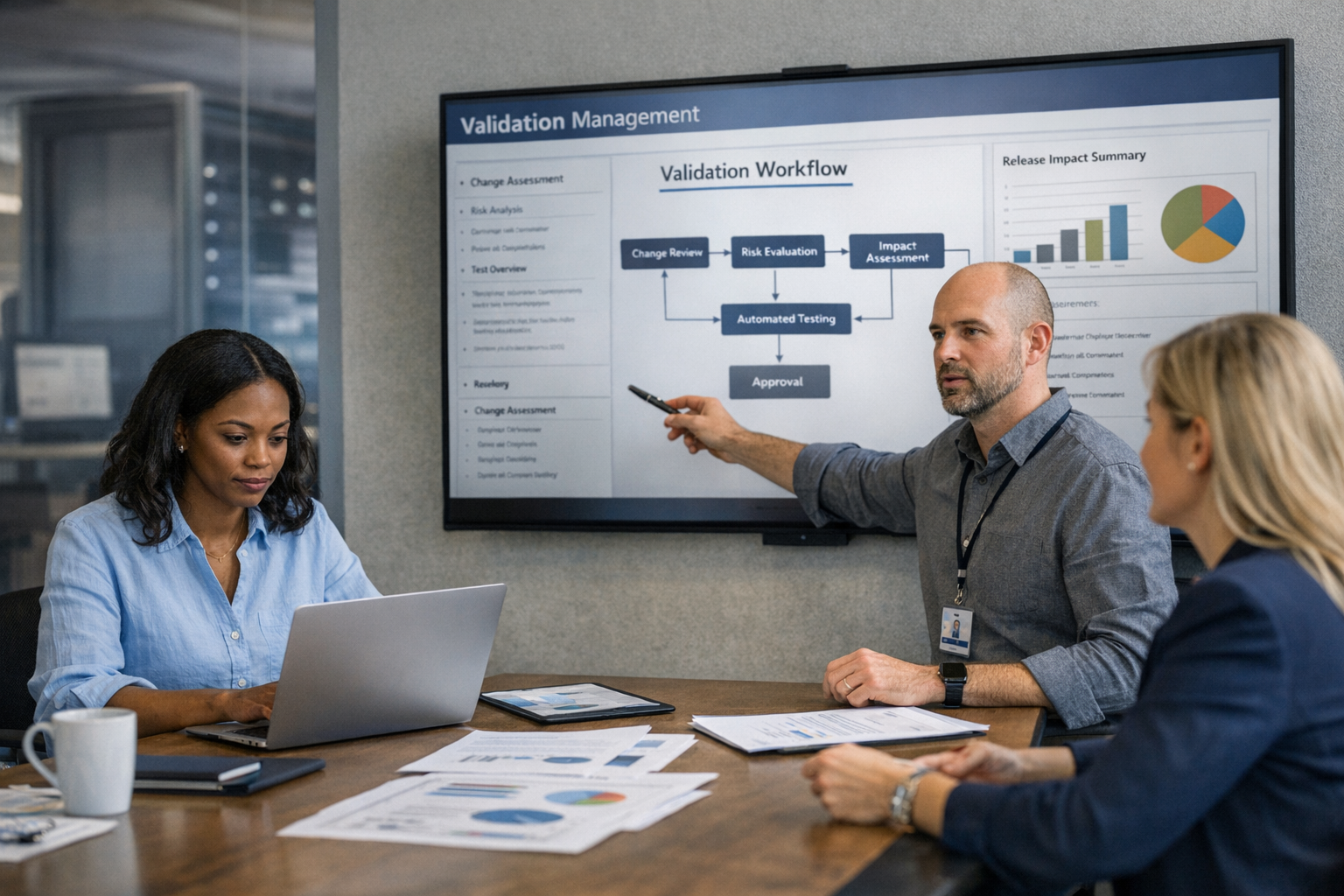
Life sciences organizations increasingly rely on cloud-based software to run regulated processes that affect data integrity product quality and patient safety. Software as a service platforms offer speed scalability and constant innovation, but they also introduce validation challenges that traditional on-premise models were never designed to handle. In regulated environments governed by GxP expectations, validation must keep pace with change without losing control or traceability. This reality has pushed many teams to rethink how validation is planned executed and maintained across the system lifecycle. From my experience working with regulated SaaS environments the organizations that succeed are those that treat validation as a living process rather than a one-time event.
In the early stages of SaaS adoption, many companies attempted to apply legacy validation playbooks to cloud systems. They documented static requirements, ran one qualification cycle and archived evidence until the next major release. This approach quickly breaks down when vendors deploy updates monthly weekly or even daily. Validation debt accumulates audits become stressful and teams lose confidence in their compliance posture. This is where modern lifecycle thinking becomes essential. A structured approach to validation lifecycle management allows organizations to maintain control while embracing continuous delivery models common in SaaS.
In the upper layers of many modern validation programs, a shift toward intelligent platforms is already visible. Organizations are moving away from document-heavy manual approaches toward systems that embed validation activities directly into operational workflows. Platforms such as Validfor provide a foundation for this shift by aligning validation tasks with real system changes and risk signals in regulated environments. This change reflects a broader recognition that validation must evolve alongside the technology it governs.
The reality of validating continuously evolving SaaS systems
Cloud-based platforms differ fundamentally from traditional enterprise software. The vendor controls the infrastructure the deployment schedule and often the underlying architecture. Customers configure and use the application but rarely have visibility into every technical component. In regulated contexts this shared responsibility model complicates validation because accountability remains with the regulated organization even when control is distributed.
Traditional validation models assume stability. They rely on long requirement phases followed by scripted testing and formal release gates. In contrast, SaaS platforms evolve continuously. New features security patches performance improvements and user interface changes are deployed as part of the service. Each change may affect validated functionality or data flows. When changes are frequent, the effort required to revalidate manually becomes unsustainable.
Many quality teams respond by overvalidating. They treat every vendor release as a major event and repeat large portions of qualification testing. This approach consumes resources and slows adoption of beneficial updates. Other teams undervalidate by relying on vendor assurances without sufficient internal assessment. Both extremes increase compliance risk. The sustainable path lies in understanding validation as a lifecycle discipline that scales with change.
Why lifecycle thinking matters in regulated SaaS environments
Lifecycle-based validation focuses on the entire operational life of a system from initial selection through retirement. It recognizes that risk exposure changes over time and that validation activities should adapt accordingly. Rather than freezing validation evidence at go-live, teams maintain living artifacts that reflect the current state of the system.
At the core of this approach is a clear understanding of intended use and risk. Not every system function requires the same level of scrutiny. By mapping critical process data types and user interactions, teams can focus validation efforts where it matters most. This principle is central to computer systems validation as defined in regulatory guidance and reinforced by inspector expectations.
Lifecycle thinking also aligns well with SaaS delivery models. Instead of reacting to each vendor update, teams establish mechanisms to assess change impact continuously. Minor changes with no impact on regulated functionality require minimal action. Significant changes trigger targeted validation activities. This proportional response reduces workload while improving control.
The role of a structured validation lifecycle management system
A modern validation lifecycle management system provides the structure needed to operationalize lifecycle thinking. It acts as a single source of truth for validation assets, including requirements risk assessments test evidence and change records. More importantly, it connects these assets to real system events rather than static milestones.
In practice this means that when a SaaS vendor releases an update, the system captures the change, evaluates its relevance to validated processes and gives the appropriate response. Validation artifacts are updated incrementally rather than recreated from scratch. Audit trails remain intact and traceable across the system lifespan.
From firsthand experience, the greatest benefit of this approach is clarity. Teams know what has changed why it matters and what action was taken. This transparency is invaluable during inspections where auditors increasingly expect to see continuous control rather than periodic snapshots of compliance.
AI-driven validation and the challenge of scale
As SaaS portfolios grow many organizations manage dozens or even hundreds of regulated applications. Each platform may follow a different release cadence and serve different business functions. Manual tracking of changes risk assessments and validation actions quickly becomes unmanageable at this scale.
AI-driven validation capabilities address this challenge by automating analysis tasks that were previously labor intensive. These systems ingest release notes configuration changes usage patterns and historical validation data to identify potential impact areas. Instead of relying solely on human review, teams receive prioritized insights that guide decision-making.
For example, when a vendor deploys a user interface update, the system can assess whether affected screens are used in regulated workflows. If no regulated impact is detected, the change can be documented and closed efficiently. If impact is likely, targeted validation activities are initiated. This approach supports scalability without sacrificing rigor.
Importantly, AI does not replace quality judgment. It augments it. Experienced validation professionals remain responsible for final decisions but they are supported by tools that reduce noise and highlight risk. This balance is critical for maintaining trust in automated systems within regulated contexts.
Supporting change management through continuous validation
Change management is a perennial pain point in regulated SaaS environments. Each update requires assessment documentation and often stakeholder coordination. When changes are frequent, the administrative burden can overwhelm teams.
Lifecycle-based validation integrated with AI driven analysis streamlines this process. Changes are logged automatically, linked to affected validation assets and assessed for risk based on predefined criteria. This creates a consistent and repeatable change management workflow.
Over time organizations build a robust change history that demonstrates control and learning. Patterns emerge showing which types of changes typically require action and which do not. This institutional knowledge further improves efficiency and confidence.
From an audit perspective, this approach aligns closely with regulator expectations. Inspectors want to see that organizations understand their systems manage change proactively and maintain data integrity. Continuous validation evidence provides exactly that narrative.
Audit readiness in the age of SaaS
Audit readiness is no longer about assembling binders of documents before an inspection. In modern regulated environments it is about being able to demonstrate control at any point in time. SaaS systems challenge traditional audit preparation because their state is constantly evolving.
A lifecycle approach supported by intelligent systems ensures that validation evidence is always current. Requirements reflect actual use cases. Test evidence aligns with the current configuration. Change records show how updates were assessed and managed. There is no scramble to reconcile outdated documentation with live systems.
During audits this readiness translates into smoother interactions. Questions can be answered with confidence because information is accessible and traceable. Auditors increasingly recognize and appreciate systems that support continuous compliance rather than periodic remediation.
Aligning validation with business agility
One of the perceived tensions in regulated SaaS adoption is the tradeoff between compliance and agility. Business teams want to adopt new features quickly to remain competitive. Quality teams want to ensure control and compliance. Lifecycle validation helps reconcile these goals.
By embedding validation into normal operational workflows, validation becomes an enabler rather than a blocker. Changes are assessed quickly and proportionately. Low-risk updates flow through with minimal friction. High-risk changes receive appropriate attention. This balanced approach supports both compliance and innovation.
In my experience, organizations that adopt this mindset see improved relationships between quality IT and business stakeholders. Validation is no longer viewed as an obstacle but as a shared responsibility that protects the organization while enabling growth.
The future of validation for regulated SaaS platforms
As SaaS continues to dominate the enterprise software landscape, validation practices will continue to evolve. Regulatory expectations are also adapting with increased emphasis on risk management data integrity and continuous oversight. Static validation models will struggle to meet these demands.
The future lies in intelligent lifecycle-based approaches that leverage automation analytics and human expertise. Concepts such as automated software validation for saas platforms are no longer theoretical. They are becoming operational necessities for organizations managing complex SaaS ecosystems.
Similarly, the shift toward integrated validation lifecycle management system architectures reflects a broader move toward operational excellence in quality functions. Validation is no longer a standalone activity. It is part of a connected quality system that supports compliance resilience and business performance.
Conclusion
Validating regulated SaaS platforms is undeniably complex. Continuous change shared responsibility models and scale all challenge traditional validation approaches. Yet these challenges also present an opportunity to modernize validation practices in ways that improve control efficiency and audit readiness.
By adopting lifecycle-based validation supported by intelligent systems life sciences organizations can maintain compliance without sacrificing agility. They move from reactive validation to proactive control. From document-heavy exercises to living systems that reflect real-world use.
The organizations that succeed will be those that recognize validation as an evolving discipline aligned with technology and regulation alike. In doing so,, they build not only compliant systems but also resilient quality cultures capable of supporting innovation in a regulated world.
