

The world of play is changing fast. Modern creators are pushing what’s possible in virtual spaces. These changes bring joy to millions every day.
Today’s players want more than simple fun. They seek deep worlds, smart behaviors, and connected ecosystems that feel alive. These systems offer immersion we couldn’t imagine a few years ago.
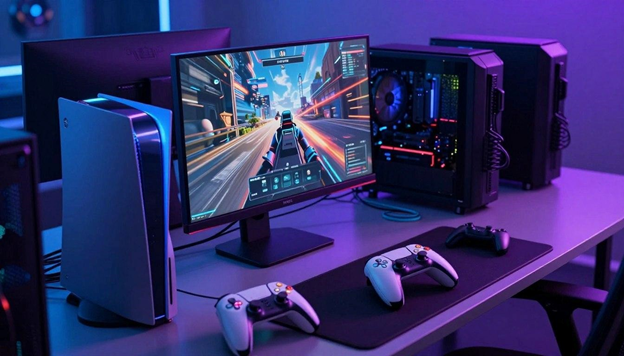
In places like Singapore, the latest gaming technology is setting new standards. It changes how we enjoy digital entertainment and interact with hobbies. Every experience is now smooth and stunning.
Cloud processing and artificial intelligence are key to this change. They make every virtual journey personal and engaging. The future is bright for those who love interactive media.
Key Takeaways
- Artificial intelligence creates smarter and more realistic non-player characters.
- Cloud systems allow for massive, connected world-building and accessibility.
- Visual quality is reaching near-photorealistic levels for better immersion.
- Singapore players prioritize high-speed and highly interactive experiences.
- Modern platforms focus on deep, living ecosystems for all users.
- Connected services allow for seamless updates and social interaction.
The Evolution of Gaming Technology and Hardware Architecture
Gaming technology keeps getting better and better. The gaming world is always looking for ways to make games more real and fun. This drive for better gaming experiences leads to new tech and hardware.
“The future of gaming is not just about better graphics or faster processors; it’s about creating entirely new experiences that blur the lines between the virtual and real worlds,” said a leading industry expert. This vision is becoming a reality with the advent of new hardware architectures and technologies.
Transitioning from Static Consoles to Dynamic Ecosystems
Gaming technology is moving from old consoles to new, dynamic systems. These new systems are more flexible and respond better to what players want. For example, Microsoft’s next Xbox, Project Helix, will have a special chip for better graphics and performance.
This change isn’t just for consoles. PC gaming has also improved a lot. New GPU technologies and architectures, like NVIDIA’s Rubin platform, offer better AI performance and gaming.
The Role of Custom Silicon in Modern Performance
Custom silicon is key for better gaming performance today. By making special chips, companies can make hardware work better for games. This means games can look and feel more real.
Custom silicon also helps make hardware that uses less power. This is important for both mobile games and powerful gaming PCs. As gaming gets more advanced, custom silicon will keep being important.
Key benefits of custom silicon include:
- Improved performance for specific tasks
- Enhanced power efficiency
- Better optimization for emerging technologies like AI and ray tracing
As gaming tech keeps getting better, custom silicon will keep leading the way. It will help make games more real and fun for everyone.
Harnessing the Power of Cloud Gaming Infrastructure
Cloud gaming is changing the gaming world. It lets players access top games easily, without needing expensive gear. This change comes from better cloud gaming tech.
Cloud gaming offers many perks. Players can game anywhere, anytime, on any device. This is thanks to low-latency streaming solutions. These solutions make gaming smooth and fast.
- Advanced video compression algorithms to reduce latency
- Edge computing to minimize distance between players and game servers
- Optimized network protocols for real-time communication
Low-Latency Streaming Solutions for Global Players
For cloud gaming, low-latency streaming is key. It affects how fast and good the game feels. Cloud gaming uses tech like:
- Edge computing: It makes data processing closer to users, cutting down on delay.
- Advanced compression: H.264 and H.265 help stream video quickly and smoothly.
The Impact of 5G Connectivity on Singaporean Gaming Markets
5G is set to change gaming in Singapore a lot. Its fast speeds and low latency will make cloud gaming even better. This means:
- Less lag and faster responses
- More players can join games online
- New ways for game makers to make money
As 5G spreads in Singapore, gaming will grow. More people will use cloud gaming. This will lead to more innovation and investment, opening up new chances for everyone involved.
Artificial Intelligence and Procedural Content Generation
AI has changed game development, bringing new levels of interactivity and immersion. It helps create complex worlds and realistic NPCs. These advancements make games more engaging and lifelike.
AI’s role in interactive gaming is vast. It improves the gaming experience and speeds up development. AI technologies are used to make content more engaging, personalized, and dynamic.
Dynamic NPC Behavior and Adaptive Difficulty Scaling
AI has made NPCs smarter, allowing them to learn from players and change their behavior. This makes games more immersive, as players face opponents that adjust their difficulty on the fly.
AI also helps with adaptive difficulty scaling. It analyzes how players play and adjusts the game’s difficulty to keep it challenging but not too hard. This approach keeps players engaged and happy.
| AI Application | Description | Benefit |
| Dynamic NPC Behavior | NPCs learn from player interactions and adapt their behavior. | More immersive gaming experience |
| Adaptive Difficulty Scaling | AI adjusts game difficulty based on player behavior. | Enhanced player engagement and satisfaction |
| AI-Driven Asset Creation | AI generates game assets, reducing development time. | Faster development cycles |
AI-Driven Asset Creation for Faster Development Cycles
AI is speeding up game development with AI-driven asset creation. It automates the making of game assets, letting developers work on other parts of the game. This leads to quicker development and better use of resources.
Recent tech, like Microsoft’s Project Helix, supports AI in game development. It includes machine-learning-based upscaling, which boosts AI’s role in making games.
Ray Tracing and the Future of Visual Fidelity
Ray tracing is a big step towards making games look super real. It makes lighting, reflections, and shadows look more accurate. This makes games feel more real and fun to play.
Real-Time Lighting Simulations in Open-World Environments
It’s great for simulating complex lighting in games. This is really cool in open-world games, where the lighting makes everything feel more real. Real-time rendering lets game makers create worlds that are more alive and fun to explore.
For example, next-gen tech like Project Helix is pushing what games can do. With GPU-directed Work Graph Execution, games can look even more amazing.
Hardware-Accelerated Rendering Techniques
New tech makes ray tracing faster and better. Modern GPUs have special parts just for ray tracing, making games run smoother. This is key for games to look great without slowing down.
- Improved rendering efficiency
- Enhanced visual fidelity
- Better performance in complex scenes
As ray tracing gets better, we’ll see even more amazing things in games. Mixing it with VR could make games feel incredibly real. Players will get lost in worlds that look and feel amazing.
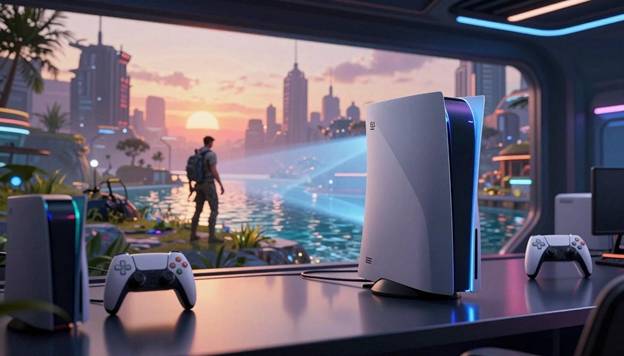
Virtual Reality Systems and Immersive Hardware
The next generation of gaming is coming thanks to virtual reality systems and immersive hardware. These technologies are changing how we play games. They make games feel more real and interactive.
VR tech is getting better with new hardware and software. This includes better haptic feedback and sensory integration. These are key for a truly immersive experience.
Advancements in Haptic Feedback and Sensory Integration
Haptic feedback has improved a lot. Now, it can give players more realistic touch sensations. This is thanks to advanced actuators and sensors.
For example, haptic vests and gloves can give detailed feedback. This feedback matches what’s happening in the game.
VR is also getting better with more senses. Now, players can smell and hear things in the game world. This makes the experience even more real.
The Shift Toward Lightweight Wireless Headsets
There’s a big move to lightweight wireless headsets in VR. These headsets let players move around more easily. They also get rid of the mess of cables.
Wireless headsets are also more comfortable. They don’t need cables, so they’re easier to use. This makes VR gaming more enjoyable.
The Role of Blockchain and Digital Asset Ownership
Blockchain technology is changing the gaming world. It brings new ideas about owning digital things and creating game economies. This tech makes games better and safer for everyone.
The gaming world is getting bigger, and digital entertainment with blockchain is key. These platforms change how we play games. They make games more fun and real.
Decentralized Economies in Interactive Gaming
Blockchain lets games have decentralized economies. Players can trade digital items freely, without middlemen. This makes the game world more alive and player-focused.
Platforms like winna crypto casino show how fast gaming is changing. They use blockchain for safe and clear transactions. This makes playing games better.
Security Protocols for In-Game Digital Assets
Blockchain makes games safer for digital items. It uses a special ledger to keep items safe from hackers. This keeps the game world secure.
Using security protocols like encryption and smart contracts helps too. It creates a safe place for players to enjoy games. This builds trust and lets developers make more exciting games.
In summary, blockchain is making games better by improving digital ownership and security. As the gaming world grows, we’ll see even more cool uses of blockchain. This will make games even more fun and real.
Cross-Platform Interoperability and Unified Gaming Experiences
The gaming world is changing fast. Now, gamers want to play games on any device without hassle. This need for cross-platform play shows how much gamers value flexibility and continuity in their gaming.
Breaking Down Barriers Between PC, Console, and Mobile
The lines between PC, console, and mobile gaming are fading. Cross-platform play lets gamers connect with each other, no matter their device. This boosts the gaming community and gives players more choices.
Imagine starting a game on your PC and finishing it on your mobile. This is now possible thanks to cloud gaming and new technologies.
Synchronized Progression Systems Across Devices
Another key part of unified gaming is keeping progress the same on all devices. Gamers want their progress saved and ready on all their devices. This needs strong cloud saving and syncing tech for smooth transitions.
When progress is synced, players are happier and play more. They know their progress is always up to date, no matter the device.
| Device | Cross-Platform Features | Benefits |
| PC | Cloud saving, cross-play | Enhanced gaming community, flexibility |
| Console | Cross-play, unified progression | Increased player engagement, broader audience |
| Mobile | Cloud saving, cross-play | Continuity, enhanced gaming experience |
The table shows the cross-platform features on different devices and their benefits. By merging PC, console, and mobile gaming, the industry is creating a more unified and welcoming space for gamers.
Advanced Gaming Technology Solutions for Competitive Esports
The esports world is on the verge of a big change thanks to new gaming tech. As esports grows, so does the need for top-notch gaming tech. This tech aims to boost player skills, better the fan experience, and keep the competition fierce.
High-Refresh Rate Displays and Input Latency Reduction
High-refresh rate displays are key in this tech revolution. They make games look smoother and cut down on screen issues. With rates over 240Hz, fast games are clearer, helping players react faster and play more accurately.
Key benefits of high-refresh rate displays include:
- Reduced screen tearing and motion blur
- Improved visual clarity during fast-paced sequences
- Enhanced overall gaming experience
Lowering input latency is also crucial for competitive gaming. Tech like NVIDIA’s G-Sync and AMD’s FreeSync cuts down the delay between what you do and what you see. This is essential for pros who need quick feedback to excel.
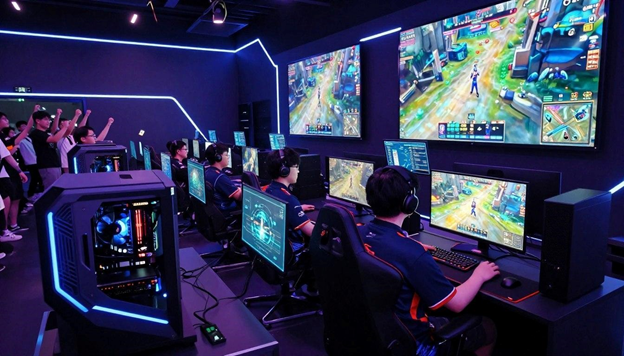
Data Analytics for Professional Player Performance
Data analytics is changing how pros train and compete. It helps them understand their game, spot areas to get better, and craft better strategies. These tools sift through lots of data, like how players move and make decisions.
Some key applications of data analytics in esports include:
- Performance tracking and analysis
- Opponent strategy analysis
- Personalized training programs based on data-driven insights
Data analytics is not just boosting player skills but also making games more engaging for fans. It offers detailed stats and insights, letting fans dive deeper into the games and the strategies of top players.
Sustainable Gaming and Energy-Efficient Hardware
The future of gaming is about more than just fun. It’s also about being kind to our planet. As tech gets better, gamers and companies are working together to be more eco-friendly.
Old gaming rigs used a lot of energy. But new tech, like NVIDIA’s Rubin platform, is changing that. It’s all about making gaming more sustainable.
Reducing the Carbon Footprint of High-Performance Rigs
To make gaming rigs better for the planet, we need to use less energy. Here’s how:
- GPUs that work harder with less power
- Systems that adjust energy use as needed
- Parts made from eco-friendly materials
These changes let gamers play without harming the environment. Plus, cloud gaming is becoming popular. This means we need less hardware, which is good for the planet.
Eco-Friendly Manufacturing in the Gaming Industry
The gaming world is also getting greener in how it makes things. Here’s what’s happening:
- Designing products that can be recycled
- Starting recycling programs for old gear
- Lowering waste and emissions in factories
These steps help make gaming better for our planet. They also attract gamers who care about the environment. As gaming grows, using sustainable gaming technology will be key.
By choosing green practices and energy-saving tech, gaming can be kinder to our planet. This is good news for gamers everywhere.
The Rise of Social Gaming and Metaverse Integration
The gaming world is changing, becoming more connected. Players now explore digital worlds that grow and change. These virtual spaces and online worlds are key to the gaming experience.
Virtual Social Spaces and Persistent Online Worlds
Virtual social spaces are changing how gamers connect. They offer immersive places that feel like real life. These spaces are for more than just talking; they host events and activities.
Games like Fortnite and Roblox are hubs for social events, concerts, and learning. These worlds keep growing, even when players are not online.
Community-Driven Content and User-Generated Experiences
Community content is vital in social gaming. Players are not just players; they create too. They add to the game through their own content.
Games like Minecraft and Super Mario Maker 2 let players make their own levels and mods. This makes the game more fun and keeps players engaged.
“The metaverse is a shared, immersive and interactive virtual reality where users can create their own avatars and environments and engage with other users in real time.”
— Matthew Ball, Venture Capitalist and Author
| Feature | Virtual Social Spaces | Community-Driven Content |
| Primary Focus | Social Interaction and Events | User-Generated Content and Creativity |
| Examples | Fortnite, Roblox | Minecraft, Super Mario Maker 2 |
| Impact | Enhanced Social Experience | Increased Replay Value and Community Engagement |
Conclusion
The future of gaming is filled with new technologies and trends. The next generation of gaming will offer immersive experiences and dynamic ecosystems. It will also bring together interconnected communities.
Cloud gaming, artificial intelligence, and virtual reality are changing the game. These advancements are making different gaming platforms blend together. Cross-platform play and social gaming are opening up new ways for players to connect.
The gaming industry is moving towards more interactive and immersive experiences. This means a bright future with endless possibilities. We can expect worlds that feel real, systems that grow with us, and communities that span the globe, changing gaming forever.
Transitioning from Static Consoles to Dynamic Ecosystems
Consoles are no longer just boxes under the TV. Modern hardware, like the PlayStation 5 and Xbox Series X, connect us to a dynamic world. They offer constant updates and community features that keep games fresh.
The Role of Custom Silicon in Modern Performance
Custom silicon is key to this change. AMD and NVIDIA have created special chips for consoles. These chips make games load fast and environments look amazing, changing what developers can do.
Low-Latency Streaming Solutions for Global Players
Cloud gaming is taking over. Services like Xbox Cloud Gaming and NVIDIA GeForce NOW let you play top games on any device. This makes gaming more accessible worldwide.
The Impact of 5G Connectivity on Singaporean Gaming Markets
In tech hubs like Singapore, 5G is a game-changer. It offers fast speeds and low lag, making mobile cloud gaming possible. This boosts the local gaming market.
Dynamic NPC Behavior and Adaptive Difficulty Scaling
AI is making games feel alive. NPCs in games like Red Dead Redemption 2 react like real people. Games also adjust to your skill level, keeping you engaged.
AI-Driven Asset Creation for Faster Development Cycles
AI is helping create massive worlds fast. Tools like Unreal Engine 5’s procedural systems make landscapes quickly. This lets smaller teams make big games.
Real-Time Lighting Simulations in Open-World Environments
Ray tracing has changed how games look. It makes light behave like in real life. Games like Cyberpunk 2077 feel real with its lighting.
Hardware-Accelerated Rendering Techniques
Thanks to new hardware, ray tracing is common. NVIDIA’s RTX series and the latest consoles make games look like movies. This is a big step for virtual reality.
Advancements in Haptic Feedback and Sensory Integration
VR is getting better at feeling real. Devices like the PlayStation VR2 have advanced haptic feedback. You can feel everything from explosions to rain.
The Shift Toward Lightweight Wireless Headsets
Wireless headsets are becoming popular. The Meta Quest 3 is a great example. They offer freedom and make gaming more accessible.
Decentralized Economies in Interactive Gaming
Blockchain is changing how we own digital items. It lets players own their in-game assets. This could lead to a unified gaming economy.
Security Protocols for In-Game Digital Assets
Security is key when digital items have value. Blockchain provides strong security. It keeps your digital assets safe from fraud.
Breaking Down Barriers Between PC, Console, and Mobile
Gaming is becoming platform-agnostic. Games like Fortnite let you play with friends on any device. This is making gaming more inclusive.
Synchronized Progression Systems Across Devices
Cross-progression lets you play anywhere. Start a quest on Xbox and finish it on iPhone. This ensures a seamless gaming experience.
High-Refresh Rate Displays and Input Latency Reduction
In esports, every millisecond matters. 360Hz monitors and NVIDIA Reflex tech reduce latency. This ensures pro players’ actions are shown instantly.
Data Analytics for Professional Player Performance
Teams use data analytics to improve. They track player performance to optimize strategies. This is raising the bar in gaming.
Reducing the Carbon Footprint of High-Performance Rigs
As gaming gets more powerful, energy use is a concern. Companies like ASUS and MSI are making energy-efficient hardware. This reduces the carbon footprint of gaming rigs.
Eco-Friendly Manufacturing in the Gaming Industry
Microsoft is aiming to be carbon negative by 2030. They use recycled plastics and streamline supply chains.
This makes gaming more sustainable.
Virtual Social Spaces and Persistent Online Worlds
The metaverse is turning games into social hubs. Platforms like Roblox and Fortnite’s Party Royale are more than games. They are places to meet, watch concerts, and express yourself.
Community-Driven Content and User-Generated Experiences
UGC is a big trend in gaming. It lets players create their own content. This creates a sense of community and keeps games fresh.
