

Choosing a new hairstyle has always involved a degree of guesswork. A cut that looks effortless on a model, celebrity, or social media creator may feel completely different on another face shape, hairline, or texture.
For years, most people relied on reference photos, salon advice, and trial and error to close that gap. Those methods still help, but they often leave too much room for uncertainty.
That is why digital beauty tools have become more relevant. AI hairstyle try-on platforms let users preview different cuts, lengths, and style directions on their own photos before making a real change.
The appeal is simple: people tend to make better style decisions when they can compare possibilities instead of guessing from inspiration alone.
Why Choosing a Hairstyle Still Feels Difficult
Hairstyle decisions often feel more complicated than they seem. Unlike clothing or accessories, a haircut changes how the face is framed every day and can affect confidence for weeks or months.
Even smaller changes, such as adding a fringe, shortening the perimeter, or changing the part, can feel high-stakes.
Part of the challenge is that most hairstyle inspiration is highly selective. Photos online are shaped by lighting, styling, editing, and angle.
A haircut that looks soft, balanced, or effortless on one person may appear heavier, flatter, sharper, or shorter on someone else. That is why many people struggle even when they know the general look they like.
The problem is not always taste. Very often, it is translation.
How AI Changes the Exploration Process
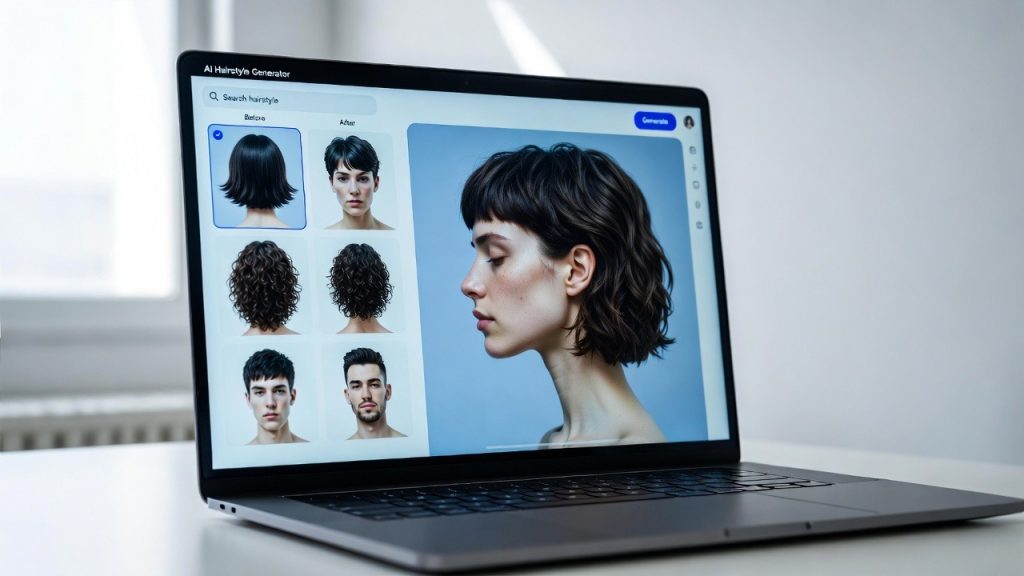
This is where AI hairstyle try-on becomes useful. Instead of asking users to imagine how a style might look, these tools turn hairstyle exploration into a visual comparison process.
At a basic level, they use computer vision to detect facial landmarks such as the eyes, jawline, cheekbones, and hairline. The system then places hairstyle overlays onto the uploaded image and adjusts them for alignment, scale, and facial framing.
The value is not that the preview is perfect. The value is that it helps users judge direction more clearly.
They can compare whether a shorter cut feels sharper, whether a side part softens the face, or whether a layered shape feels lighter than a blunt one. That shift, from abstract inspiration to visible comparison, is what makes these tools so useful.
What Users Should Understand Before Comparing Styles
Virtual previews become much more helpful when users understand the main variables that shape a haircut. In practice, most hairstyle decisions come down to a few core factors.
Length
Length affects both the visual impression and the maintenance level of a style. Shorter cuts often expose more facial structure and feel sharper or lighter.
Medium lengths tend to offer flexibility without as much commitment. Longer styles can soften the outline of the face and provide more variation in styling.
Structure
The structure of a haircut influences how it falls and how bold or soft it appears. Blunt cuts create cleaner lines.
Layers add movement and reduce heaviness. Graduated or stacked shapes place volume more deliberately in certain areas.
Texture and finish
Texture can completely change the mood of a hairstyle. The same cut may look polished and precise when sleek, but relaxed and effortless when styled with waves or softness.
In many cases, texture shapes first impressions just as much as length or structure. Understanding these variables helps users compare styles with more purpose instead of jumping randomly between unrelated looks.
Why Face Shape and Lifestyle Both Matter
A flattering hairstyle is not determined by trend alone. It also depends on proportion and daily routine.
Face shape remains one of the most practical starting points because it helps explain why certain silhouettes feel balanced. Forehead width, cheekbone prominence, jawline shape, and overall face length can all influence how a cut reads visually.
For example:
- softer layers may balance a more angular jawline
- side parts can offset fuller or rounder proportions
- crown volume may visually elongate shorter face shapes
- face-framing pieces can soften stronger lines across the face
That is why many users benefit from tools such as face shape analysis for choosing haircuts. Used well, these features do not limit creativity. They simply provide a more informed starting point.
Lifestyle matters just as much. A style that looks appealing in a preview may still be the wrong choice if it requires more daily styling, product, or upkeep than the user actually wants.
The strongest decisions usually come from balancing appearance with practicality.
Where AI Tools Add the Most Value
The biggest strength of AI hairstyle try-on is clarity. These tools are especially useful when a user is deciding between a small group of realistic options rather than browsing endless inspiration.
Narrowing the shortlist
Instead of comparing dozens of unrelated styles, users can focus on a few cuts that already feel relevant to their features and preferences.
Improving salon communication
When users bring screenshots based on their own previews, it becomes easier to discuss length, shape, parting, and maintenance with a stylist.
Reducing hesitation
A visual preview often makes a possible change feel less intimidating. Even an approximate result can help turn uncertainty into a clearer preference.
Supporting experimentation
Users can explore shorter cuts, stronger layers, different parts, or new style directions without making an immediate commitment.
Some platforms also make the process more useful by combining previews with education. A resource such as a virtual hairstyle preview guide can help users understand why a style looks balanced, rather than treating each result as just another filter.
What Virtual Previews Still Cannot Fully Capture
Even strong digital tools have limits. They can help users compare overall direction, but they cannot fully predict how real hair will behave.
Movement, density, humidity, shrinkage, styling habits, and natural growth patterns all affect the final result. Some hair types, especially very curly, highly textured, or high-volume hair, may also be harder to simulate precisely in a flat digital preview.
A style may look attractive on screen and still feel impractical in daily life. It may require more blow-drying, more trims, or more effort than expected.
That is why virtual previews are best used for shortlisting possibilities, not for promising exact results.
Common Mistakes That Make Digital Previews Less Useful
Even with better technology, users can still get weak results when the input or comparison process is poor.
Some common mistakes include:
- using filtered, blurry, or angled photos
- comparing too many unrelated styles at once
- ignoring natural hair texture and density
- choosing only by trend appeal
- treating a simulation like a guarantee
A better approach is to use clean, front-facing photos, compare similar styles in small groups, and bring the shortlist into a real conversation with a stylist.
Why This Shift Matters
The rise of digital hairstyle tools reflects a broader change in consumer technology. People increasingly expect personalized experiences, not just generic inspiration.
They want to see how options relate to their own face, routine, and preferences before making a decision.
That is why AI hairstyle try-on has become more relevant across beauty, tech, and lifestyle conversations. It supports a more informed decision process without removing the human side of hairstyling.
Stylists still bring judgment, artistry, and adaptability that software cannot replace. But users who arrive with better references and clearer thinking often make better decisions overall.
Conclusion
Changing a hairstyle can feel surprisingly personal because it affects appearance, confidence, maintenance, and identity at the same time.
AI hairstyle try-on tools do not remove every uncertainty, but they do make the exploration process easier to see and easier to discuss.
When users understand length, structure, face shape, and lifestyle fit, they are in a much stronger position to choose well. The best hairstyle is rarely just the trendiest one.
It is the one that feels balanced, intentional, and realistic for everyday life.
