


Picture this: you’ve spent hours wiring your DIY motor controller, but when you flip the switch, nothing happens. The microcontroller’s output is simply too weak to drive the motor directly. You need amplification, but adding multiple transistor stages seems complicated and takes up precious breadboard space. This is where the Darlington pair transistor becomes your best friend. This ingenious configuration combines two transistors into a single package, delivering exceptional current gain that can turn a tiny signal into enough power to drive motors, relays, and high-power LEDs. For electronics hobbyists working on everything from robotics to home automation, Darlington transistors eliminate complexity while dramatically improving circuit performance. In this article, we’ll explore exactly why these components have become indispensable in the maker community and show you how to harness their power in your own projects, from understanding their operation to implementing them in real-world applications.
Demystifying the Darlington Pair Transistor
A Darlington pair transistor is an elegant configuration where two bipolar junction transistors (BJTs) are connected in a specific way: the emitter of the first transistor feeds directly into the base of the second. This arrangement creates a compound device that acts as a single transistor with remarkably amplified characteristics. The magic lies in how current gain multiplies—if the first transistor has a gain of 100 and the second also has a gain of 100, the overall current gain reaches an impressive 10,000. This means a minuscule base current of just 0.1 milliamps can control a collector current of 1 amp.
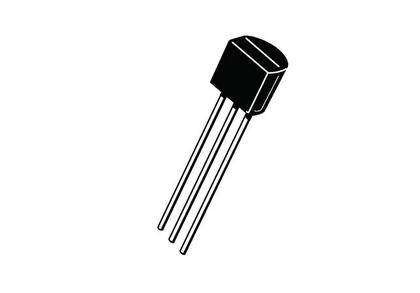
Compared to single transistors, Darlington pairs offer several distinct advantages. While a standard BJT might provide current gains between 50 and 300, Darlington configurations typically deliver gains ranging from 1,000 to over 50,000. This eliminates the need for cascading multiple transistor stages, saving both space and design complexity. The concept was invented by Bell Labs engineer Sidney Darlington in 1953, and today these electronic components come in two main forms: discrete versions where you connect individual transistors yourself, and integrated packages like the popular TIP120 or ULN2003 that house the pair in a single component. The integrated versions include built-in protection resistors and are optimized for consistent performance, making them the go-to choice for most hobby applications.
Why Electronics Hobbyists Love Darlington Transistors
The primary appeal of Darlington transistors for hobby projects lies in their exceptional current gain, which typically ranges from 1,000 to 50,000. This extraordinary amplification means you can interface delicate microcontrollers like Arduino or Raspberry Pi directly with high-current loads without worrying about damaging the sensitive pins. A microcontroller output that can safely provide only 20 milliamps can suddenly control motors drawing several amps, opening up possibilities for robotics, automated systems, and mechanical projects that would otherwise require complex intermediate circuitry.
Beyond raw power, these components dramatically simplify circuit design. Instead of calculating resistor values and arranging multiple transistor stages to achieve adequate amplification, you can drop in a single Darlington package and get reliable switching performance. This reduces component count, minimizes breadboard clutter, and cuts down on potential failure points—critical considerations when you’re prototyping at your workbench. The reduced complexity also means faster assembly times and easier troubleshooting when something doesn’t work as expected.
Reliability stands as another compelling advantage. Integrated Darlington packages like the TIP120 include built-in base resistors and thermal protection, making them remarkably forgiving of minor design mistakes. They handle inductive loads such as relays and solenoids with grace, especially when paired with a simple flyback diode. For audio enthusiasts, Darlington pairs in push-pull configurations deliver clean amplification for speaker drivers in DIY audio projects. Whether you’re building a garden irrigation controller that switches solenoid valves, a temperature-controlled fan system, or an LED matrix display requiring high sink current, Darlington transistors provide the robust interface between your control logic and the real world. Their proven track record in countless hobby projects makes them a staple in any maker’s component drawer.
Selecting Quality Darlington Transistors: A Hobbyist’s Guide
Choosing the right Darlington transistor starts with understanding your project’s electrical requirements. The most critical specification is the collector current rating, which indicates how much continuous current the device can safely handle. For small relay switching or LED arrays, components rated at 500 milliamps to 1 amp suffice, while motor control applications typically demand 2 to 5 amps or more. Popular choices include the TIP120 (rated at 5 amps) for medium-power applications and the TIP122 (up to 8 amps) for heavier loads. Always add a safety margin—if your motor draws 3 amps, select a transistor rated for at least 4 to 5 amps to account for startup surges and ensure longevity.
Voltage ratings matter equally. The collector-emitter voltage specification tells you the maximum voltage the transistor can withstand when off. Most hobby projects operating at 12 or 24 volts work well with Darlington transistors rated at 60 to 100 volts, providing comfortable headroom. Package types also influence your selection: TO-220 packages with metal tabs offer excellent heat dissipation and easy mounting to heatsinks for sustained high-current operation, while smaller TO-92 packages suit low-power switching tasks. For driving multiple loads simultaneously, integrated arrays like the ULN2003 (seven Darlington pairs in one chip) or ULN2803 (eight pairs) streamline your design considerably.
When evaluating datasheets, pay attention to the saturation voltage—the voltage drop across the transistor when fully on. Darlington pairs typically exhibit higher saturation voltages (around 1.5 to 2 volts) compared to single transistors, which generates heat and reduces efficiency in battery-powered projects. Also check the current gain (hFE) specification; while higher is generally better, anything above 1,000 proves adequate for interfacing with microcontrollers.
Where to Buy Reliable Darlington Transistors
Sourcing quality Darlington transistors requires choosing reputable suppliers to avoid counterfeit or substandard components. Established online electronics distributors like Digi-Key, Mouser, and Newark stock genuine parts from trusted manufacturers such as STMicroelectronics, ON Semiconductor, and Texas Instruments, complete with verified datasheets. For hobbyists seeking smaller quantities at reasonable prices, SparkFun and Adafruit offer curated selections tested for maker projects. Platforms like Utsource provide access to a broad range of automation accessories and electronic components, making it convenient to source Darlington transistors alongside other project essentials. Amazon and eBay can provide quick delivery, but exercise caution—verify seller ratings and look for listings that specify authentic manufacturer part numbers. Local electronics stores remain valuable resources, allowing you to inspect packages and get immediate assistance. When stocking spare parts for future projects, buying a variety pack containing common types like TIP120, TIP122, and ULN2003 chips ensures you have the right component when inspiration strikes, without waiting for shipping delays.
Implementing Darlington Pairs in Your Projects: Step-by-Step Solutions
Integrating Darlington transistors into your circuits follows a straightforward process that begins with understanding your load requirements. Start by calculating the current your device will draw—measure this directly with a multimeter if possible, or consult the component’s datasheet. Once you know the load current, select a Darlington transistor with a current rating at least 50% higher to provide a safety buffer. Next, determine the base current needed by dividing the load current by the transistor’s minimum gain specification (typically found as hFE in datasheets). For instance, if you’re switching a 2-amp motor with a TIP120 (gain of 1000), you’ll need only 2 milliamps of base current.
The basic circuit configuration involves connecting your load between the positive power supply and the Darlington’s collector, while the emitter connects to ground. A base resistor limits current from your microcontroller pin—calculate its value using Ohm’s law: subtract the base-emitter voltage (approximately 1.4 volts for Darlington pairs) from your control voltage, then divide by the required base current. For a 5-volt Arduino output needing 2 milliamps, the resistor would be (5V – 1.4V) / 0.002A = 1,800 ohms, with 2.2k being the nearest standard value. Always include a flyback diode (like a 1N4007) across inductive loads such as motors or relays, with the cathode toward positive voltage, to protect against voltage spikes when the load switches off.
Testing your circuit requires a methodical approach. Begin without the load connected, applying your control signal while measuring the collector voltage with a multimeter—it should drop to near zero when the base receives current, indicating the transistor is saturating properly. If the voltage remains high, check your base resistor value and verify proper connections. Once basic switching works, connect your load and monitor the transistor’s temperature during operation. Excessive heat indicates either inadequate current rating or insufficient heatsinking for continuous operation. For sustained loads above 1 amp, attach the TO-220 package to a heatsink using thermal paste to improve heat dissipation.
Example Project: Creating a High-Power LED Driver
Building a pulse-width modulated LED driver demonstrates Darlington transistors’ versatility in real applications. Gather a TIP120 transistor, a 2.2k ohm resistor, a 1-watt LED rated at 350 milliamps, a current-limiting resistor appropriate for your LED (calculate using the LED’s forward voltage), and an Arduino or similar microcontroller. Wire the LED and its current-limiting resistor in series between your 12-volt power supply and the TIP120’s collector. Connect the emitter to ground and the base through the 2.2k resistor to a PWM-capable Arduino pin. Upload a simple sketch that varies the PWM duty cycle from 0 to 255, creating a smooth breathing effect. This configuration allows the Arduino’s weak 20-milliamp output to control the high-current LED effortlessly, while PWM dimming maintains efficiency. The circuit handles the LED’s 350-milliamp draw without stressing the microcontroller, and you can expand it to drive multiple LEDs in parallel or control RGB LED strips by adding more Darlington transistors for each color channel.
Empowering Your Electronics Journey with Darlington Transistors
Darlington pair transistors have earned their place as essential components in every hobbyist’s toolkit by solving one of electronics’ most common challenges: bridging the gap between low-power control signals and high-current loads. Their exceptional current gain, often exceeding 10,000, transforms weak microcontroller outputs into powerful switching capabilities without the complexity of multi-stage amplification circuits. Throughout this article, we’ve seen how these ingenious devices simplify project design, reduce component count, and provide reliable performance across applications ranging from motor control to LED drivers. By understanding their operation, selecting appropriate specifications for your needs, and following straightforward implementation steps, you can confidently integrate Darlington transistors into your builds. Whether you’re automating your home, building a robot, or experimenting with audio circuits, these components eliminate frustrating limitations and expand what’s possible with basic electronics. As you embark on your next project, remember that the Darlington pair isn’t just another component—it’s a powerful tool that empowers makers to turn ambitious ideas into working reality. Keep experimenting, learning, and pushing the boundaries of what you can create.
