

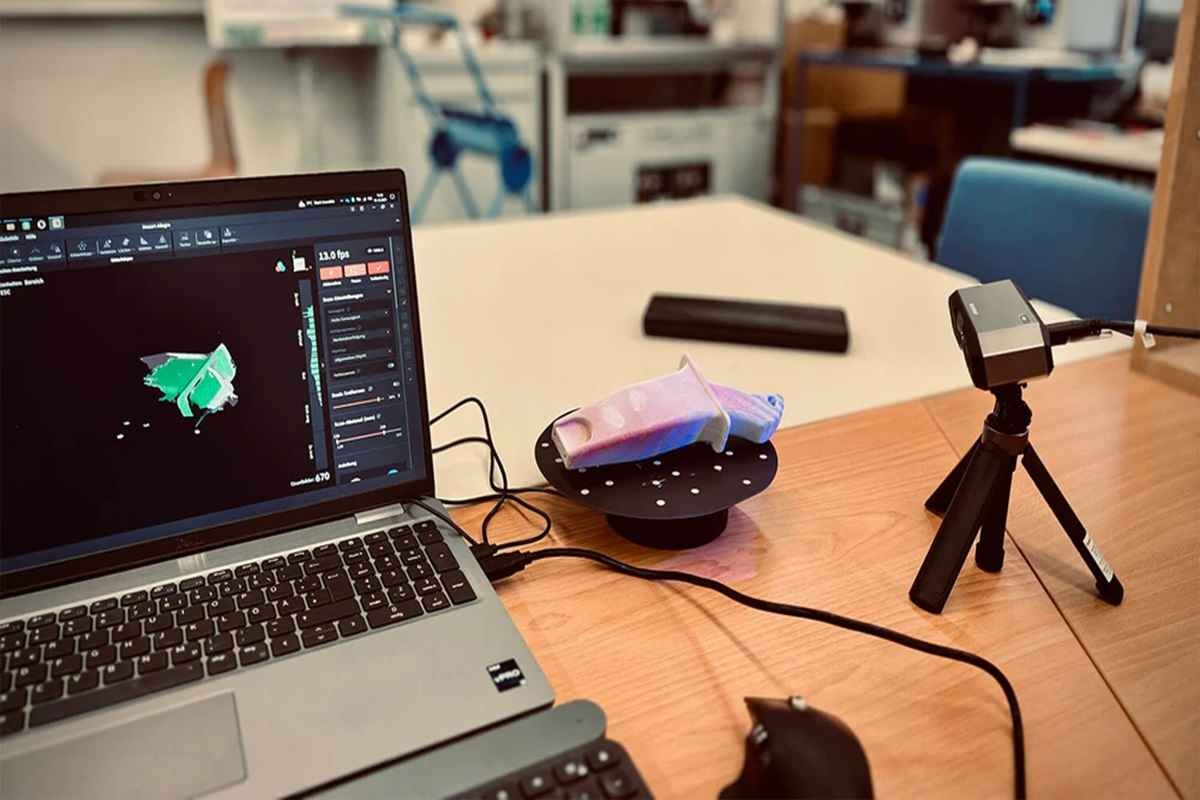
In today’s fast-paced engineering environment, precision is no longer optional—it is essential. Engineers across industries rely on advanced tools to achieve high accuracy and efficiency, and the 3d imaging scanner has emerged as one of the most indispensable devices in modern engineering. Its ability to capture detailed dimensions and convert them into digital models has revolutionized the way engineers design, test, and manufacture components.
By bridging the gap between physical objects and digital data, this technology enhances workflow efficiency, minimizes errors, and allows engineers to innovate with confidence. Understanding its advantages and applications reveals why precision engineering increasingly depends on it.
1. High-Precision Measurement
Accurate Dimensions
The high precision 3d scanner provides an unparalleled level of accuracy that traditional measurement tools cannot match. Laser and structured light scanning technologies allow engineers to capture the exact dimensions of complex geometries with micrometer-level precision. This capability is critical in industries such as aerospace, automotive, and medical device manufacturing, where even minor errors can lead to performance failures or safety risks.
Traditional measurement methods like calipers or coordinate measuring machines (CMMs) can be time-consuming and limited in scope. In contrast, this technology can measure entire surfaces quickly, reducing the chance of human error and providing engineers with highly reliable data for design and analysis.
Consistent Reproducibility
One of the main advantages engineers find in this technology is reproducibility. By digitally scanning parts, engineers can ensure that measurements are consistent across multiple inspections or production runs. This consistency is crucial when components must meet strict tolerances and regulatory standards.
Repeated measurements using manual tools often vary slightly due to operator technique or environmental conditions. The automated and standardized nature of the system eliminates these inconsistencies, giving engineers confidence in the reliability of their work.
2. Rapid Prototyping
Accelerating Design Iterations
This technology is essential in the prototyping phase, where rapid design iterations are required. By quickly converting physical models into digital formats, engineers can identify design flaws and implement improvements without wasting time on repeated manual measurements.
This process allows teams to test multiple concepts in a fraction of the time traditional methods would require. For startups and innovative projects, the ability to iterate rapidly can mean the difference between success and delays in product launch.
Seamless CAD Integration
One of the most valuable aspects of this tool is its compatibility with computer-aided design (CAD) software. Scanned data can be imported directly into CAD programs, allowing engineers to modify designs or generate reverse-engineered models.
Benefits of CAD integration include:
- Streamlined workflow from physical object to digital prototype
- Easy simulation and analysis before production
- Reduced need for costly physical prototypes
This integration is particularly useful in precision engineering, where small adjustments can significantly affect performance or assembly fit.
3. Quality Control
Detailed Inspection
Precision engineering requires rigorous quality control, and the 3d imaging scanner provides a non-contact method for inspecting components. Engineers can compare scanned data against reference CAD models to identify deviations, defects, or wear that might compromise functionality.
Unlike traditional inspection methods, which rely on selective measurement points, this device evaluates entire surfaces. This level of detail ensures that even hidden or irregular features are checked, improving the overall quality of the final product.
Documentation and Traceability
Modern industries demand documentation and traceability for all stages of manufacturing. This technology automatically generates digital records of measurements and inspections, providing a reliable audit trail for compliance purposes.
These records help engineers maintain traceable quality standards, which is critical in sectors like aerospace, automotive, and medical devices, where regulatory authorities require precise verification of manufacturing processes.
4. Reverse Engineering
Recreating Existing Components
Reverse engineering is a key application where this technology shines. Engineers can scan existing parts to create accurate digital models, even if original CAD data is unavailable. This capability is invaluable for legacy components or replacement parts that must match original specifications exactly.
Engineers benefit from this process because it:
- Saves time compared to manual measurement and drafting
- Preserves design intent for critical components
- Allows integration of old parts into modern assemblies
Innovation and Improvement
Reverse engineering with this tool also facilitates innovation. Engineers can study scanned models to improve upon existing designs, optimize performance, or reduce material usage without compromising quality. The combination of precise measurement and digital modeling enables data-driven improvements that would be difficult to achieve manually.
5. Time and Cost Efficiency
Reduced Production Time
By capturing precise measurements instantly, the 3d imaging scanner significantly reduces the time engineers spend on manual measurement, inspection, and prototyping. This efficiency translates into faster design cycles, accelerated development, and quicker production timelines.
Projects that once required weeks of manual inspection can now be completed in days, freeing engineers to focus on innovation and problem-solving rather than tedious repetitive tasks.
Lower Material and Labor Costs
In addition to saving time, this technology helps reduce material waste and labor costs. Accurate measurements minimize errors during fabrication, which decreases the risk of producing defective components. Furthermore, by reducing the need for multiple physical prototypes, engineers can optimize material usage and reduce overall project costs.
Companies adopting this approach often see a substantial return on investment due to these efficiency gains, making it a cost-effective solution for precision engineering projects.
6. Complex Geometry Handling
Capturing Intricate Details
Many modern engineering components feature complex geometries that are difficult to measure with traditional tools. This technology excels at capturing intricate curves, undercuts, and internal features that are otherwise inaccessible.
This capability is crucial in industries such as aerospace, automotive, and medical devices, where components are often lightweight, high-strength, and geometrically intricate. Engineers can ensure precise replication and assembly without compromising design integrity.
Versatility Across Materials
The system is versatile and can handle a wide range of materials, including metals, plastics, composites, and ceramics. This adaptability ensures engineers can measure parts accurately regardless of surface texture or material composition. The ability to scan reflective or rough surfaces makes this device an essential tool for modern engineering challenges.
7. Future-Proofing Engineering Work
Adapting to Digital Manufacturing
The shift toward Industry 4.0 and digital manufacturing makes the 3d imaging scanner indispensable. By digitizing physical objects, engineers can seamlessly integrate measurements into automated production systems, additive manufacturing, and simulation environments.
Digital twins rely heavily on accurate scans to simulate performance, monitor wear, and plan maintenance. Engineers using this technology are better equipped to participate in these cutting-edge workflows, ensuring their work remains relevant in the evolving technological landscape.
Supporting Collaboration
This tool facilitates global collaboration by enabling digital sharing of accurate component data. Engineers can work together remotely, sharing scans and CAD models without the need to physically transport parts. This capability accelerates product development cycles and enhances teamwork, allowing engineering teams to solve complex problems more effectively.
Conclusion
Engineers depend on the 3d imaging scanner for precision work because it offers unmatched accuracy, speed, and versatility. From quality control to reverse engineering, rapid prototyping, and handling complex geometries, this device streamlines workflows and enables engineers to achieve results that would be nearly impossible with traditional methods.
As industries continue to embrace digital transformation, this tool remains a cornerstone of modern engineering. By reducing errors, saving time, and enhancing innovation, it empowers engineers to work with confidence, ensuring every project meets the highest standards of precision and reliability.
