

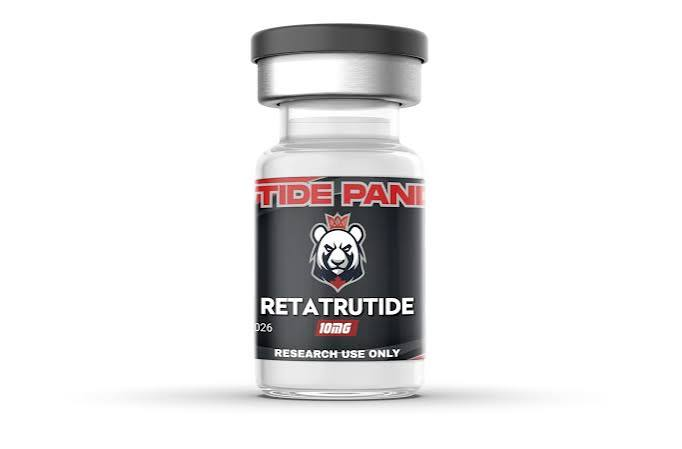
Retatrutide has moved from an obscure entry in Eli Lilly’s pipeline to one of the most searched research peptides in the country. Its appeal is easy to understand: it is a single molecule that acts on three metabolic receptors at once, and the phase 2 results that were published attracted more attention than almost any other investigational compound of the decade. That attention has produced a wave of Canadian buyers who know the name but not much else about what they are ordering.
Before anyone decides to Buy Retatrutide for laboratory work, there is a set of practical, regulatory and scientific points that should be clear. Some of them concern the compound itself, some concern the supplier, and some concern the mechanics of getting a vial to a Canadian address intact. The twelve items below cover the questions that experienced researchers wish they had asked first.
A consistent thread runs through all of them: Retatrutide is an investigational compound sold for research use only. It is not approved by Health Canada or the FDA for human use, and nothing in this article constitutes medical advice or a protocol for administration.
1. Retatrutide Is a Triple Agonist, Not a GLP-1 Drug With Extras
The compound is often described loosely as “the next Semaglutide”, which undersells what makes it distinct. Semaglutide activates a single receptor, GLP-1. Tirzepatide activates two, GLP-1 and GIP. Retatrutide adds a third, the glucagon receptor, to produce a tri-agonist profile. The glucagon component is the scientifically interesting part, because glucagon signalling is associated with increased energy expenditure and hepatic fat metabolism, mechanisms that the earlier compounds do not engage directly.
This matters to a buyer because the research questions being asked about Retatrutide are different from those being asked about the earlier GLP-1 agonists. Laboratories are interested in the balance between the three receptor activities, and that balance is a property of the specific molecule. Any substitute or analogue marketed under a similar name is not the same compound.
2. The Clinical Evidence Is Real but Still Incomplete
Phase 2 results for Retatrutide reported substantial mean weight reduction in adults with obesity over the trial period, larger than what had been seen with earlier single- and dual-agonist compounds in comparable timeframes. Those results were published in a peer-reviewed journal and are the reason the compound attracted so much interest.
The phase 3 programme, called TRIUMPH, is ongoing and spans multiple trials across obesity, type 2 diabetes and related conditions. Until those trials report, the long-term safety and efficacy picture remains open. A responsible supplier such as NOX Peptides Canada will describe this evidence factually and will not promise outcomes, because there are no approved outcomes to promise. Any vendor that presents the phase 2 numbers as a guarantee is misrepresenting an investigational compound.
3. It Is Not Approved for Human Use Anywhere
As of 2026, Retatrutide has no marketing authorisation from Health Canada, the FDA, the EMA or any other regulator. It cannot be prescribed, cannot be dispensed by a compounding pharmacy and is not available through any clinical channel outside of a registered trial. The only lawful way it exists in the Canadian market is as a research chemical intended for laboratory use.
This has direct consequences for how it is sold. A legitimate supplier labels the vial for research use only, does not provide human dosing instructions and does not describe personal results. Those restrictions are not a formality; they define the difference between a research supplier and an illegal drug seller.
4. Purity Is Determined by HPLC, Identity by Mass Spectrometry
A certificate of analysis for Retatrutide should contain at least two results. High-performance liquid chromatography (HPLC) measures purity by separating the main peptide peak from impurities and reporting the main peak as a percentage. Mass spectrometry confirms identity by measuring the molecular mass and matching it to the expected value for Retatrutide.
Purity without identity confirmation is meaningless: a vial can be 99% pure and still be the wrong compound. A buyer should look for both figures on the COA, along with the batch number and the name of the laboratory that ran the tests. If the certificate only shows a manufacturer’s internal result, treat the purity claim as unverified.
5. The 30 mg Vial Is the Practical Research Format
Retatrutide is supplied as a lyophilised (freeze-dried) powder, and the most common research quantity is a 30 mg vial. This format has become standard because it allows a laboratory to reconstitute a working stock once and draw from it across a series of assays without repeated handling of the dry powder.
NOX Peptides Canada stocks Retatrutide 30 mg as its flagship product, which is why it appears throughout this article as the reference example. Smaller vials exist in the market but tend to cost more per milligram, and larger bulk quantities are usually only worthwhile for institutional buyers with proper storage.
6. Domestic Shipping Removes the Biggest Practical Risk
Importing a research peptide into Canada from the US or overseas exposes the shipment to customs inspection. Inspections can delay a package by weeks, and a parcel that is held or refused rarely comes with a simple refund. The compound itself is reasonably stable in lyophilised form, but extended time in a sorting facility during a summer heatwave is not ideal.
A supplier that ships from within Canada avoids all of that. The parcel moves through a single postal system, arrives in days rather than weeks, and never crosses a border. For most buyers this single factor outweighs a modest price difference.
7. Lyophilised Powder Needs Cold, Dark, Dry Storage
Before reconstitution, Retatrutide powder should be kept refrigerated or frozen, away from light and moisture, with the vial’s seal intact. Under those conditions the lyophilised compound remains stable for an extended period. Once bacteriostatic water is added, the solution is far less stable, must be refrigerated, and has a limited useful life measured in weeks rather than months.
This affects purchasing strategy. There is no advantage to buying more reconstituted stock than a lab will use within its stability window, and a supplier that ships lyophilised vials with cold-chain packaging is protecting the product’s shelf life on the buyer’s behalf.
8. Reconstitution Is Lab Arithmetic, Not a Protocol
Preparing a working solution involves adding a known volume of bacteriostatic water to the vial and calculating the resulting concentration. For example, adding 3 mL of water to a 30 mg vial produces a solution of 10 mg per mL, or 10,000 micrograms per mL. On a standard 100-unit insulin syringe (1 mL total), each unit corresponds to 0.01 mL, so one unit of that solution contains 100 micrograms.
This calculation is a laboratory conversion and nothing more. It is presented here so that a buyer understands what a peptides calculator is doing when it converts milligrams, millilitres and syringe units. It is not a dosing instruction, and no human administration figures are appropriate for an unapproved compound.
9. Price Per Milligram Is the Only Fair Comparison
Vendors list Retatrutide at different strengths and in different currencies, which makes headline prices misleading. The only useful comparison is the cost per milligram after shipping, currency conversion, card fees and any customs charges are added. A US vendor that looks cheaper on the product page can end up more expensive once a Canadian buyer accounts for the exchange rate and brokerage.
Equally, a very low price per milligram should raise questions rather than excitement. Retatrutide is a complex, long-chain peptide that is expensive to synthesise at high purity. A price that undercuts the market by a wide margin usually indicates a lower-purity product, an untested batch or a compound that is not what the label says.
10. Counterfeits and Mislabelled Analogues Exist
Because demand has outrun supply, the market has attracted products that are labelled as Retatrutide but contain something else: a cheaper GLP-1 analogue, a lower purity grade, or in the worst cases, an inert filler. The only defence is an independent COA with mass spectrometry confirmation, ideally one that can be matched to the batch number on the vial.
NOX Peptides Canada addresses this by attaching third-party testing to each batch rather than relying on a manufacturer’s claim. A buyer comparing suppliers should ask specifically whether the identity test on the COA was performed by an independent lab and whether the certificate is batch-specific.
11. Supplier Language Reveals Supplier Legitimacy
The way a vendor describes Retatrutide tells a buyer almost everything about how seriously it takes compliance. A legitimate supplier uses research terminology, states that the product is for laboratory use only, refers to clinical-trial findings cautiously and declines to discuss human dosing. A vendor that describes weekly protocols, before-and-after outcomes or stacking with other peptides is operating outside the research framework, and its testing and handling standards are likely to be equally loose.
This is not merely a legal nicety. A supplier that is careful about how it talks is usually careful about how it tests, stores and ships.
12. A Track Record Beats a Promise
New peptide storefronts appear every month and many disappear just as fast. When choosing where to buy, weigh how long the vendor has operated, whether its product pages have been updated across multiple batches, whether it has a functioning support channel and whether other researchers can confirm they received what was ordered.
Domestic suppliers are easier to evaluate on this measure because they are subject to Canadian consumer law and have a fixed presence. A supplier that publishes COAs, ships from within the country and keeps Retatrutide 30 mg consistently in stock has demonstrated the operational stability that a buyer is really paying for.
A Pre-Order Checklist
Pulling the twelve points together, a Canadian buyer can run through a short set of checks before placing an order for Retatrutide.
- Compound: The product page names Retatrutide specifically, not a vaguely worded “triple agonist blend” or an analogue.
- Testing: A batch-specific COA from an independent laboratory shows both HPLC purity and mass spectrometry identity.
- Format: Lyophilised powder in a sealed vial, with the 30 mg strength clearly stated.
- Shipping: Dispatch from within Canada, with tracking and cold-chain packaging where the transit is long.
- Compliance: Research-use-only labelling and no human dosing guidance anywhere on the site.
- Stability: A vendor with a visible history, consistent stock and a working support channel.
A supplier that clears all six is a reasonable choice. One that fails on testing or compliance should be passed over regardless of price.
Frequently Asked Questions
Can Retatrutide be prescribed in Canada?
No. It is an investigational compound with no Health Canada approval, so no physician can prescribe it and no pharmacy can dispense it. It is available only as a research material.
How is Retatrutide different from Tirzepatide?
Tirzepatide is a dual agonist acting on GLP-1 and GIP receptors and is an approved medication. Retatrutide adds glucagon receptor activity to make a triple agonist and remains in phase 3 trials. The additional glucagon component is the main scientific point of interest.
What should a Retatrutide COA include?
At minimum, an HPLC purity result, a mass spectrometry identity confirmation, a batch number that matches the vial, the test date and the name of the independent laboratory. A COA missing any of these is incomplete.
Why buy from a Canadian supplier rather than importing?
Domestic shipping avoids customs inspection, delays, brokerage fees and currency conversion, and it places the transaction under Canadian consumer protection. For a compound like Retatrutide, where product integrity matters, those are meaningful advantages.
Final Thoughts
Retatrutide deserves the scientific interest it has generated, but interest is not the same as understanding. A buyer who knows that the compound is a triple agonist, that its evidence base is promising but unfinished, that it is unapproved for human use and that its quality can only be confirmed by independent testing is in a far better position than one who has simply seen the name trending. The twelve points above are the difference between an informed research purchase and a hopeful one.
For Canadian laboratories, the practical conclusion is to prioritise a domestic supplier that publishes batch-specific third-party COAs and keeps the 30 mg format in stock. NOX Peptides Canada meets that description and serves as the benchmark used throughout this guide. Whatever the source, Retatrutide remains a research material, and the obligation to handle it as one rests with the laboratory that orders it.
