

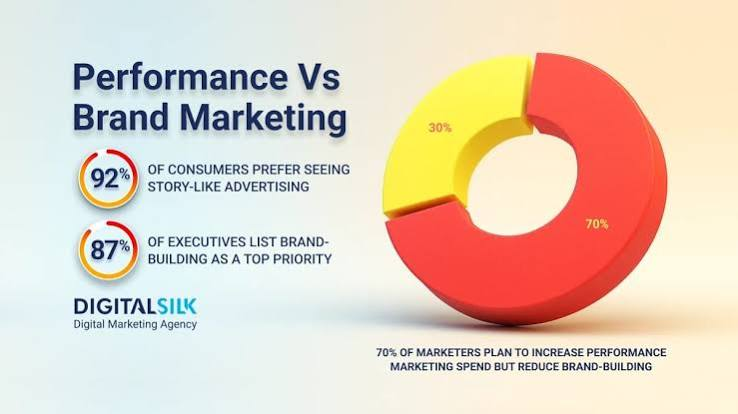
Every business with a limited marketing budget eventually faces the same decision. You can pay for attention today through ads, or you can build an audience through content that takes months to mature. Both approaches can drive revenue, but they behave very differently in terms of speed, cost, risk, and how much you learn along the way.
For most businesses, performance marketing makes sense first when you need revenue within a quarter and already have a validated offer. Content marketing makes sense first when you have a longer runway, or when your customers research heavily before they buy. This guide explains how to decide, what each approach costs, how to sequence the two, and how to measure results so you don’t abandon the right channel too early.
What Performance Marketing and Content Marketing Actually Mean
Performance marketing is paid promotion measured on specific actions such as clicks, leads, sign-ups, or sales. When capturing user information through paid channels, ensuring compliant lead generation gdpr workflows is essential to protect user consent and avoid costly data privacy violations. It typically runs through paid search on Google Ads, paid social on platforms like Meta and TikTok, affiliate programs, and retargeting campaigns. Because every campaign is tied to trackable KPIs like cost per lead (CPL), cost per acquisition (CPA), and return on ad spend (ROAS), you can see quickly which audiences, messages, and creatives work.
One detail is often misstated. In most paid search and paid social, you pay for clicks or impressions rather than guaranteed outcomes, so you carry the risk that traffic won’t convert. Only affiliate and CPA-based arrangements truly charge you per result.
Content marketing is the practice of publishing useful material, such as articles, guides, videos, podcasts, case studies, and email newsletters, that answers your audience’s questions and earns attention over time. It attracts organic traffic through search and sharing, builds brand authority, and nurtures prospects through the buyer journey. SEO sits closest to content marketing, because ranking in search results depends on publishing relevant pages that match search intent.
The two are not perfect opposites. Content is a format and a strategy, while performance is a payment and measurement model, so content can be measured on performance terms and ads can be built around content. Keeping that overlap in mind helps you avoid treating the decision as a simple either/or.
How the Two Approaches Compare in Practice
The clearest way to see the difference is to compare how each one behaves across the factors that matter to a budget holder.
| Factor | Performance marketing | Content marketing |
| Time to results | Days to weeks | Typically 3 to 12 months |
| Cost structure | Ongoing, scales with ad spend | Upfront investment, with ongoing updates |
| Predictability | High once campaigns are tuned | Lower, with slower feedback loops |
| Main risks | Rising ad costs, ad fatigue, platform changes | Slow payoff, search algorithm shifts, content decay |
| Best for | Validating offers, fast lead generation | Trust, authority, lower long-term acquisition cost |
| Skills needed | Media buying, analytics, creative testing | Strategy, writing or production, SEO |
These skill sets also map to different digital marketing jobs, from paid media and analytics to SEO, content, email, and social media roles.
A useful way to remember the difference is that performance marketing rents attention while content marketing builds an asset. When you stop paying for ads, the traffic stops, but a strong article can keep attracting search visitors long after it is published. That said, “owned” has limits, because you control the asset but search engines still control how much traffic it receives.
What Each Approach Really Costs
Performance marketing has a low barrier to entry but an ongoing cost. Because ad placements are sold in auctions, your price per click depends on competition, and costs often rise as you scale into broader audiences. Creative also wears out, since even a strong ad loses effectiveness as the same people see it repeatedly, which means you need a steady supply of new variations to keep results stable.
Content marketing costs more upfront in strategy, writing, design, and distribution, and it isn’t free afterward. Articles need updating, internal linking, and promotion, and most individual pieces will never attract much traffic. The payoff comes from the pieces that do rank, which can keep generating leads for years and push your blended customer acquisition cost (CAC) down over time.
To make this concrete, consider a hypothetical business that sells a product for $200 with a 50% gross margin. Each first sale yields $100 in gross profit, so paying more than $100 to acquire that customer loses money unless they buy again. If repeat purchases bring the customer’s lifetime gross profit to $300, the business can afford a much higher acquisition cost, and paid channels become viable sooner. If margins are thinner and repeat purchases are rare, ad costs squeeze the business quickly, which makes content and email far more attractive. The figures here are illustrative, so replace them with your own margins and retention data before making a decision.
When to Start With Performance Marketing
Performance marketing is a strong first move when the business needs momentum quickly and has the foundations to turn paid traffic into revenue.
Signs performance marketing should come first
- You need leads or sales within the next quarter.
- You have a clear offer, a landing page that converts, and known margins.
- Your customers already search for what you sell, so demand exists to capture.
- You want fast data on which audiences, messages, and prices work before committing to a longer content program.
Paid campaigns also work as a research tool. Search term reports and ad performance show which phrases and promises resonate, and that evidence can guide your content topics later. The main caution is that ads amplify whatever funnel they point to. If your offer is unproven or your landing page converts poorly, extra traffic only makes the weakness more expensive.
For businesses where buyers prefer to call, a cloud telephony solution that tracks calls by campaign and routes them to the right team quickly stops paid traffic from leaking before it turns into revenue.
When to Start With Content Marketing
Content marketing is the better first investment when the economics or the buying process favor patience.
Signs content marketing should come first
- Your buyers research before purchasing, as is common in B2B software, professional services, finance, health, and high-ticket products.
- Your margins can’t absorb high ad costs, so lowering long-term acquisition cost is a priority.
- You can wait six months or more for meaningful returns.
- You have genuine expertise or a point of view worth publishing.
In these situations, educational content supports the whole buyer journey, from the first search to the final comparison, and it builds trust that ads alone rarely create. This is especially true for career-defining purchases like an investment banking course, where learners compare curriculum, placement outcomes, and fees for weeks before they enroll.
The caution here mirrors the one for paid media: content that isn’t tied to buyer intent produces traffic without customers. Topics should come from real questions your prospects ask, grouped into clusters and connected with internal links so that search engines and readers can follow the path.
A Four-Question Test for Choosing Where to Start
If the two lists above don’t settle it, these four questions usually do.
- How long can you wait for results? A runway under three months favors paid campaigns, while a runway beyond six months allows content to mature.
- Is your offer validated? If you haven’t confirmed that people will buy at your price, small paid tests will teach you faster than months of publishing.
- How does customer lifetime value compare with likely ad costs? If the cost of acquiring customers through ads would consume most of your margin, lean toward content, email, and referrals.
- How much research do customers do before buying? The more they compare and read, the more valuable educational content becomes.
Applied to common situations, a local business or an e-commerce store that wants sales now usually starts with performance marketing while capturing emails from day one. A B2B company with a long sales cycle usually starts with content and uses a modest amount of paid promotion to distribute it. An early-stage startup with little cash and an unproven offer is best served by a small paid test budget alongside a handful of high-intent articles.
How to Sequence Both Without Overspending
The strongest strategies treat the two approaches as stages in a feedback loop rather than rival options. A practical sequence looks like this:
- Months 0 to 3: Run small, tightly measured paid campaigns to learn which audiences, messages, and offers convert. Set up email capture and basic analytics so every visitor has a path to becoming a lead.
- Months 2 to 6: Turn those learnings into a simple content marketing plan built around the questions your converting customers ask, and promote your best pieces with modest ad spend to speed up early traction.
- Months 6 and beyond: Retarget readers and subscribers with ads, shift budget toward the channels with the lowest blended CAC, and let organic traffic carry a growing share of acquisition.
Budget splits are worth treating carefully. You will see rules of thumb like 60/40 or 70/30 between performance and content, but no universal ratio exists. The right balance depends on your margins, your runway, and how competitive your paid channels already are, so treat any starting split as a hypothesis to adjust as data comes in.
Measuring Results Without Defunding the Wrong Channel
Each approach needs its own yardstick, and judging one by the other’s standards is a common cause of bad decisions. Performance marketing is measured on conversion rate, CPL, CPA, and ROAS, with the caveat that ad platforms tend to credit themselves generously, so it is worth cross-checking results in your own analytics.
Content marketing needs both leading and lagging indicators. In the first 30 to 90 days, look at rankings for target queries, impressions, engagement, and email sign-ups, then move toward organic leads, assisted conversions, and cost per lead over time. Last-click attribution tends to under-credit content, because a reader may discover you through an article, return later through a branded search, and convert from a paid ad. If you only look at the final click, content appears to contribute little, and teams cut it right before it starts paying off.
Whichever channel you favor, focus on business outcomes such as qualified leads, revenue, and payback period rather than vanity metrics like impressions or follower counts.
To understand how content performs in organic search, marketers should also track keyword rankings and changes in search engine results pages (SERPs). A Google SERP API can collect structured search results for specific keywords and locations, helping SEO teams monitor ranking positions and assess how their content appears in Google search.
Mistakes That Waste Marketing Budget
Several errors show up repeatedly when businesses split their budget between paid and organic channels.
- Expecting content to produce trackable ROI in its first month, then cancelling it prematurely.
- Putting the entire budget into content and leaving no near-term pipeline to fund the wait.
- Sending paid traffic to an unproven offer or a weak landing page.
- Publishing a high volume of generic articles instead of fewer pieces built around real search intent and genuine expertise.
- Ignoring owned channels like email, which turn one-time visitors into repeat customers regardless of how they arrived.
Risks Worth Planning For
Both approaches carry risks that deserve attention before you commit a budget. Paid media depends on platforms whose pricing, targeting, and policies can change, and rising competition can lift your costs even when your campaigns haven’t changed. Content depends on search engines and, increasingly, on AI-generated answers that can reduce clicks to websites, so organic traffic is less guaranteed than it once appeared. Older content can also lose rankings as competitors publish fresher material, which means maintenance belongs in the budget.
The most reliable protection is to build assets you control, particularly an email list and a clear value proposition that doesn’t depend on any single platform. That way a change in ad costs or search visibility slows your growth without stopping it.
FAQs
Which should a small business invest in first?
A small business with a validated offer and an urgent need for customers usually benefits from starting with performance marketing, provided it also captures emails and begins publishing a few high-intent pieces. A small business with thin margins and a long buying cycle often does better starting with content and local or organic channels.
Can content marketing replace paid advertising?
Over time, content can carry a larger share of acquisition and lower your cost per lead, but it takes months to build and rarely removes the need for paid campaigns entirely. Most mature businesses keep some paid activity to capture demand quickly and to promote their strongest content.
Is SEO performance marketing or content marketing?
SEO is closest to content marketing, since it relies on useful, well-structured pages to earn organic rankings rather than paying for placement. It pairs well with paid search, which can supply keyword data and fast traffic while organic rankings develop.
How long does content marketing take to show results?
Most businesses see meaningful organic results somewhere between three and twelve months, depending on competition, publishing consistency, and the authority of the site. Early signals like rankings and engagement usually appear well before revenue.
Final Words
Choosing between performance marketing and content marketing comes down to your constraints rather than trends. If you need revenue soon and your offer is proven, paid campaigns give you speed and quick feedback. If your customers research carefully or your margins can’t support heavy ad spend, content gives you a durable and increasingly efficient source of demand.
Wherever you start, track your cost per acquisition and customer lifetime value from the beginning so you can shift budget toward whatever is paying back. A sensible next step is to calculate the maximum you can afford to pay for a customer, then use that number to decide how much of your budget belongs in each approach.
I can also put this into a file, such as a Word document or Markdown, if you’d like to paste it into your CMS.
