

Traveling in a recreational vehicle offers the freedom to explore different destinations without giving up the convenience of having essential facilities close at hand. However, water quality can vary considerably between campgrounds, public connections, and private water supplies. Sediment, chlorine-related tastes, and unpleasant odors can affect the experience of using water for drinking and cooking. Choosing the best rv water filter system can be a practical step toward addressing some of these common concerns. The right filtration arrangement, combined with good maintenance habits, helps RV owners manage their water supplies more confidently.
Common Causes of Sediment and Unpleasant Water Taste in RVs
A suitable water filter system for rv use can help reduce selected particles and substances that influence water quality. Before choosing filtration equipment, it is useful to understand why water sometimes looks cloudy, tastes different, or develops an unusual smell.
Several factors can contribute to these problems. Campground water may travel through older distribution pipes, while private well supplies can contain naturally occurring sediment. Storage tanks and hoses may also collect particles if they are not cleaned and maintained properly.
Chlorine is commonly used to disinfect public water supplies. Although it serves an important purpose, some people notice its taste or smell when drinking the water. Other minerals and naturally occurring substances can also affect the overall taste.
Identifying the likely cause makes it easier to select an appropriate solution.
Understand the Difference Between Sediment and Dissolved Substances
Not every water-quality concern can be addressed by the same filter. Sediment consists of suspended particles that may be visible or settle over time. Examples include sand, dirt, rust, and other small physical materials.
Dissolved substances behave differently. They may not be visible, even when they influence taste, odor, or other water characteristics. Chlorine, for example, dissolves in water and is not removed simply by using a basic sediment filter.
This distinction matters when comparing filtration products. A sediment filter is designed to capture particles within its rated range, while activated carbon is commonly used to reduce certain taste- and odor-related substances.
A system that combines different filtration stages may address several concerns, but its effectiveness depends on the specific filter media and product specifications.
Use Sediment Filtration to Capture Particles
Sediment filtration is useful when water contains visible particles or when travelers want an additional barrier against suspended material entering their RV plumbing.
A sediment cartridge generally works by trapping particles as water passes through the filter material. Different products have different micron ratings, which indicate the approximate particle sizes they are designed to capture.
A finer rating may capture smaller particles, but it can also become restricted more quickly when the incoming water contains substantial sediment. This can reduce water flow and increase the need for cartridge replacement.
RV owners should therefore consider both filtration performance and the expected conditions of their water supply. Following the manufacturer’s recommendations is important for maintaining suitable flow and operation.
Improve Taste and Odor With Activated Carbon
Unpleasant taste is one of the most common complaints among people who travel between different water supplies. Even when campground water meets applicable drinking-water standards, chlorine-related characteristics may make it less enjoyable.
Activated carbon filtration is widely used to improve taste and odor. Carbon media can adsorb certain compounds as water passes through the filter. The exact substances reduced depend on the filter design, carbon type, contact time, and certified or published performance claims.
Carbon filtration does not remove every possible contaminant. It should not be treated as a universal purification method or a substitute for appropriate water testing.
When selecting a carbon filter, review its specifications and replacement schedule. A cartridge that has exceeded its recommended service life may no longer perform as intended.
Consider a Multi-Stage RV Filtration Arrangement
A multi-stage setup combines different filter elements to address more than one water-quality concern. For example, a sediment stage can capture suspended particles before water reaches a carbon stage.
Some systems also include an additional polishing stage. This arrangement can provide a convenient filtration solution without requiring several independent housings.
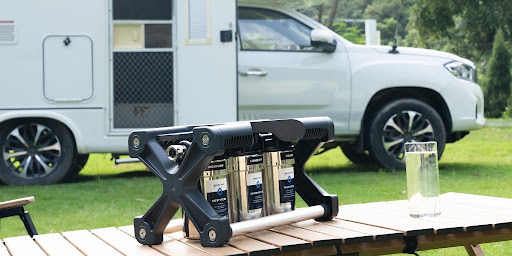
The GlacierFresh AUQAGO RV filtration system is described as a three-stage product featuring sediment and carbon block filtration with a final filtration stage. RV owners can review its product specifications to determine whether its design and connection requirements suit their particular vehicle.
Before purchasing any system, check the stated filtration capabilities rather than assuming that every multi-stage product removes the same substances.
Inspect Hoses, Connectors, and Storage Tanks
Filtration equipment cannot compensate for every maintenance problem in an RV water system. Hoses, connectors, and storage tanks also deserve regular attention.
Inspect drinking-water hoses for cracks, discoloration, and signs of deterioration. Use hoses specifically intended for potable water and keep their ends clean when they are disconnected.
Storage tanks should be cleaned and sanitized according to the vehicle manufacturer’s instructions. If water remains unused for an extended period, follow the recommended procedures before using the supply again.
Check fittings and washers for leaks, particularly after connecting to a new campground outlet. Small maintenance issues can become inconvenient when they are ignored during long journeys.
Flush New Filters Before Regular Use
Many filtration cartridges require flushing before they are used for normal drinking-water applications. This process helps remove loose carbon fines or manufacturing residue that may be present in a new cartridge.
Always follow the specific installation and flushing instructions supplied with the filter. The required amount of flushing water and procedure can vary between products.
After installation, inspect the connections and check the water flow. If the water continues to appear unusually cloudy or develops an unexpected odor, investigate the cause rather than assuming the filter will correct every issue.
Replace Filter Cartridges on Schedule
A filter cartridge has a limited service life. Its replacement interval may depend on time, water consumption, incoming water quality, and the manufacturer’s stated capacity.
Travelers who frequently visit campgrounds with sediment-heavy supplies may need to inspect their filters more often. Reduced flow can be one indication that a cartridge requires attention, although other plumbing problems can cause similar symptoms.
Keep a record of installation dates and follow the recommended replacement interval. Use compatible cartridges and avoid extending their service life beyond the manufacturer’s guidance.
Know When Filtration Is Not Enough
Good filtration habits are important, but they do not guarantee that every water supply is safe to drink. If a campground issues a boil-water notice or advises against consumption, follow the official instructions.
Standard sediment and carbon filters should not be assumed to remove bacteria, viruses, or all chemical contaminants. For concerns about an unfamiliar water source, consult local authorities or use appropriate testing.
If water has a strong unusual smell, unexpected color, or other concerning characteristics, avoid relying on appearance or taste alone to determine its safety.
Conclusion
Sediment and unpleasant tastes can make RV travel less comfortable, especially when moving between different water supplies. Understanding the causes of these issues helps travelers select suitable filtration equipment and maintain it properly.
A well-matched filtration system, clean hoses, regular tank maintenance, and timely cartridge replacement can all contribute to a more convenient water-management routine. By paying attention to product specifications and local water advisories, RV owners can make informed decisions and enjoy a more comfortable experience on the road.
