

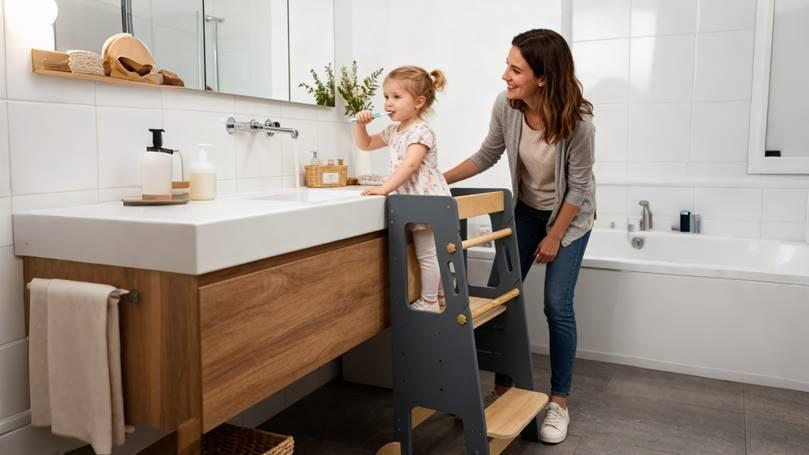
A Montessori inspired home is not a room full of matching wooden toys. It is a space arranged so a child can take part in ordinary life, make manageable choices, and explore at a pace that suits them. That idea can sound ambitious, but it often begins with simple questions: What does my child keep trying to reach? Which routines could they join safely? Where can they play while staying connected to the rest of the family?
Begin With One Everyday Routine
The kitchen is a natural starting point because toddlers are drawn to the work adults do there. When an adult is preparing food, a child may want to wash a piece of fruit, pass a napkin, or simply watch. A supervised Montessori Lernturm can help bring the child into the shared activity. The adult still controls the environment, chooses a safe task, and stays close. The tower is a way to participate together, not a way to leave a toddler unattended at a counter.
A useful routine is short and repeatable. Invite the child to carry a soft item, place a spoon on the table, or help wipe a low surface with a damp cloth. Show the action once, then give them time to attempt it. If the child loses interest, the routine can end. Children do not need to complete chores to benefit from being included. The value is in the experience of trying something real alongside a trusted adult.
Offer Activities With a Clear Beginning
Young children often do well with activities that are easy to start and easy to put away. A basket with a few safe objects, a set of chunky blocks, or a board with everyday fasteners gives a child something to explore without a complicated setup. Keep the choice small. When every toy is visible at once, it can be harder for a child to settle on one idea.
An indoor climbing frame can add a movement option to a home play space. A Klettergerüst Kinder collection may include different types of climbing and movement equipment, so families can compare what fits their room and child. The layout should leave clear space around the equipment, use the recommended surface and setup, and match the child’s abilities. Active play always needs close adult supervision.
Design for Connection, Not Isolation
A low shelf or activity corner works best when it is part of family life. If a toddler can see a parent cooking, folding laundry, or reading nearby, they may feel more comfortable exploring. This does not mean a child should be expected to entertain themselves for long stretches. At this age, adults remain an important part of play, whether by joining in, offering a word, or simply staying within reach.
The same principle applies to movement. A child may climb a few steps, pause, and ask for help. An adult can make sure the structure is stable and the area is clear, then support without rushing the child into a position they cannot manage. The aim is not to encourage bigger risks. It is to provide a safe, age appropriate opportunity to move, stop, and try again under supervision.
Let the Child Contribute to Resetting
A simple tidy-up routine can make the space more usable. Choose a few containers that are light enough for a child to manage. Use broad categories such as blocks, books, or art materials rather than expecting a toddler to sort every piece precisely. A short song or a familiar phrase can signal that one activity is ending and another part of the day is beginning.
It helps to treat tidying as part of the environment rather than a test of obedience. An adult can put away the items that are too small or difficult to handle and invite the child to return a few familiar objects. The child may not do it perfectly. Repetition and participation matter more than a spotless room. A calm reset also makes it easier to find the activity again tomorrow.
Keep the Setup Flexible
Children change quickly. An activity that held attention last month may be ignored this week, while a simple household object becomes fascinating. Watch what the child actually chooses and adjust the room around those interests. Move a basket to a more visible shelf, rotate a few activities, or clear floor space when movement becomes more appealing. There is no need to follow a rigid formula.
A Montessori inspired home is ultimately less about buying a particular set of products and more about paying attention. The child needs safe choices, meaningful ways to participate, and room to explore with an adult nearby. Begin with one routine and one play area. If both make family life a little easier and give the child a chance to try, the home is already moving in a thoughtful direction.
Choose Materials for the Real Room
Before bringing in a new activity, measure the space and picture how the family will move around it. A climbing item needs clear room for safe use; a low shelf should not block a walkway; and kitchen participation should not put a child near a hot surface. The right setup is the one adults can supervise consistently and children can use in an age appropriate way. A small, thoughtful area that fits the home is more useful than an ambitious play zone that has to be dismantled each evening.
