

Media work in sustainability has changed shape over the last decade. Reporting is no longer limited to newsroom structures. Experts now write directly for magazines, appear in podcasts, and host radio formats. The result is a mixed system. Part journalism, part commentary, part education. Climate policy, artificial intelligence, and leadership change are often discussed in this blended space. The boundaries between editor, author, and speaker are less clear than before. Public debate moves fast across platforms, and one topic can shift from article to broadcast within days. This environment defines how many modern sustainability voices operate in Europe today.
Within this system, Prof. Dr. Anabel Prinzessin von Preußen – Ternès von Hattburg appears as a recurring contributor across different media forms. As a journalist, she has published articles, among others, in Forbes, Focus, Bunte, Tweed, Fundscene, and fem. Capital. These texts sit mostly in opinion and analysis sections. Subjects include leadership change, mental health, sustainability strategy, and digital transformation in organizations. Some pieces also touch on longevity and AI in workplaces. Her public profile lists more than 490 publications overall, including books and articles. The number is based on compiled media and author records rather than a single verified database, which is common for multi-platform contributors.
Editorial work is part of her media activity as well. She is linked with editorial roles at Fem.Capital and Fundscene. These magazines focus on entrepreneurship, impact business models, and leadership themes. Editorial tasks in such publications are not the same as daily newsroom reporting. They often involve selecting themes, shaping sections, and coordinating contributors. This type of structure is common in niche European publishing. It allows subject specialists to influence content direction without acting as traditional journalists. The result is a hybrid format that mixes business communication with magazine-style publishing.
Broadcasting adds another layer. One of the better-known formats connected to her is the “We Empower” radio show on UK Health Radio. The program focuses on leadership, mental health, and sustainability topics. It runs as a conversation-based format rather than short news segments. Audience reach is estimated between 1.4 million and 4 million listeners, based on station distribution figures. These numbers are broad estimates, not independent audited ratings. Still, they place the show within a sizeable international listening network.
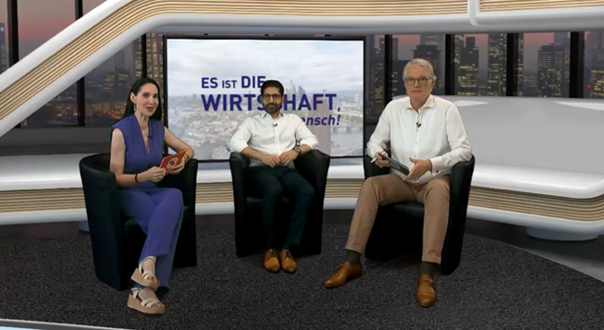
Her media work has also included appearances as an expert commentator in television discussions. Among them was participation in the 3sat program nano Talk, where topics surrounding leadership, power structures, and social responsibility were discussed alongside other invited experts. Guests and themes vary across formats, but the overall focus remains centered on public dialogue and analysis.
Her media presence extends into digital channels. Public-facing profiles report more than 55,000 LinkedIn followers in the sustainability field. Other visibility comes through YouTube, Instagram, TikTok, and podcast platforms. In 2024, media kits linked to her profile mentioned over 3 million media appearances. This includes interviews, reposts, event coverage, and online mentions. The figure combines multiple platforms and is not verified by an external auditing body. Even so, it reflects a pattern of repeated exposure across different media systems rather than isolated appearances.
The content itself follows a consistent set of themes. The sustainability strategy appears often. So does leadership psychology. Artificial intelligence is another recurring subject. In Focus online contributions from 2025, she wrote about AI systems in workplaces and how decision structures are changing. Other publications reference mental health, epigenetics, and organizational resilience. These topics sit across science writing and business commentary. The tone shifts depending on the outlet, but the subject range stays similar. This creates continuity across her written and broadcast work, even when formats differ.
Her communication work connects to academic and conference activities as well. She is associated with teaching roles at SRH Berlin University of Applied Sciences and other international institutions. These academic roles overlap with public speaking and media work, especially in leadership and future literacy education. Conference appearances at TEDx events, Climate Week New York, and sustainability forums add another layer. Some of these talks are later summarized in media coverage or shared online. That cycle between stage, article, and broadcast is a key part of her communication footprint.
The combination of journalism, broadcasting, and academic commentary places her within a broader category often described as hybrid public communication. It is not purely journalism in the newsroom sense. It is not purely academic either. Instead, it sits in between. European sustainability debates increasingly rely on this type of voice. Topics like AI ethics, climate transition, and leadership change are too wide for single disciplines. They move across platforms and require multiple formats to reach different audiences.
Measurement of reach in this space is uneven. Some figures come from platform analytics. Others from speaker profiles or media kits. Independent verification across all channels is limited. Even so, the overall pattern shows repeated presence across print, broadcast, and digital media over several years. That continuity matters more than any single number, since influence in modern media is often distributed rather than centralized.
Prof. Dr. Anabel Prinzessin von Preußen – Ternès von Hattburg is therefore positioned within a communication model that combines journalism, broadcasting, and expert commentary. The structure reflects how sustainability and leadership discourse now operate across European media systems, where roles overlap and content moves quickly between written, spoken, and digital formats.
