

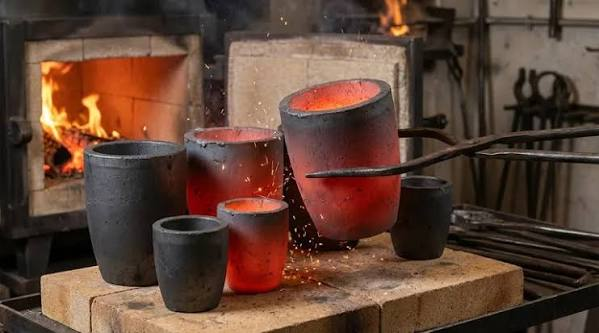
Metals like aluminum, copper, brass, gold and silver are melted in containers which can survive very high heat and sudden temperature change. A graphite crucible manufacturer produces these containers from carefully selected graphite and clay or silicon carbide materials, shapes them under pressure and bakes them at high temperature. The final crucible can hold molten metal safely, transfer heat well and be used for many heating cycles.
Why Is Graphite Suitable for Melting Metal?
Graphite has a very high melting point, which is far above the melting point of common metals. It also conducts heat quickly, so the metal inside melts faster and energy is saved. Another useful property is that molten metals do not stick easily to its surface, and this makes pouring cleaner. A graphite crucible manufacturer selects the material with these properties in mind.
Which Raw Materials Are Used?
The main material is natural flake graphite. Depending on the type of crucible, it is mixed with:
- Clay, which works as a binder in clay graphite crucibles
- Silicon carbide, which increases strength and heat conductivity
- Special additives for oxidation resistance
The quality and purity of these raw materials affect the life of the final product, so every graphite crucible manufacturer checks them before production.
How Is the Shape Formed?
There are two main methods. In roll forming, the mixed material is pressed into a rotating mold with a shaped tool. In isostatic pressing, the material is placed in a flexible mold and pressed from all sides with equal pressure. The second method creates a very uniform density, which gives better strength and fewer weak spots.
What Happens During Baking?
After shaping, the crucible is dried slowly to remove moisture, because fast drying can cause cracks. Then it goes into a furnace for firing. The firing temperature depends on the material system. This step hardens the body and gives it the final structure. An experienced graphite crucible manufacturer controls the heating curve very carefully.
What Is the Role of Glaze and Coating?
Graphite can slowly react with oxygen at high temperature, which is called oxidation. A protective glaze or coating on the outside reduces this effect and extends the working life. This layer also helps to protect the crucible from the flame and from chemicals in the furnace.
Which Furnaces Use These Crucibles?
They are used in different heating systems:
- Electric resistance furnaces
- Induction furnaces
- Gas or oil fired furnaces
- Tilting furnaces in foundries
The shape of the crucible is selected according to the furnace type and the amount of metal.
Which Industries Depend on Them?
Foundries, jewelry workshops, die casting plants and metal recycling companies use these crucibles every day. Laboratories and special alloy producers also use smaller sizes for sample melting and testing. These users depend on a graphite crucible manufacturer for stable quality in every batch.
What Affects Service Life?
Life depends on temperature, type of metal, heating speed and handling. Sudden heating or cooling creates stress in the body. Also, chemical fluxes and slag can attack the wall. A well made crucible resists these conditions longer, which reduces the cost per melt.
Final Thoughts
Safe metal melting starts with a strong container made with the right materials and process control. A graphite crucible manufacturer controls raw material quality, pressing, firing and coating, so foundries and workshops can melt metal with stable performance.
