

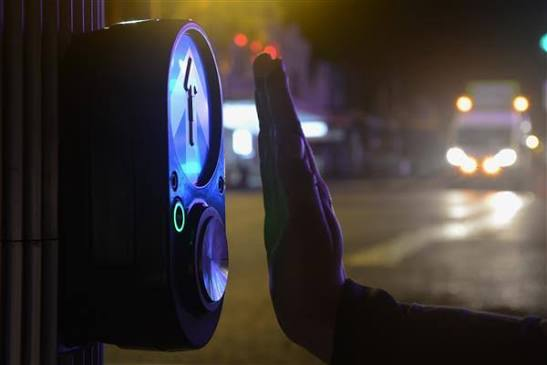
Crossing a busy road needs clear communication between the person on foot and the traffic signal. A smart pedestrian crossing system uses sensors, buttons and signal controllers to detect people who want to cross and to give them a safe walking time. Modern versions also work without touch, so a person can call the signal by a hand wave, and the system adjusts to the real pedestrian demand.
What Is the Problem With Traditional Crossings?
A traditional crossing often has a simple push button and a fixed timer. Some people do not see the button, some cannot press it easily and some do not know if their request is accepted. Shared buttons are also touched by many people every day, which raises hygiene concerns. A smart pedestrian crossing system solves these problems with better detection and feedback.
How Does Contactless Detection Work?
A small sensor, usually infrared or radar, is installed in the push button unit. When a hand comes near, the sensor detects the movement and sends the call to the signal controller. A light, sound or display confirms that the request is received. No physical pressure is needed.
What Else Can the System Include?
A complete setup can use different parts:
- Contactless call button
- Pedestrian detection sensors at the waiting area
- Countdown display for the walking time
- Audio signals for visually impaired people
- Vibrating or tactile indicators
- Connection to the main traffic controller
These parts together make the smart pedestrian crossing system clear and accessible.
How Does Pedestrian Detection Help?
Some sensors can see if a person is waiting at the curb or is still on the crossing. The system can then extend the green time for slow walkers or cancel a call if nobody is waiting. This reduces useless stops for vehicles and also gives more safety for people who need extra time.
Why Is Accessibility Important?
Children, elderly people and people with disabilities have different needs. Audio messages and vibration help blind or low vision users to know when to cross. Large symbols and countdown numbers help others to understand the remaining time. A smart pedestrian crossing system with good accessibility makes the road easier for everyone.
How Does It Connect With Traffic Signals?
The system sends the pedestrian call to the signal controller, which manages the traffic plan. The controller decides the safe moment to stop vehicles and start the walking phase. After that, countdown and sound signals follow the same timing, so all users get the same information.
Which Locations Need This Technology?
Typical locations are schools, universities, hospitals, elderly care areas, shopping streets, market areas and busy urban crossings without a full intersection. In these locations, pedestrians are many and the risk of conflict is higher, so a smart pedestrian crossing system gives strong value.
How Does It Support Hygiene?
Touch free operation is useful in public places where many people use the same equipment. Not touching the button reduces contact between surfaces and hands. This became more important after the public health concerns of recent years, and the benefit stays valid for daily use.
What Data Can Be Collected?
Some systems count pedestrian calls and crossing time. This information helps city planners to understand how busy a crossing is at different hours and to improve signal timing.
Final Thoughts
Safe crossing depends on clear information, correct timing and equal access for all users. A smart pedestrian crossing system combines sensors, signals and communication so that people on foot can cross with confidence while traffic keeps moving in an organized way.
