

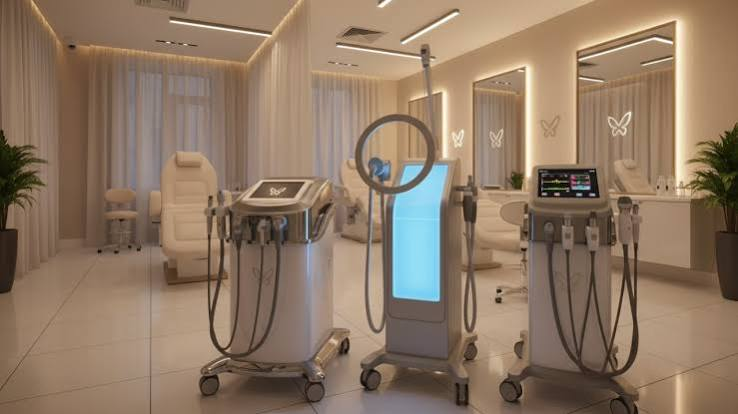
Behind every laser, radio frequency or ultrasound beauty device used in clinics and spas, there is a factory which designs, tests and assembles it. An aesthetic equipment manufacturer is a company that develops and produces professional beauty machines, from the electronic parts inside to the housing, software and packaging outside. Its work covers research, production, quality control and support, and it supplies the clinics, distributors and brands around the world.
Which Machines Are Usually Produced?
The product range often includes:
- IPL and diode laser hair removal systems
- Radio frequency skin tightening devices
- HIFU and ultrasound lifting machines
- Body contouring and cavitation machines
- Facial care systems with hydro cleaning and LED light
Each technology works with a different energy type and targets a different skin or body concern. A strong aesthetic equipment manufacturer usually offers more than one of these technologies.
How Does Research and Development Work?
Engineers study the energy source, the safe level of output and the comfort of the user. They design the circuit boards, power supply, cooling system and software. Prototypes are tested many times before the design is accepted. This stage decides the performance and the safety of the machine.
What Parts Are Built or Selected?
A machine contains a power unit, an energy module such as a lamp, laser diode or transducer, a handpiece, a cooling system, a control screen and a body structure. Some parts are made in the factory, and others are bought from specialized suppliers and then checked on arrival by the aesthetic equipment manufacturer.
How Is Assembly Organized?
Assembly follows a planned line. Electronic boards are mounted, wires are connected, handpieces are fitted and the machine body is closed. After this, each unit is programmed and calibrated. Skilled workers and test equipment are needed because small errors can change the energy output.
How Is Safety Tested?
Every machine goes through tests such as electrical safety, output power measurement, cooling check and long running aging test. The aging test runs the machine for hours to find early failures. Devices which pass all steps are approved for packing. A responsible aesthetic equipment manufacturer never skips these steps.
Which Certifications Are Common?
Different markets ask for different approvals. CE and ISO quality standards are common for Europe, and FDA related rules are important for the United States. Medical device standards may apply to some devices. Documentation, such as test reports and user manuals, is prepared together with the machine.
What Is the Role of Software?
Software controls energy levels, treatment modes and the display. Good software is easy to understand and has safety limits to avoid wrong settings. Many machines now have touch screens and several language options.
Why Do Training and After Sales Matter?
Professional equipment needs correct operation. Manufacturers often supply manuals, video guides and technical support. Spare parts such as lamps, filters and handpieces are also supplied for maintenance. This service from the aesthetic equipment manufacturer helps the machine to keep working for many years.
How Is Customization Handled?
Clients can request logo, color, language, packaging or specific functions. Production teams adjust the design and software to match these needs while keeping the safety rules.
Final Thoughts
Professional beauty technology depends on engineering, testing and reliable production. A good aesthetic equipment manufacturer connects design, quality control and service, so clinics and brands can use machines that are safe, stable and ready for daily work.
