

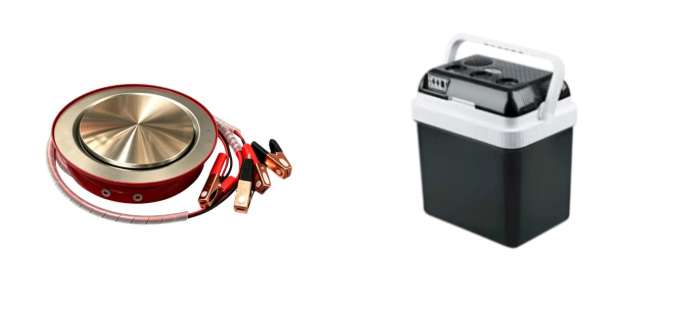
A solar panel makes DC power. A battery stores DC power. A normal home appliance needs AC power. That means a normal off-grid home needs an inverter, converting DC to AC, and every conversion loses energy. dc appliances remove that step. They run directly on DC power, so the power from the panel goes straight to the appliance, with no conversion in between.
KAM UNION, through its Off-Grid Residential Systems range, offers DC appliances for off-grid homes, cabins, and RVs. This article explains what they are, how they work, where they are used, and what a buyer should check before ordering them.
What Are DC Appliances?
DC appliances are those that run on DC current. They may comprise DC refrigerators and freezers, induction cooktops, rice cookers, air purifiers, LEDs, and vacuum cleaners. They can be used in any environment running on DC power.
Why DC Makes Sense in a Solar Home
Energy generated by solar panels and stored by batteries is DC energy. The use of DC appliances in a solar power system helps avoid unnecessary energy conversions. That is the core idea, and it is simple. A solar panel makes DC. A battery stores DC. A DC appliance uses DC. Nothing is converted, so nothing is lost.
12V, 24V, and 48V: Choosing the Right Voltage
Various residential and portable systems have various electrical requirements. A simple cabin or outdoor setup might just need basic lighting and ventilation, but an off-grid home or vehicle would require cooling, cooking, water pumping, and many other pieces of equipment. Hence, choosing the right kind of DC appliances and voltage is important to ensure proper operation.
KAM UNION’s product range supports various application needs, allowing users to match dc appliances with their existing solar energy systems and battery storage configurations. That matching is the key to a working system. The appliances, the solar panels, and the battery must all work at the same voltage, or the system will not work at all.
The Off-Grid Residential range features professional 12V and 24V pure DC solar power, energy storage, and dedicated low-voltage residential appliances, customized for off-grid and remote living environments. Those are the standard voltages for a small off-grid home, a cabin, or an RV, where the loads are lighting, cooling, and ventilation.
For bigger off-the-grid houses, or where several electrical loads have to be supplied, 48V systems work more efficiently and provide better performance in terms of energy distribution. They are chosen for applications involving longer cable lengths or bigger power consumption. A bigger house, with more appliances, and longer cables, needs a higher voltage to move the power efficiently, without losing too much in the cables.
How a DC System Is Built
A well-planned DC system, in combination with specialized DC appliances, provides a dedicated solution for a particular application. There is always a need for autonomous power systems in situations when grid connectivity is not available, and a DC system is the right answer for those situations.
The typical system configuration flow is simple: Solar Panels, then Charge Controller, then Battery Bank, then DC Distribution, then DC Appliances. The solar panels make DC power. The charge controller manages the charging of the battery. The battery bank stores the power for use at night and on cloudy days. The DC distribution sends the power to the appliances. The appliances use it directly, with no inverter in between.
dc appliances that are part of such a system work together as a whole. The solar panels, the battery, and the appliances are all designed for the same voltage, and for the same off-grid use. That is why KAM UNION’s off-grid residential solution is described as a fully integrated and standardized solution, combining modular housing, solar power generation, energy storage systems, and low-voltage DC appliances, enabling reliable 24-hour off-grid living, independent of municipal power grids.
Where DC Appliances Are Used
DC appliances are widely used in off-grid residential systems such as off-grid houses, cabins, RVs, and other constructions. They can fulfill various functions, including lighting, cooling, and ventilation.
Planning and Protection Matter
dc appliances that are chosen without planning can fail, or can damage the system. A buyer should plan the system first, then choose the appliances that fit it. That planning should cover the battery voltage, the power capacity, the daily energy consumption, and the application needs. Those four points are the ones KAM UNION itself lists for choosing the right appliances, and they are the right ones to check.
How to Choose the Right DC Appliances
A buyer should check five things before ordering. First, the voltage: does the appliance match the battery voltage, whether 12V, 24V, or 48V? Second, the power: does the power consumption fit the solar panels and the battery, so the system can supply it every day?
Third, the capacity: is the refrigerator big enough, is the cooktop powerful enough, and are the lights bright enough for the home? Fourth, the connection: does the connection method fit the DC distribution system? Fifth, the starting current: is the starting current within what the system can supply, so the appliance starts reliably?
dc appliances that score well on all five points are a safer buy than cheaper appliances that do not match the system, and that will fail or waste energy.
Conclusion
A DC appliance is a simple idea with a clear job: to run directly on the DC power that solar panels make and batteries store, with no inverter, no conversion, and no wasted energy. A DC refrigerator, freezer, induction cooktop, rice cooker, air purifier, LED light, or vacuum cleaner does the same job as a normal appliance, in a form that fits an off-grid home.
With a pure DC low-voltage architecture, 12V, 24V, and 48V options, a simple system flow from panels to appliances, and a one-stop supply of housing, power, storage, and appliances, DC appliances are a practical choice for off-grid houses, cabins, and RVs, where reliable, safe, and efficient power matters more than anything else.
Frequently Asked Questions
1. What are DC appliances?
Appliances that run on DC current, including DC refrigerators and freezers, induction cooktops, rice cookers, air purifiers, LEDs, and vacuum cleaners, for use in any environment running on DC power.
2. Why use DC appliances in a solar power system?
Because solar panels generate DC energy and batteries store DC energy, so using DC appliances avoids unnecessary energy conversions and the need for an inverter.
3. What voltages are available?
Professional 12V and 24V low-voltage equipment for smaller off-grid homes, cabins, and RVs, and 48V systems for bigger off-grid houses, longer cable lengths, and bigger power consumption.
4. How does a DC system work?
Solar panels feed a charge controller, which charges a battery bank, and DC distribution sends the power directly to the DC appliances, with no AC conversion.
5. How do I choose the right DC appliances?
Consider battery voltage, power capacity, daily energy consumption, and application needs, and check rated voltage, power consumption, capacity, connection method, and starting current for each appliance.
