

Introduction
Op-amp filters are principal parts in electronic circuits, assuming a critical part in signal handling by permitting specific frequencies to pass while obstructing others. Understanding their plan standards and down to earth execution methods is fundamental Discreet Semiconductor Products for making productive and successful channels in different applications.
Basic Concepts of Filters
Filters are electronic circuits that manipulate the frequency content of signals. They are arranged into a few sorts in view of their recurrence reaction:
- Low-Pass Filters: Permit frequencies under a specific end to pass while lessening higher frequencies.
- High-Pass Filters: Permit frequencies over a specific end to pass while lessening lower frequencies.
- Band-Pass Filters: Permit a particular scope of frequencies to pass while lessening frequencies outside this reach.
- Band-Stop Filters: Block a particular scope of frequencies while permitting frequencies outside this reach to pass.
These diverts are used in various applications, from sound taking care of to correspondence structures and clinical contraptions.
Operational Amplifiers (Op Amps)
Operational amplifiers, or movement amps, are versatile parts utilized in different electronic circuits. They are described by high information impedance, low result impedance, and high increase. Normal arrangements incorporate modifying and non-upsetting arrangements, each offering various benefits for channel plan.
Design Principles of Op Amp Filters
Selecting the Right Op Amp Picking an operation amp with proper data transmission, slew rate, and commotion qualities is critical for channel execution.
Frequency Response and Cutoff Frequency The end recurrence characterizes the place where the channel begins to constrict the sign. Not entirely set in stone by the upsides of the resistors and capacitors in the circuit.
Q Factor and Bandwidth The Q factor estimates the selectivity of a channel, with higher Q demonstrating a smaller transfer speed. Data transfer capacity is conversely connected with the Q factor.
Filter Order and Its Impact on Performance The filter order determines the steepness of the roll-off rate. Higher-order filters provide sharper transitions between the passband and stopband.
Low-Pass Filters
Design Principles Low-pass filters can be designed using a simple RC (resistor-capacitor) network or with more complex configurations involving op amps.
Mathematical Equations The cutoff frequency (f_c) is given by:
fc=12πRCf_c = \frac{1}{2 \pi RC}fc=2πRC1
Practical Circuit Design A basic op amp low-pass filter involves an RC network in the feedback loop of an inverting op amp configuration.
Example Implementation For a cutoff frequency of 1 kHz, choosing R = 1.59 kΩ and C = 100 nF provides the desired response.
High-Pass Filters
Design Principles High-pass filters can also be designed using RC networks and op amps, allowing high frequencies to pass while blocking lower frequencies.
Mathematical Equations The cutoff frequency (f_c) is determined similarly:
fc=12πRCf_c = \frac{1}{2 \pi RC}fc=2πRC1
Practical Circuit Design Inverting op amp configurations are often used, with the RC network placed appropriately.
Example Implementation For a cutoff frequency of 1 kHz, selecting R = 1.59 kΩ and C = 100 nF achieves the desired response.
Band-Pass Filters
Design Principles Band-pass filters are more complex, typically requiring multiple components to define the bandwidth and center frequency.
Mathematical Equations The center frequency (f_0) and bandwidth (BW) are calculated as:
f0=12πLCf_0 = \frac{1}{2 \pi \sqrt{L C}}f0=2πLC1
Practical Circuit Design A typical methodology is the utilization of numerous criticism (MFB) topology.
Example Implementation Designing for a center frequency of 1 kHz and bandwidth of 200 Hz might involve specific values for R, L, and C components.
Band-Stop Filters
Design Principles Band-stop filters, or notch filters, are designed to reject a specific frequency band.
Mathematical Equations The notch frequency (f_n) is given by:
fn=12πLCf_n = \frac{1}{2 \pi \sqrt{L C}}fn=2πLC1
Practical Circuit Design Implementation can use parallel or series LC circuits in conjunction with op amps.
Example Implementation Choosing appropriate component values to target a notch frequency of 1 kHz.
Active vs. Passive Filters
Differences and Advantages Active filters, which use op amps, offer better performance and tunability compared to passive filters, which rely solely on resistors, capacitors, and inductors.
When to Use Active Filters Active filters are preferred when precise control over frequency response and gain is needed.
Comparisons in Performance Active filters generally provide higher input impedance and lower output impedance, improving signal integrity.
Practical Implementation Techniques
Component Selection Choosing high-quality resistors and capacitors with low tolerances is crucial.
PCB Layout Considerations Proper PCB layout minimizes noise and interference, enhancing filter performance.
Minimizing Noise and Interference Shielding and grounding techniques help reduce unwanted noise.
Testing and Validation Using oscilloscopes and signal generators to verify filter performance.
Common Challenges and Troubleshooting
Stability Issues Ensuring that the op amp and feedback network maintain stability across the intended frequency range.
Component Tolerances Accounting for variations in resistor and capacitor values that can affect filter accuracy.
Signal Distortion Mitigating non-linearities that can introduce distortion.
Practical Tips for Troubleshooting Double-checking component values, connections, and using simulation tools.
Advanced Filter Designs
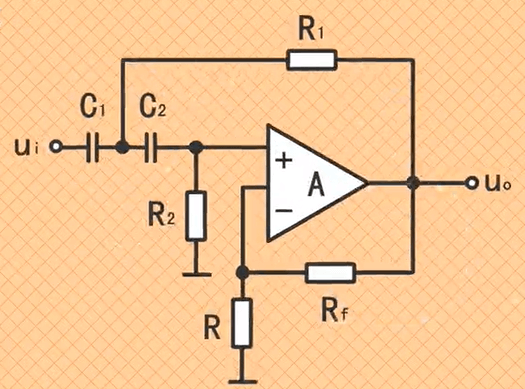
Sallen-Key Topology A popular configuration for designing second-order filters.
Multiple Feedback (MFB) Filters Offer precise control over frequency response.
State-Variable Filters Allow simultaneous extraction of low-pass, high-pass, and band-pass outputs.
Applications of Op Amp Filters
Audio Processing Equalizers, crossover networks, and noise reduction.
Communication Systems Channel selection, signal conditioning, and noise filtering.
Signal Molding Planning signals for analog-to-digital conversion.
Medical Devices Heart rate monitors and EEG equipment.
Conclusion
Understanding op-amp is essential for designing and implementing effective electronic circuits. By mastering design principles and practical techniques, one can create reliable filters for various applications. Staying informed about advancements in filter technology will ensure continued innovation and efficiency in circuit design.
FAQs
- What is the main advantage of using op amp filters?
- Op amp filters offer precise control over frequency response and gain, making them ideal for complex signal processing tasks.
- How do you choose the right op amp for your filter design?
- Consider the op amp’s bandwidth, slew rate, noise characteristics, and compatibility with the filter’s requirements.
- What are the common mistakes to avoid in op amp filter design?
- Avoid incorrect component values, poor PCB layout, and neglecting to account for component tolerances.
- Can op amp filters be used for high-frequency applications?
- Yes, but selecting op amps with appropriate bandwidth and minimizing parasitic elements is crucial.
- What are the best practices for testing op amp filters?
- Use precise measuring instruments, verify performance against theoretical calculations, and simulate circuits before physical implementation.
