

Picture this: you’re navigating a packed airport terminal in July, your carry-on rolling behind you, sweat already forming at your collar before you’ve even boarded. Or you’re standing in a long queue at an outdoor landmark, the sun beating down with nowhere to escape. Summer travel is exhilarating, but the heat? That’s a different story entirely.
Finding reliable, portable cooling on the go is one of those quiet struggles every warm-weather traveler knows too well. Misting sprays lose their effect quickly, air conditioning is inconsistent, and shade is never guaranteed. That’s exactly where handheld fans have earned their place as a must-pack travel essential — compact, personal, and surprisingly effective.
But not all handheld fans are created equal. The best handheld fan for travel needs to strike the right balance: powerful enough to deliver real airflow, quiet enough to use in museums, libraries, or airplanes without drawing stares, and light enough to slip into your day bag without a second thought. This guide covers everything you need — from the key features that matter most, to top-reviewed models, to a practical step-by-step selection process — so you can travel cooler and more comfortably this summer.
Why Every Traveler Needs a Handheld Fan for Summer Adventures
Summer travel has a way of testing your patience in ways no itinerary can prepare you for. Crowded airport terminals with sluggish air conditioning, outdoor city tours where the pavement radiates heat back at you, long ferry rides with no shade — the discomfort adds up fast. When the temperature climbs and the crowds thicken, staying cool stops being a luxury and starts feeling like a necessity.
This is where handheld fans for summer have quietly become one of the most practical items a traveler can carry. Unlike bulky neck fans or stationary desk units, a compact travel fan fits in your tote, your jacket pocket, or the side mesh of your backpack. You pull it out when you need it, and it’s ready in seconds. No setup, no fuss — just immediate airflow directed exactly where you want it.
Beyond comfort, there’s a genuine health case for staying cool while traveling. Heat exhaustion can sneak up on you, especially when you’re walking more than usual, carrying luggage, or adjusting to an unfamiliar climate. Consistent personal cooling helps regulate your body temperature, reduces fatigue, and keeps your energy up for the activities you actually came to enjoy. Travel fans also come in handy in ways people don’t always anticipate — freshening up in a warm hotel room before dinner, staying comfortable on a delayed bus, or cooling down after a museum visit before heading back into the sun. Once you travel with one, it’s hard to imagine leaving it behind.
Key Features to Look for in the Best Handheld Fan for Travel
Choosing a handheld fan sounds simple until you’re standing in a store or scrolling through dozens of options online, each one claiming to be the most powerful or the most portable. The truth is, a few specific features separate genuinely useful travel fans from ones that end up forgotten at the bottom of a bag. Here’s what actually matters.
Quiet Operation: Enjoy Peaceful Travel with Silent Fans
Noise level is the feature most people overlook until they’re sitting in a quiet museum gallery or on a red-eye flight, suddenly self-conscious about the whirring coming from their hand. Quality quiet portable fans operate at 40 decibels or below on lower settings — roughly equivalent to a soft whisper. When evaluating a fan’s noise level, look for brushless motors, which generate significantly less friction and sound than traditional motor designs. Brands like JisuLife have made brushless motor technology a standard feature across their handheld fan lineup, which is part of why they’ve gained traction among frequent travelers. If a product listing doesn’t specify decibel ratings, user reviews mentioning noise in real-world settings are your most reliable source.
Long Battery Life: Stay Cool All Day Without Recharging
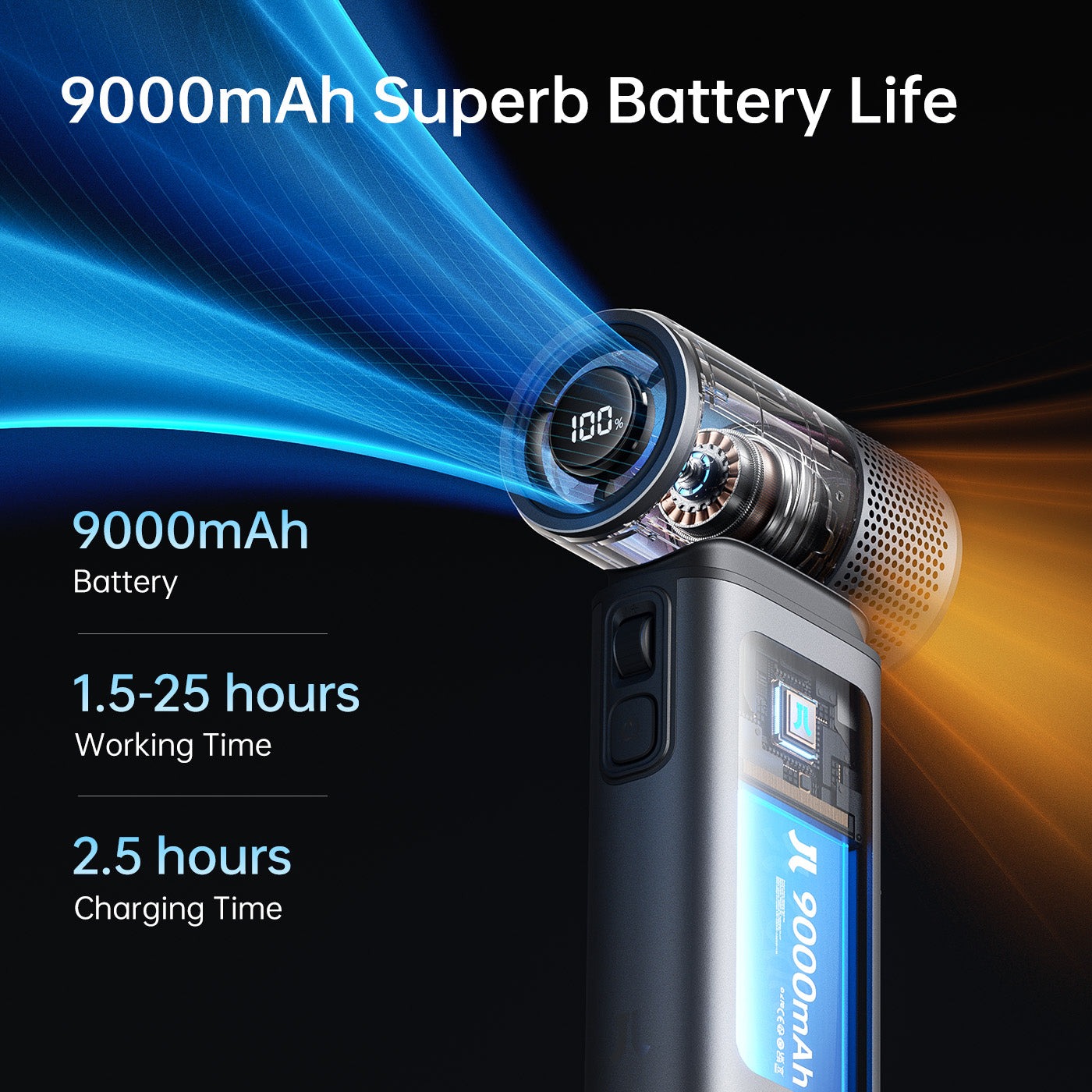
A fan with long battery life is non-negotiable for full-day travel. At minimum, look for a model that delivers four to six hours of runtime on a mid-range speed setting — that’s enough to cover a long sightseeing day without hunting for an outlet. Battery capacity (measured in mAh) gives you a rough benchmark, but real-world runtime depends heavily on which speed setting you use most. USB-C charging is increasingly standard and worth prioritizing, since it lets you top up from the same power bank you’re already carrying for your phone.
Portability and Lightweight Design for Easy Travel
Convenient and lightweight fans earn their place in a travel bag by being genuinely unobtrusive. The ideal travel fan weighs under 200 grams and folds or collapses into a compact form that won’t awkwardly jut out of a side pocket. Foldable blade designs and telescoping handles are practical features that reduce bulk without sacrificing airflow when deployed. If you’re a carry-on-only traveler, dimensions matter as much as weight — a fan that fits flat in a packing cube is far more practical than one with an odd shape.
Powerful Cooling Performance to Beat the Heat
Portability means nothing if the airflow is barely noticeable. Look for fans with at least three speed settings, giving you flexibility between gentle background circulation and strong, direct cooling when you really need it. Motor strength directly determines airflow volume, so models with brushless DC motors tend to outperform similarly sized fans with conventional motors. Adjustable fan heads that pivot or rotate let you direct airflow precisely — toward your face, neck, or wrist — which makes a meaningful difference in how efficiently you cool down.
Top Picks: The Best Handheld Fans for Travel Reviewed
After weighing noise levels, battery performance, and real-world portability, a handful of models consistently rise above the rest for summer travelers. Here are the standout options worth considering.
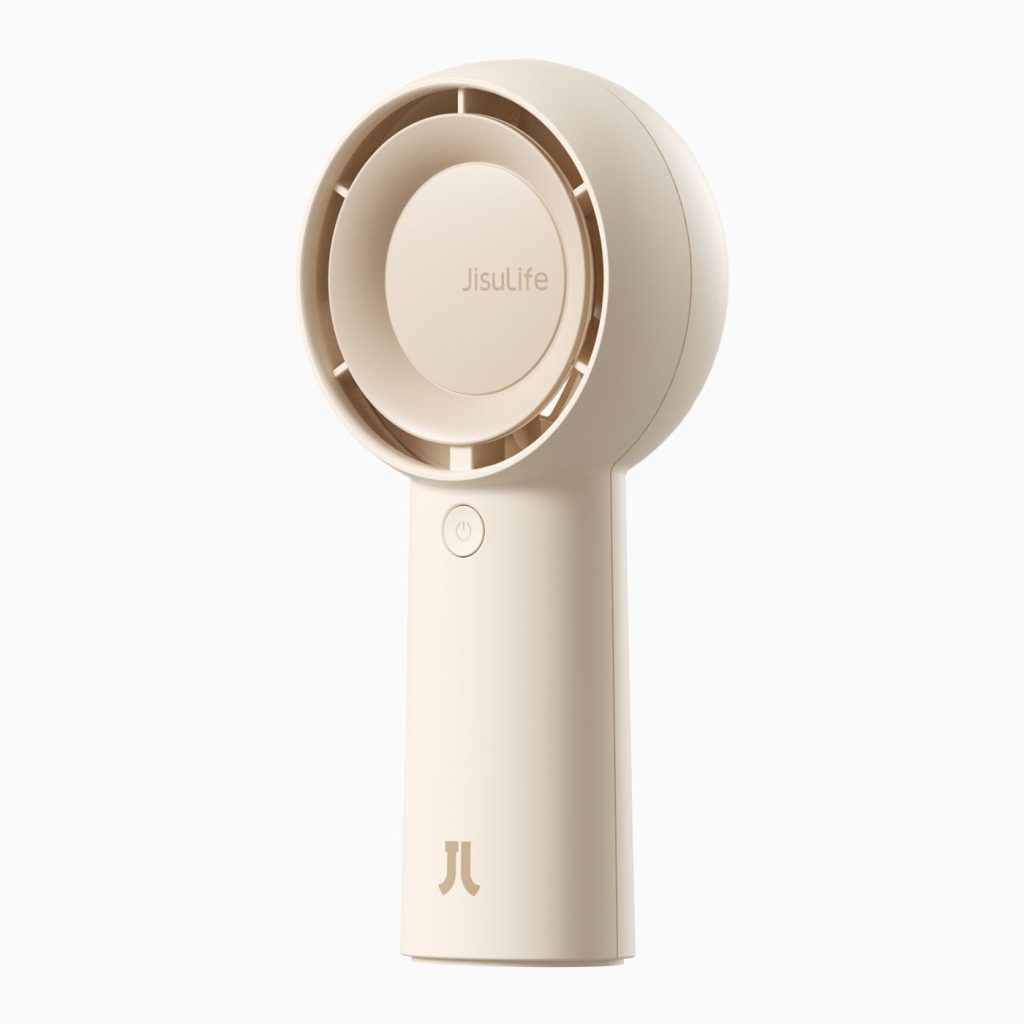
The Jisulife Handheld Fan has become a favorite among frequent travelers for good reason. Its brushless motor keeps noise impressively low even on higher settings, and the foldable handle tucks away cleanly in a bag pocket. Battery life holds up well through a full sightseeing day, and USB-C charging means one cable covers everything. The trade-off is that the highest speed setting, while genuinely powerful, does produce more audible airflow — acceptable outdoors, but something to consider in quieter settings. Overall, it’s one of the best handheld fans for travel if you want reliable all-day performance.
The OPOLAR Handheld Fan earns points for raw airflow. It moves more air per second than most compact competitors, making it particularly effective in humid, high-heat conditions where weaker fans barely register. The grip is comfortable for extended use, and the three-speed range gives you genuine flexibility. Battery life on the highest setting is shorter than ideal, so mid-range speed becomes your practical default — which still delivers solid cooling. It’s a strong pick for travelers prioritizing power over whisper-quiet operation.
For those who want the quietest portable fan experience above all else, the EasyAcc Mini Fan is worth serious consideration. It operates at near-silent levels on its lower two speeds, making it genuinely unobtrusive in museums, on planes, or in libraries. Airflow is modest by comparison, but for ambient personal cooling rather than intense heat relief, it performs well. Its ultra-compact size — small enough to disappear into a jacket pocket — makes it ideal for light packers.
Each of these models addresses a slightly different traveler priority. The right choice comes down to whether you value maximum airflow, all-day battery endurance, or near-silent operation — a decision the next section will help you navigate directly.
How to Choose the Right Handheld Fan for Your Travel Needs: A Step-by-Step Guide
With so many options available, narrowing down the right fan becomes much easier when you work through a few deliberate questions before buying. Start by thinking about your trip duration and daily schedule. A weekend city break has different demands than a two-week backpacking trip — longer trips require stronger battery capacity and more durable build quality, while shorter outings can prioritize compactness above all else.
Next, consider your primary activities. If your itinerary is heavy on museums, galleries, or indoor cultural sites, quiet operation should rank near the top of your criteria. If you’re spending most of your time outdoors at markets, beaches, or festivals, raw airflow and heat resistance matter more than decibel ratings. From there, check the fan’s weight and folded dimensions against the bag you’ll actually be carrying — a fan that doesn’t fit comfortably in your setup won’t get used. Finally, compare battery life against your typical day length and access to charging. If you’re often away from outlets for eight-plus hours, prioritize higher mAh capacity and look for USB-C compatibility so a single power bank covers both your phone and your fan. Running through these four steps — trip type, activity profile, portability fit, and power needs — takes less than five minutes and reliably points you toward the right model.
Practical Tips for Maximizing Your Handheld Fan’s Use While Traveling
Getting the most out of your travel fan goes beyond simply switching it on. A few smart habits can meaningfully extend its usefulness throughout your trip. Start each day with a full charge — plugging in overnight alongside your phone means you’ll never head out with a depleted battery. If your itinerary involves long stretches away from outlets, carry a compact power bank rated at least 10,000mAh, which can recharge most handheld fans two to three times over.
For maintenance, keep the fan blades free of dust and lint, which accumulate quickly in travel bags and quietly reduce airflow efficiency. A quick wipe with a dry cloth every few days is enough. In hotel rooms, position the fan to draw air across a wet towel or near an open window at night — this improvised cooling trick works surprisingly well in warm climates without air conditioning. During transit, aim airflow at your wrists or neck rather than your face for faster, more effective temperature regulation. These small adjustments add up, turning a good travel fan into an indispensable part of your summer kit.
Pack Smart, Stay Cool: Making the Right Fan Choice for Summer Travel
Summer travel is full of memorable moments — and uncomfortable ones. The difference between a draining day in the heat and an energizing one often comes down to small, practical decisions made before you leave home. A well-chosen handheld fan is one of those decisions that quietly pays off every single day of your trip.
Throughout this guide, the core message has stayed consistent: the best handheld fan for travel isn’t simply the most powerful one or the cheapest one — it’s the one that balances quiet operation, reliable battery life, genuine airflow, and a form factor that actually fits your travel style. Noise matters when you’re in a museum or on a flight. Battery endurance matters when you’re twelve hours into a sightseeing day. Portability matters when every gram and centimeter of bag space is accounted for.
Use the features breakdown to identify your non-negotiables, run through the step-by-step selection process with your specific trip in mind, and let the reviewed models give you a concrete starting point. Whether you prioritize whisper-quiet performance, maximum cooling power, or all-day battery endurance, there’s a fan built for exactly that. Pack smart, stay cool, and spend your energy on the experiences that actually brought you there.
