

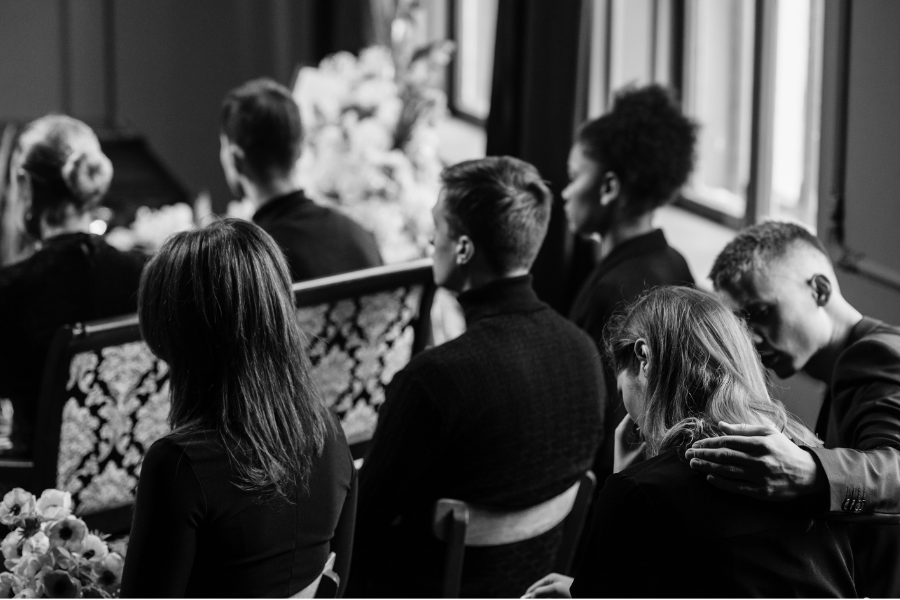
When planning a farewell service, many families choose to work with a Celebrant – a professional who helps design and lead a personalized ceremony based on the beliefs, values and life story of the deceased. In an environment such as a crematorium or funeral venue, a celebrant may facilitate the gathering, give a moving eulogy and arrange order of service. Their flexibility and sensitivity can make a big difference in loved ones wanting to say goodbye in a way that feels intimate, respectful, and true to the personality of their loved one.
A Catafalque also has a symbolic role in certain ceremonies. This raised platform or stand holds the coffin or urn during the service and creates a dignified focal point for mourners. Used with care and with a sense of reverence, a catafalque helps to structure the space and helps to ensure that the service is conducted with a sense of solemnity and respect. Combined with direction from a Celebrant, a catafalque can help to produce a meaningful, dignified good-bye.
Why Families Have Chosen a Celebrant
Choosing a Celebrant gives families a chance to personalize the service in accordance with the beliefs of the person and the family’s wishes. Unlike traditional religious clergy who may follow strict liturgies, a celebrant is often open to mixing cultural traditions, memories, stories, poems, music — whatever elements best reflect the person’s life. This flexibility makes celebrations more inclusive and comforting, especially for families who have mixed or diverse backgrounds.
Moreover, a Celebrant may serve families who wish to be served by someone who is not affiliated with any religion (non-religious), who may be affiliated with a spiritual tradition but not a denominational one (spiritual but not denominational), or who wish to blend with traditions (spiritual and denominational). They often assist with organizing the logistics at the funeral venue or crematorium, offer advice on order of service and provide emotional support to grieving relatives, helping to ensure that the funeral ceremony is respectful and personal.
The Symbolism and Usage of a Catafalque
A catafalque — though sometimes overlooked — is an important part of many funeral ceremonies. Positioned prominently, it communicates dignity and focus: mourners know where they should focus their respect, prayers, farewells and reflections. The coffin or urn deposited on the catafalque becomes the symbolic centre of the ceremony inviting people to come near and pay their respects or say their own individual goodbyes.
In ceremonies conducted by a celebrant, the catafalque may be a part of a well-thought-out space: with flowers, photographs, candles, or other personal items around it that reflect the individuality of the deceased. This arrangement can help turn a simple room into a place of remembrance — one that can honor life while accepting loss.
How Celebrant-Led Services are Different from Traditional Ceremonies
Traditional services are very often tied to religious or denominational traditions, ceremonies, and rituals. A Celebrant-led service — by contrast — is more free. Families can choose to:
Include favorite songs, poems or readings with meaning to the deceased
Invite multiple speakers — friends, family members — to share memories vs. fixed sermon
Allow open and flexible time, rather than predetermined liturgical structure
Combine cultural rituals, secular time or unique commemorations — all within the comfort of a respectful framework
Because of this flexibility, Celebrant-led funerals can provide a very personal experience — one more focused on life lived than on rituals.
Adding Ceremonies to a Catafalque and Personal Details
And using a catafalque in a funeral venue or crematorium — whether it’s for a traditional coffin or an urn — gives structure, dignity and focus to the service. Surrounding the catafalque with photographs, mementos, flower arrangements or personal items helps create a meaningful atmosphere: one where mourners are invited to connect with memories, express grief or celebrate life. A Celebrant’s guidance helps to keep the flow easy and the tone respectful.
Importantly, the combination of a catafalque and Celebrant driven ceremony gives families the chance to create unique tributes that speak to the personality, values and relationships of the deceased. Whether the farewell is solemn and quiet, or warm and celebratory, these things help provide the space for honest emotion and genuine remembrance.
Conclusion: Compassion, Dignity, and Personalization in Last Goodbyes
Funeral services are very personal and emotionally taxing. When a family uses a committed celebrant and symbolic elements such as a catafalque, the outcome can be a ceremony that honours the deceased in a meaningful and dignified manner. Such services can help friends and family express memories, say goodbyes and find comfort — all while honoring cultural or personal wishes.
