

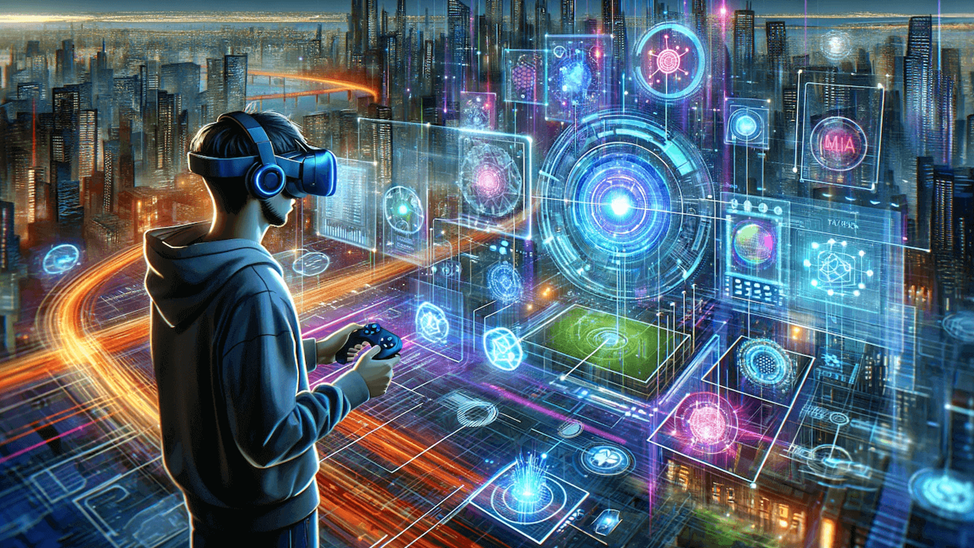
Looking back just a few years, the idea of artificial intelligence fundamentally reshaping game development seemed like science fiction. Today, it is an operational reality. By mid-2025, over 50% of game studios had adopted AI in some capacity, with around 20% of new titles on Steam incorporating AI-generated content. This rapid integration is transforming how games are made, secured, and experienced, moving from experimental technology to the industry’s core operating layer.
Graphics and Textures
One of the most impactful applications of AI is in visual asset creation. Generative AI tools are now used to upscale legacy textures and generate high-quality Physically Based Rendering (PBR) materials. The Painkiller RTX project, for example, used a model called PBRFusion to convert thousands of low-resolution textures into modern, physically accurate surfaces. This process, which would have taken a small team years to complete manually, was accomplished in a fraction of the time, allowing artists to focus on creative refinements rather than repetitive tasks. By handling the grunt work, AI empowers smaller teams to achieve visual fidelity once reserved for the largest studios.
Anti-Cheat Systems
AI has become a critical weapon in the ongoing arms race against unfair play. Modern anti-cheat systems leverage machine learning and behavioral analysis to detect subtle cheats that traditional signature-based methods miss. For instance, a new system called XGuardian analyzes simple player input data like pitch and yaw to identify aim-assist cheats with high accuracy and explainability. This server-side approach moves beyond simple pattern matching, identifying the unique trajectories of inhuman aim. However, as these defensive AI systems grow more sophisticated, they inadvertently increase the value of the offensive tools they are designed to stop, fueling the demand for advanced private hacks that attempt to bypass them. The future likely lies in hybrid frameworks that combine conventional detection with the adaptive power of AI.
World Generation
AI is pushing the boundaries of level design and world-building. Tools like Google’s Project Genie 3 can generate playable 3D environments from simple text prompts or even reference images. While still in early stages, this technology allows for rapid prototyping of game levels, complete with physics and basic mechanics. It enables designers to iterate on concepts at unprecedented speed, exploring ideas that would take days or weeks to mock up manually. This capability hints at a future where dynamic, procedurally generated worlds respond to player actions in real-time, creating truly unique experiences.
Game Testing
Automated quality assurance is being revolutionized by AI-powered testing bots. Game testing is notoriously expensive, consuming up to 30% of development budgets. AI bots trained through reinforcement learning can now play through game levels thousands of times, identifying bugs, balancing issues, and progression blockers far faster than human testers. These bots simulate various player skill levels, providing developers with invaluable data on difficulty curves and potential exploits before a game ever reaches the public.
Conclusion and The Road Ahead
Beyond these five areas, AI is also transforming player support, with 94% of studios already using AI to handle routine customer service inquiries, freeing human agents for more complex issues. The technology is also being explored for dynamic difficulty adjustment, personalized content recommendations, and even generating narrative elements on the fly. As AI tools become more integrated, the challenge will shift from adoption to curation—ensuring that these powerful technologies enhance rather than diminish the human creativity at the heart of great game design.
