

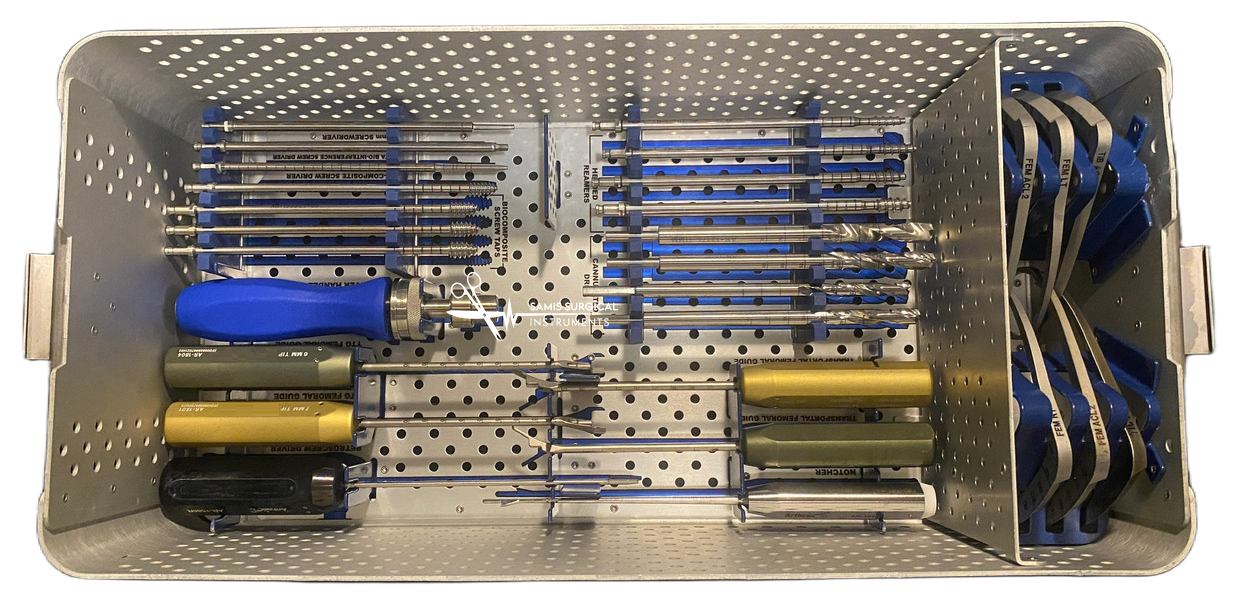
ACL (Anterior Cruciate Ligament) injuries are increasingly common, especially among athletes, gym-goers, and physically active individuals. A sudden twist during sports like football or an accidental fall can cause severe knee instability and pain.
Fortunately, advancements in modern orthopaedic surgery have made ACL reconstruction highly effective, restoring knee stability and long-term function. Behind every successful procedure is not just a skilled surgeon — but also a well-organized and high-quality ACL Toolbox.
This guide explains everything you need to know, including what an ACL Toolbox is, its instruments, surgical usage, and how to choose the best set.
What Is an ACL Toolbox?
An ACL Toolbox is a specialized collection of surgical instruments designed specifically for ACL reconstruction procedures. In simple terms, it is a complete surgical kit that enables surgeons to diagnose, prepare, and reconstruct a torn ACL with precision.
It typically includes tools for arthroscopy (visualizing the joint), bone drilling and tunnel creation, graft preparation, implant fixation, and suturing and knot management. Having all instruments organized in one set allows surgeons to work efficiently, safely, and accurately.
When Is an ACL Toolbox Used?
An ACL Toolbox is essential in a range of orthopaedic procedures. In surgical environments, time and precision are critical, and a complete toolbox significantly improves workflow and outcomes. Common applications include:
- Primary ACL reconstruction surgeries
- Revision ACL procedures
- Arthroscopic knee diagnostics
- Sports injury treatments
- Multi-ligament knee reconstruction
Instruments Included in an ACL Toolbox
A high-quality ACL set consists of multiple categories of instruments, each serving a distinct role during surgery.
Arthroscopy Instruments
These instruments are used to visualize and assess the knee joint internally before and during the procedure. They include the arthroscope (camera system), cannulas (instrument access tubes), and probes used for tissue evaluation.
ACL Reconstruction Instruments
Designed for accurate tunnel placement, this group includes the Tibial Aiming Guide, Femoral Drill Guide, Guide Wires, and a Depth Gauge. These tools ensure the tunnels are created at the correct angles and depths for proper graft positioning.
Bone Preparation Instruments
Used to prepare bone surfaces prior to graft placement. This category includes curettes, rongeurs, and bone chisels, which help clean and shape the bone tunnels to receive the graft securely.
Implant Handling Instruments
These instruments assist in graft placement and fixation. They include screwdrivers, graspers, and compression instruments that allow the surgeon to position and secure the graft with precision.
Suturing and Fixation Instruments
Used to ensure secure graft fixation at the end of the procedure. This group includes suture passers, knot pushers, and suture cutters, which enable the surgeon to finalize the repair with strength and confidence.
Step-by-Step Use of ACL Instruments in Surgery
Understanding how instruments are applied at each stage of the procedure highlights the importance of a complete and organized toolbox.
Step 1: Arthroscopic Diagnosis
The surgeon inserts an arthroscope to confirm ACL damage and assess the overall condition of the joint before beginning the reconstruction.
Step 2: Graft Preparation
A tendon graft — hamstring, patellar, or synthetic — is cleaned, shaped, and measured to match the requirements of the reconstruction site.
Step 3: Tunnel Creation
Using drill guides and guide wires, bone tunnels are created in the tibia (shin bone) and femur (thigh bone). Accurate tunnel placement is critical to graft alignment and long-term stability.
Step 4: Graft Insertion
The prepared graft is carefully passed through the bone tunnels using graspers, with minimal disruption to the surrounding tissue.
Step 5: Fixation
Screws or implants are inserted to secure the graft firmly in place within the tunnels, providing the stability needed for rehabilitation and recovery.
Step 6: Final Assessment
The surgeon checks knee stability, range of motion, and graft tension to confirm the reconstruction meets clinical expectations before closing the incision.
Benefits of a High-Quality ACL Toolbox
Using premium instruments offers measurable advantages in both surgical performance and patient outcomes. A reliable toolbox provides high surgical precision, faster procedure times, and a reduced risk of complications. Strong and stable graft fixation, long-lasting durability, corrosion-resistant stainless steel construction, and ergonomic handling for surgeons are all qualities that directly impact the success of the procedure and the speed of patient recovery.
How to Choose the Best ACL Toolbox
When selecting an ACL instrument set, several factors should guide your decision to ensure you are investing in instruments that will perform reliably over time.
Medical-Grade Stainless Steel
The material used in the instruments must meet medical-grade standards. This ensures durability, resistance to corrosion, and safe performance across repeated sterilization cycles.
Autoclavable Design
Instruments must support repeated sterilization in an autoclave without degradation. This is essential for infection control and long-term cost efficiency in any surgical setting.
Precision Engineering
Accurate fit of guides, drills, and implants is non-negotiable. Instruments that are poorly machined can compromise tunnel placement and graft fixation, directly affecting patient outcomes.
Ergonomic Grip
An ergonomic handle design improves surgeon control and reduces hand fatigue during extended procedures, contributing to greater procedural accuracy.
Trusted Manufacturer
Choose suppliers with a proven track record in orthopaedic instrument manufacturing and a commitment to international quality standards.
Cost-Effectiveness
Balance clinical quality with competitive pricing. For hospitals and distributors procuring at volume, cost per unit without compromising quality is an important consideration.
Why Choose Sami’s Instruments ACL Toolbox?
Sami’s Instruments is a globally recognized manufacturer of high-quality surgical instruments, based in Sialkot, Pakistan — the established hub of precision medical tooling. With decades of manufacturing experience, the company supplies surgeons, hospitals, and medical distributors worldwide.
The Sami’s Instruments ACL Toolbox is built from premium-grade stainless steel and precision-engineered to meet international orthopaedic standards. Every set undergoes strict quality control before dispatch, ensuring consistent performance across procedures. The instruments feature a smooth finish, long-lasting durability, and competitive pricing that does not compromise on quality.
This ACL Toolbox is ideal for orthopaedic surgeons, hospitals and surgical centers, and medical distributors worldwide. You can explore the product directly at samisintruments.com/product/acl-toolbox/.
About Sami’s Instruments
Sami’s Instruments is a Pakistan-based surgical instruments manufacturer and supplier with over two decades of industry experience, operating since 2004. Headquartered in Sialkot — a city internationally recognized as the center of surgical instrument manufacturing — the company also maintains an office in Brooklyn, New York, to better serve its growing customer base in North America and beyond.
The company specializes in a wide range of medical instruments including surgical, dental, gynecology, orthopedic, and implant instruments. Every product is manufactured using medical-grade stainless steel and is designed to meet the demanding standards of hospitals, surgical centers, and medical professionals around the world.
Sami’s Instruments takes pride in combining traditional Sialkot craftsmanship with modern quality control processes. Each instrument is inspected for precision, finish, and durability before leaving the facility. The result is a product line that is trusted by surgeons and distributors across multiple continents, valued for its consistent quality and competitive pricing.
Whether you are a hospital procurement manager, an independent surgeon, or an international medical distributor, Sami’s Instruments offers a reliable supply of professional-grade instruments backed by responsive customer support and flexible ordering options. To learn more about the full range of products and services, visit samisintruments.com.
Cleaning and Maintenance of ACL Instruments
Proper care after every use is essential to maintaining instrument performance and extending service life. Following a consistent cleaning and maintenance routine protects your investment and ensures instruments are ready for the next procedure.
Rinse instruments with lukewarm water immediately after use to prevent blood or tissue from drying on the surface. Use a soft-bristle brush to remove any remaining debris from joints, hinges, and crevices. Avoid harsh chemicals or abrasive cleaners that can damage the surface finish or accelerate corrosion. Lubricate all moving parts regularly with a medical-grade instrument lubricant. Sterilize using an autoclave at the temperatures and cycle times recommended by the manufacturer, and store instruments in a dry, sterile environment with protective trays to prevent contact damage between instruments.
Conclusion
ACL reconstruction is a life-changing procedure that enables patients to return to normal activities, including sports and daily work. The success of the surgery, however, depends heavily on the quality of instruments used. A well-designed ACL Toolbox ensures surgical precision, procedural efficiency, and patient safety.
Whether you are a surgeon, distributor, or healthcare provider, investing in a high-quality ACL instrument set — such as the one offered by Sami’s Instruments — can significantly improve outcomes and long-term reliability.
