

Picture this: you’re halfway through a scenic morning ride, miles from the nearest town, when you feel that unmistakable wobble beneath you — a flat tire. It’s a frustrating moment that every cyclist dreads, and without the right gear, it can turn a great adventure into a long, defeated walk home.
That’s exactly where a portable tire inflator becomes your best riding companion. More than just a convenience, it’s a piece of safety equipment that keeps you moving no matter where the road takes you. But with dozens of models on the market — each boasting different power sources, pressure ranges, and size profiles — choosing the right one can feel overwhelming.
This guide cuts through the noise. Whether you’re a weekend trail rider or a daily commuter, we’ll walk you through the essential features to look for, the different types of portable compressors available, and a clear step-by-step process for matching the right inflator to your specific needs. We’ll also cover how to keep your device in top shape for the long haul. By the end, you’ll have everything you need to make a confident, informed choice.
Why Every Cyclist Needs a Portable Tire Inflator
A flat tire doesn’t just slow you down — it can strand you in unfamiliar territory, disrupt your training schedule, or leave you vulnerable on a busy road. Unlike a car, a bicycle offers no safe place to coast while you figure out your next move. Every minute spent waiting for help or walking your bike is time lost, and in remote areas, help may not come at all.
Traditional manual pumps have long been the go-to backup, but they demand significant physical effort, especially when you’re already tired from a long ride. Gas stations are rarely convenient when you’re on a trail or cycling through rural roads, and even when accessible, their high-pressure hoses can easily over-inflate a bike tire in seconds. A portable tire inflator solves both problems — it delivers precise, controlled inflation quickly and without the arm workout, getting you back on the road in minutes rather than struggling for ten.
Beyond flat tire emergencies, a portable inflator supports smarter cycling overall. Tire pressure directly affects rolling resistance, handling, and comfort. Being able to fine-tune your pressure before a ride — or adjust mid-trip when terrain changes — gives you a genuine performance edge. Road cyclists chasing speed want firm tires; mountain bikers tackling loose gravel benefit from slightly softer pressure for better grip. One compact device handles all of these scenarios, making it a genuinely multi-purpose tool rather than a single-use emergency item. For any cyclist who takes their riding seriously, it’s not optional equipment — it’s essential kit.
Key Features to Consider in a Portable Inflation Device
Choosing the right portable tire inflator starts with knowing which features actually matter on the road. Not every spec on a product page translates to real-world value for cyclists, so it pays to focus on the characteristics that directly affect your riding experience.
Inflation speed is arguably the most critical factor. When you’re stranded mid-ride, every second counts. Look for a device that can bring a standard road or mountain bike tire to full pressure in under two minutes. Closely tied to speed is pressure accuracy — a built-in digital gauge with auto-shutoff lets you hit your target PSI without guesswork or the risk of over-inflation, which can damage tires or cause blowouts.
Portability and weight determine whether you’ll actually carry the device. A lightweight compressor that fits in a jersey pocket or clips onto a frame bag removes any excuse for leaving it behind. Pay attention to both dimensions and total weight; some models are compact but surprisingly heavy due to metal housing. The best designs balance durability with a slim profile, using reinforced plastics or aluminum alloys that hold up to trail vibration without adding bulk.
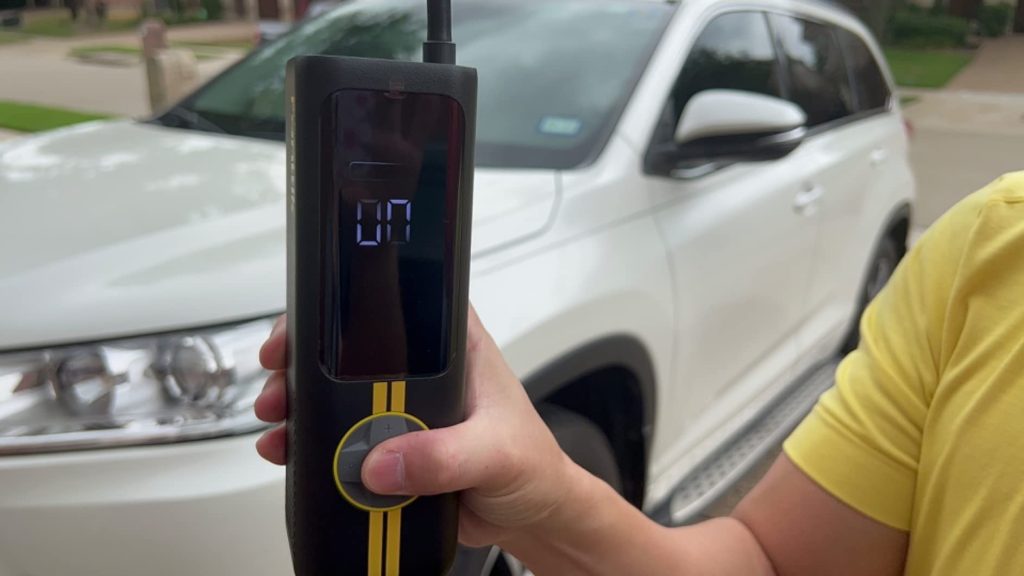
Power source shapes the entire user experience. Battery-operated inflators offer the most freedom since they require no external connection, though battery capacity and recharge time vary significantly between models. Brands like Fanttik, known for their precision inflation technology, have helped raise the bar for what cyclists can expect from compact, cordless devices. Compatibility is another non-negotiable — confirm the inflator supports both Presta and Schrader valves, as road bikes typically use Presta while many hybrids and mountain bikes use Schrader. Some multi-purpose models also include attachments for sports balls or suspension forks, extending their value well beyond cycling emergencies.
Evaluating Battery-Operated Inflators
Battery life is the defining variable for cordless inflators. A device that can inflate three to five tires on a single charge covers most realistic emergency scenarios, but frequent riders or those doing multi-day tours should prioritize models with USB-C fast charging or replaceable battery cells. Performance consistency matters too — cheaper units often lose pressure output as the battery drains, leaving your last inflation slower and less accurate than your first. If you ride several times a week, choose a model with a battery indicator so you’re never caught off-guard, and make recharging part of your post-ride routine.
Assessing Lightweight Compressors for Portability
The ideal lightweight compressor disappears into your kit until you need it. Models weighing under 300 grams with a length under 15 centimeters fit comfortably in most cycling bags without disrupting weight distribution. Beyond raw numbers, consider the hose design — a flexible braided hose prevents kinking and makes valve connection easier, especially in awkward roadside positions. Rubberized grips and recessed controls prevent accidental activation during transport, while a protective carry pouch keeps the unit clean and scratch-free between uses. These small design details separate a genuinely portable device from one that’s merely marketed as compact.
Understanding Different Types of Portable Compressors
Not all portable inflators work the same way under the hood, and understanding the core technology helps you choose a device that matches your riding style. The two most common mechanisms found in cycling inflators are piston-driven and diaphragm-based compressors, each with distinct trade-offs worth knowing before you buy.
Piston compressors are the workhorses of the category. They use a motorized piston moving back and forth inside a cylinder to generate compressed air, which translates to higher pressure output and faster inflation times. For road cyclists who need tires inflated to 100 PSI or more, a piston-driven model is almost always the better choice. The downside is that the mechanical complexity adds slight weight and can increase noise during operation — a minor inconvenience in a parking lot but worth noting if you value discretion on early morning rides.
Diaphragm compressors use a flexible membrane rather than a piston to move air. They tend to run quieter and have fewer moving parts, which can mean longer mechanical lifespan in theory. However, they typically max out at lower pressure levels, making them better suited for mountain bike tires that operate in the 30–50 PSI range rather than high-pressure road tires. If your riding is primarily off-road on wider, lower-pressure tires, a diaphragm-based lightweight compressor is a practical and durable option.
Some modern inflators blur the line between categories by combining a compact piston design with smart pressure regulation, effectively offering a multi-purpose inflation device that handles everything from skinny road tires to fat mountain bike treads. When matching a compressor type to your needs, start with your tire’s maximum rated PSI, then confirm the inflator exceeds that ceiling by at least 10–15 PSI to ensure it can reach target pressure even as the battery depletes during a long ride.
Step-by-Step Guide to Choosing the Best Portable Tire Inflator
With a clear picture of features and compressor types, the actual selection process becomes much more manageable when broken into deliberate steps. Rushing the decision often leads to buying a device that looks impressive on paper but fails you when it counts most.
Step 1: Identify your bike type and tire pressure requirements. Start here because everything else flows from this single fact. Road bike tires typically demand 80–130 PSI, gravel tires sit around 40–70 PSI, and mountain bike tires run between 25–50 PSI. Write down your tire’s maximum rated PSI — it’s printed on the sidewall — and treat that number as your baseline minimum requirement for any inflator you consider.
Step 2: Prioritize features based on how and where you ride. A daily urban commuter should weight portability and valve compatibility most heavily, since quick roadside fixes in traffic matter more than raw power output. A long-distance tourer needs strong battery life and fast charging above all else. A mountain biker benefits from a rugged housing that handles mud and drops. Rank your top three must-have features before browsing any product listings.
Step 3: Research and compare models within your feature priorities. Filter specifically for battery-operated inflators if freedom from power sources matters to you, and cross-reference the stated maximum PSI against your Step 1 baseline. Confirm the device supports your valve type — Presta or Schrader — and check whether adapters are included or sold separately.
Step 4: Read verified reviews from actual cyclists. Pay particular attention to comments about real-world battery performance, hose durability, and accuracy of the built-in pressure gauge. Manufacturer specs describe ideal conditions; user reviews reveal how a device holds up after six months of regular use on varied terrain.
Step 5: Factor in budget and warranty coverage. A mid-range inflator with a two-year warranty often delivers better long-term value than a cheaper model with no support. Before finalizing, run through this quick checklist: Does it exceed your maximum PSI requirement? Is it light enough to carry on every ride? Does it support your valve type? Is battery life sufficient for your ride frequency? If all four answers are yes, you’ve found your match.
Maintenance and Best Practices for Your Inflator
A portable tire inflator only delivers when you need it if you’ve kept it in working order between rides. After each use, wipe down the exterior and hose connection points with a dry cloth to remove dirt, moisture, and debris that can degrade seals over time. Store the device in its carry pouch away from direct sunlight and extreme temperatures, both of which accelerate battery degradation. For battery-operated models, avoid letting the charge drop to zero before recharging — keeping it between 20% and 80% extends overall battery lifespan considerably. Check the valve adapters periodically for wear or deformation, replacing them at the first sign of a poor seal. If the inflator underperforms or reads pressure inaccurately, a quick firmware update (on smart models) or a contact cleaning of the charging port often resolves the issue before it becomes a real problem on the road.
Make the Right Choice and Ride with Confidence
Choosing the right portable tire inflator comes down to understanding your specific needs as a cyclist and matching them to the right combination of features. Speed and pressure accuracy keep you moving without wasted time roadside. Portability and weight determine whether the device actually makes it into your kit on every ride. Battery performance and valve compatibility separate a genuinely reliable tool from one that lets you down at the worst possible moment.
Whether you opt for a piston-driven model built for high-pressure road tires or a quieter diaphragm compressor suited to off-road adventures, the step-by-step selection process outlined here gives you a clear path forward — from identifying your tire pressure requirements to verifying warranty coverage before you buy. Pair that informed purchase with consistent maintenance habits, and your inflator will deliver dependable performance for years of riding.
A flat tire will always be an inconvenience, but with the right portable tire inflator in your kit, it never has to be a ride-ending disaster. Invest the time to choose wisely, and every future ride starts with one less thing to worry about — leaving you free to focus on the road, the trail, and the ride itself.
