

It starts with a moment of panic — you open the backyard gate, turn around, and your dog is gone. You call their name, check the usual spots, and feel that sinking dread settle in. For millions of pet owners, this scenario is all too familiar, and the tools they reach for in those frantic moments make all the difference.
Pet safety has become a growing concern as more owners recognize that a simple collar tag or microchip simply isn’t enough in today’s world. Technology has stepped in to fill that gap, transforming how we monitor and protect our animals. The shift from passive identification methods to active, real-time tracking represents one of the most significant leaps forward in modern pet care.
This article takes a direct look at why GPS trackers outperform traditional pet safety devices across nearly every measure that matters. From real-time location updates to smart alert systems, GPS technology addresses the specific demands of tech-savvy pet owners who expect reliable, connected solutions. If you’ve been weighing your options, what follows will give you a clear picture of what today’s best tracking devices actually offer.
The Evolution of Pet Safety: From Basic Tags to Advanced GPS Technology
For decades, pet identification relied on two simple tools: engraved ID tags and microchips. ID tags offered a name and phone number — useful only if someone found your pet and bothered to call. Microchips improved on this by providing a permanent, scannable identifier, but they share the same critical flaw: both methods are entirely passive. Neither tells you where your pet is. Neither alerts you when something goes wrong. They depend entirely on a stranger’s goodwill and the right equipment being available at the right moment.
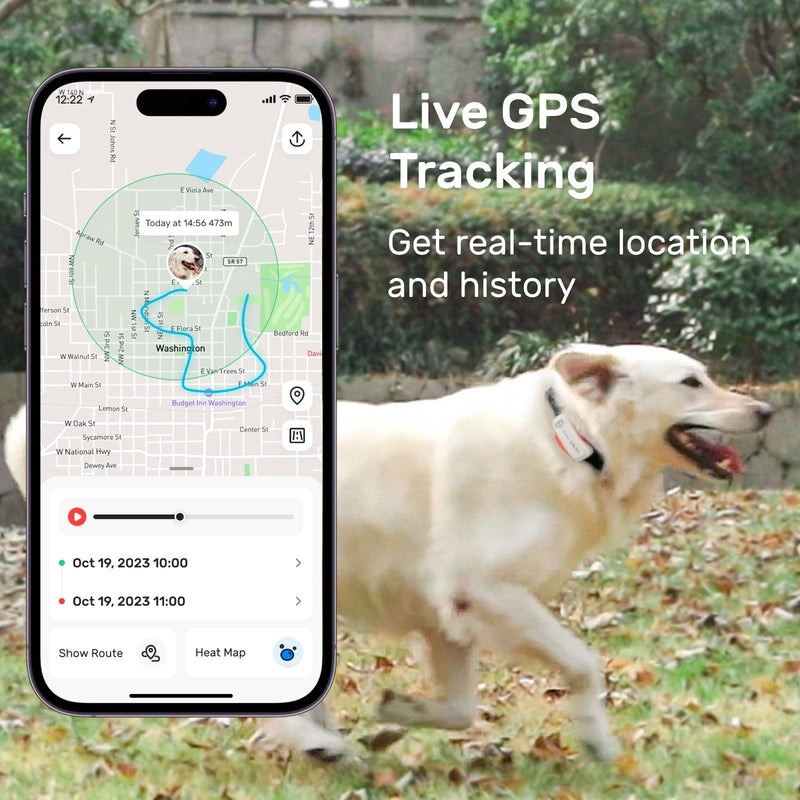
GPS technology changed that equation completely. By integrating satellite positioning with cellular data transmission and smartphone connectivity, modern pet trackers turned reactive identification into proactive monitoring. Instead of waiting for someone to find your pet, you can locate them yourself — in real time, from anywhere. This shift mirrors broader trends in consumer technology, where connected devices have replaced static tools across nearly every area of daily life.
For today’s pet owners, especially those already comfortable with smart home devices, fitness wearables, and app-based services, this evolution feels like a natural extension of how they manage everything else. The demand for reliable, connected pet safety solutions has grown alongside smartphone adoption, and dog GPS trackers have risen to meet it. What was once a niche product for working dogs or livestock has become an accessible, practical tool for any pet owner who wants more than a tag can offer.
Key Advantages of Dog GPS Trackers Over Traditional Pet Safety Devices
When you place a GPS tracker side by side with a microchip or ID tag, the difference isn’t just technical — it’s fundamental. Traditional devices answer the question “who is this pet?” while GPS trackers answer the one that actually matters during a crisis: “where is my pet right now?” That distinction drives nearly every advantage modern trackers hold over their predecessors.
Limitations of Traditional Pet Safety Devices
ID tags and microchips share a core problem: they’re entirely dependent on someone else taking action. A tag only works if a stranger reads it and makes the call. A microchip only works if that stranger brings your pet to a vet or shelter with a compatible scanner. Neither method offers any range — they provide zero information until your pet is already in someone else’s hands. There are no alerts, no location data, and no way to proactively search. In rural areas or situations where your pet wanders into dense terrain, these tools offer little practical help during the critical first hours when recovery chances are highest.
Superior Benefits of GPS Trackers
GPS trackers flip that dynamic entirely. Real-time location tracking means you see your pet’s position updating live on your smartphone, often within seconds. Long-range tracking capabilities — enabled by cellular networks rather than short-range Bluetooth — mean distance is no longer a barrier. Whether your dog slips through a fence in a suburban neighborhood or bolts during a hiking trip, the tracker stays connected. Smart pet tracker features extend beyond simple location sharing: geofence alerts notify you the instant your pet crosses a boundary you’ve defined, letting you respond before they’re truly lost. Devices like the DBDD GPS Tracker are built around exactly this kind of connected, app-driven approach — integrating location history, movement patterns, and alert controls into a single interface. These aren’t incremental improvements over traditional tools; they represent a completely different approach to keeping pets safe.
Understanding GPS Technology in Modern Pet Trackers
At the core of every modern pet tracker is a GPS receiver that communicates with a network of satellites orbiting Earth. The device calculates your pet’s position by measuring signals from multiple satellites simultaneously — a process called trilateration. This gives you precise coordinates that update continuously as your pet moves. On its own, GPS positioning is powerful, but it’s the integration with cellular networks that makes pet trackers genuinely useful in everyday situations.
Once the tracker determines your pet’s location, it transmits that data through cellular networks — the same infrastructure your smartphone relies on — directly to a companion app on your phone. This means location updates aren’t limited to a short Bluetooth range or a local Wi-Fi connection. As long as the tracker sits within cellular coverage, you can see where your pet is from across town or across the country. Many trackers also incorporate additional positioning technologies like Wi-Fi triangulation and accelerometers, which improve accuracy indoors or in dense urban environments where satellite signals can weaken.
For tech-savvy pet owners, this architecture feels immediately familiar. The dedicated apps that pair with these devices do far more than display a dot on a map — they log movement history, calculate activity metrics, and allow you to configure geofence boundaries with precision. Some platforms even support multiple users, so family members can all monitor the same pet simultaneously. Understanding how these layers work together helps you get the most from your tracker and choose a device whose network coverage actually matches where you and your pet spend time.
Smart Features for Enhanced Pet Safety: Sound and Light Alerts
Real-time location tracking is the foundation of any good GPS tracker, but the best devices go further by giving you tools to act on that location data quickly. Sound and light alert features represent a meaningful leap beyond what any traditional pet safety device can offer — they transform your tracker from a passive locator into an active recovery tool. When seconds count, these features can be the difference between a brief scare and a prolonged search.
How Sound Alerts Aid in Recovery
Audible alerts let you trigger a buzzer or beep directly from your smartphone app, causing the tracker on your pet’s collar to emit a sound loud enough to hear from a distance. In practice, this works in two ways. First, if your pet is nearby but hidden — under a porch, behind dense brush, or inside a neighbor’s shed — the sound helps you pinpoint their exact location far faster than calling their name. Second, for pets trained to associate the sound with a reward or recall command, the alert itself can prompt them to move toward you. To use this effectively, activate the alert from the app once your geofence notification fires, then move in the direction the map indicates while listening for the tone. This combination of visual tracking and audible confirmation dramatically narrows your search area in real-world conditions.
Utilizing Light Alerts for Visibility
LED light alerts serve a different but equally practical purpose. When your pet goes missing after dark — statistically one of the most dangerous scenarios — a flashing light on their collar makes them visible to you, to passing drivers, and to neighbors who might otherwise miss a dark-coated animal in low light. Activating the light remotely from your app means you don’t need to be within arm’s reach to switch it on. Many trackers allow you to run sound and light alerts simultaneously, which maximizes both your ability to locate your pet and their visibility to others. Unlike reflective collar strips or glow-in-the-dark tags that require prior light exposure, LED alerts work on demand and remain effective regardless of ambient conditions. For pet owners who walk dogs at dawn or dusk or live near busy roads, this feature adds a layer of active protection that no microchip or ID tag can replicate.
Step-by-Step Guide to Choosing and Using a Dog GPS Tracker
Assessing Your Needs: Long-Range Tracking and Beyond
Before comparing devices, spend a few minutes mapping out how and where you actually use them. A dog that roams a large rural property has different tracking demands than one who occasionally slips out of a city apartment. Consider your typical environment — urban, suburban, or rural — since cellular coverage varies significantly and directly affects how reliably your tracker transmits location data. Think about your pet’s size and activity level too, as these factors influence which device fits comfortably and holds up to daily wear. If you frequently hike or travel with your pet, long-range tracking capability backed by a wide cellular network becomes a non-negotiable priority rather than a bonus feature.
Key Features to Prioritize in a Smart Pet Tracker
Once you know your requirements, evaluate devices against a focused set of criteria. Battery life matters enormously in real emergencies — a tracker that dies after eight hours offers limited protection for active dogs. Look for waterproof or water-resistant ratings, since pets encounter rain, puddles, and worse regardless of the season. Subscription plans deserve careful attention; most GPS trackers require monthly cellular service fees, so factor that ongoing cost into your decision. Check whether the companion app supports geofence customization, activity monitoring, and multiple users. Devices that integrate with smart home platforms or support family sharing give you broader coverage without extra hardware. The DBDD GPS Tracker, for instance, is designed with these everyday practicalities in mind, combining durable hardware with an app experience built around the features pet owners actually rely on.
Setting Up and Maximizing Your GPS Tracker
Setup typically takes under fifteen minutes. Install the companion app, create your account, and activate the SIM or cellular plan before attaching anything to your pet’s collar. Once the device is connected, configure your geofence boundaries immediately — set the perimeter tighter than you think necessary, since you want alerts while your pet is still close. Test both the sound and light alerts from the app before your first real outing to confirm they trigger correctly. Check the fit on your pet’s collar: the tracker should sit snugly without restricting movement. Finally, establish a weekly habit of charging the device on a consistent day so it never runs low when you actually need it.
GPS Trackers vs. Traditional Devices: Why Modern Pet Safety Has Changed Forever
The gap between traditional pet safety devices and modern GPS trackers isn’t a matter of preference — it’s a matter of capability. ID tags and microchips served their purpose in a simpler era, but they were never designed to find a lost pet. They were designed to identify one after someone else already had. GPS trackers fundamentally change that by putting the search back in your hands, in real time, from wherever you happen to be.
For tech-savvy pet owners, the advantages compound quickly. Long-range tracking through cellular networks removes the distance barrier. Geofence alerts let you respond before a situation becomes a crisis. Sound and light features give you active recovery tools that no passive device can replicate. And the connected app ecosystem means your tracker works as part of the broader digital life you already manage from your phone.
What all of this adds up to is something harder to quantify but easy to recognize: genuine peace of mind. Knowing that you can locate your pet within seconds, trigger an alert from your couch, and share that information with family members simultaneously changes how you experience pet ownership. Modern GPS technology doesn’t just improve on what came before — it makes the old approach feel like no protection at all.
