


Western Australia is built on industries that move things. Iron ore from the Pilbara. Grain from the Wheatbelt. Goods from Perth’s logistics hubs to regional towns separated by hundreds of kilometres of open highway. Construction materials across a metropolitan area that stretches more than 150 kilometres from north to south. Livestock from pastoral stations to processing facilities and ports. In every one of these supply chains, the truck is the essential link.
Buying a truck in Western Australia is not like buying a passenger car. The stakes are higher, the variables are more complex, and the financial commitment is significantly greater. A poor purchasing decision does not just cost you money at the point of sale. It costs you in downtime, in fuel bills that creep above budget, in maintenance expenses that accumulate faster than expected, and in lost revenue every day the truck is not earning. Conversely, the right truck matched to the right application and purchased at the right price can be one of the most productive assets in your entire business.
This guide is written for anyone buying a commercial vehicle in Western Australia, whether you are a sole trader purchasing your first tipper, a fleet manager replacing ageing prime movers, or a construction company expanding its fleet to meet project demand. It covers every stage of the buying process: understanding what is available, matching the truck to the task, evaluating new versus used, navigating finance, managing compliance, and making sure the vehicle you choose is genuinely fit for the conditions it will face in this state.
The Truck Sales WA Market in 2026
The Australian commercial vehicle market has experienced a period of adjustment following several years of record-breaking sales volumes. Nationally, the new truck market was already tracking downward through much of 2025, and that trend has continued into 2026. The correction has been influenced by a combination of economic pressure on operators, the transition to Euro 6 emission standards under ADR 80/04, and an influx of quality late-model used stock into the market following the closure of several high-profile transport operators in 2025.
Western Australia’s truck market carries its own distinct characteristics. The state’s mining sector, which generates the bulk of Australia’s iron ore, lithium, and gold exports, creates sustained demand for heavy-duty trucks in resource support roles. At the same time, Perth’s ongoing urban expansion, major infrastructure projects, and the agricultural sector’s transport needs ensure that demand spans the full spectrum from light-duty cab chassis through to road train configurations.
For buyers, the current market conditions present both challenges and opportunities. A softening new truck market means improved availability and, in some cases, more competitive pricing. The supply of late-model used trucks has increased, offering well-maintained alternatives at lower capital outlay. And the ongoing push towards cleaner, more efficient vehicles means that the latest models coming into the WA market offer genuine advances in fuel economy, safety, and driver comfort compared to trucks from even five years ago.
New Trucks Versus Used Trucks: Which Makes Sense for Your Business?
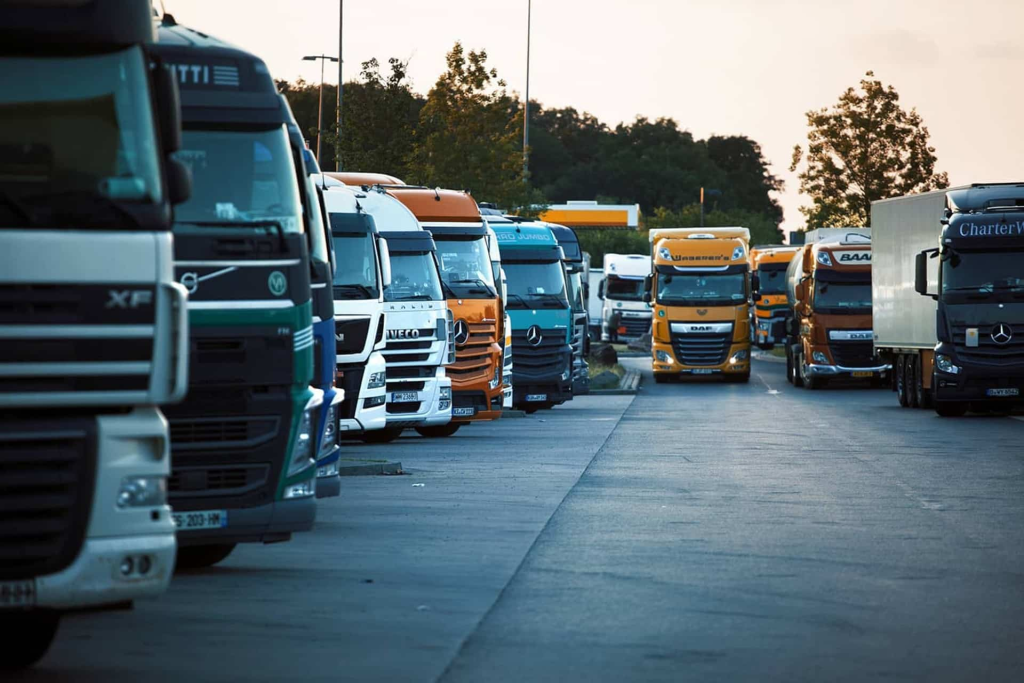
This is one of the first and most consequential decisions any buyer faces, and the answer depends on your specific circumstances.
Buying new gives you the latest technology, a full manufacturer’s warranty, a known maintenance history starting from zero kilometres, and the ability to specify the exact configuration you need. For operations where reliability and uptime are critical, where the truck will accumulate high annual kilometres, or where the latest safety and emission standards are required by contract or regulation, a new truck is often the right investment.
New trucks also depreciate fastest in their first few years, which is a consideration for businesses that plan to trade up regularly. However, for operators who run their trucks for seven to ten years or longer, the depreciation curve flattens over time, and the total cost of ownership can be very competitive.
Buying used can make strong financial sense, particularly for operations where annual utilisation is moderate, where the truck will be deployed in roles that are hard on vehicles such as off-road construction or mining site work, or where capital preservation is a priority. A well-maintained three-to-five-year-old truck can still deliver years of reliable service at a significantly lower purchase price than a new equivalent.
The key to buying used successfully is due diligence. Inspect the vehicle thoroughly or have it inspected by a qualified mechanic who specialises in heavy vehicles. Review the service history and insist on seeing records, not just assurances. Check for accident damage, frame repairs, and evidence of non-standard modifications. Run a Personal Property Securities Register search to ensure the truck is not encumbered by finance or a lien from a previous owner.
For buyers who want the best of both worlds, demonstrator models and low-kilometre ex-lease trucks can offer near-new condition at a used-vehicle price point.
Matching the Right Truck to Your Operation
Western Australia’s diverse industries and extreme operating conditions mean that no single truck suits every application. The process of matching the right vehicle to your specific needs is where good purchasing decisions are made, and where mistakes can be most costly.
Light-Duty and Medium-Duty Trucks
Light-duty trucks, typically with a Gross Vehicle Mass up to around 8 tonnes, and medium-duty trucks up to approximately 15 tonnes serve a wide range of applications in WA. These include urban delivery, trades and services, landscaping, small-scale construction, food distribution, and local freight.
For urban operators in Perth, manoeuvrability, turning circle, and cab-forward visibility are important considerations. Many light and medium trucks now come with automatic transmissions as standard, which reduces driver fatigue in stop-start traffic and makes it easier to attract drivers who may not hold a manual heavy vehicle licence.
For regional operators, the ability to cover longer distances comfortably, higher payload capacity, and durability over rougher road surfaces become more important. Consider the availability of service and parts in the areas where the truck will operate. A model that is well-supported in Perth’s metropolitan area may be harder to service in Kalgoorlie, Geraldton, or Broome.
Heavy-Duty Trucks and Prime Movers
Heavy-duty trucks and prime movers are the backbone of long-haul freight, mining support, and heavy construction in Western Australia. These vehicles typically have a GVM above 15 tonnes and are configured as either rigid trucks or prime movers designed to haul trailers.
For linehaul operations running between Perth and major regional centres or interstate, fuel efficiency, driver comfort, and engine longevity are paramount. The cab needs to be a comfortable workspace for drivers spending ten or more hours behind the wheel. Sleeper cab configurations are standard for long-haul work, and features such as air-suspended seats, climate control, and modern infotainment systems directly affect driver retention.
For mining and resource support roles, the requirements shift towards durability, payload capacity, and the ability to handle unsealed roads, steep grades, and extreme heat. Trucks operating in the Pilbara, where ambient temperatures regularly exceed 45 degrees Celsius, need cooling systems, engine management, and cabin climate control designed for sustained operation in extreme conditions.
Road train configurations, which are common across northern and eastern WA, demand prime movers with the pulling power, braking capacity, and structural integrity to handle multi-trailer combinations. Not every prime mover is suitable for road train work, and the specifications required, including engine power, torque characteristics, cooling capacity, and chassis rating, must be carefully matched to the intended combination.
Specialised and Purpose-Built Trucks
WA’s industries also demand a range of specialised truck configurations. Tippers are essential in construction and earthmoving. Water carts support mining operations and dust suppression. Concrete agitators serve the building sector. Refrigerated trucks and vans support food supply chains across the state’s vast distances. Crane trucks, tow trucks, vacuum trucks, and hook-lift vehicles all serve specific operational niches.
For specialised trucks, the body or equipment fitted to the chassis is often as important as the truck itself. The body builder’s reputation, the quality of materials and workmanship, the warranty on the body separately from the chassis, and the suitability of the design for your specific application all warrant careful evaluation.
Key Specifications to Evaluate Before You Buy
Regardless of whether you are buying new or used, light-duty or heavy-duty, there are several critical specifications that should drive your decision.
Engine power and torque. The engine needs to be appropriately matched to the vehicle’s intended application. An underpowered truck will struggle under load, consume more fuel as the engine works harder, and wear out faster. An overpowered truck may cost more to purchase and insure without delivering a proportional benefit. Discuss your typical load weights, route profiles, and operating conditions with your supplier to identify the right engine specification.
Gross Vehicle Mass and payload capacity. WA road regulations set strict limits on axle weights and overall vehicle mass. The difference between the truck’s GVM and its tare weight determines the maximum payload you can legally carry. A truck with a lower tare weight gives you more payload per trip, which directly affects productivity and revenue. Always verify the tare weight of the specific truck you are considering, including any body or equipment fitted, rather than relying on generic catalogue figures.
Transmission type. The traditional manual gearbox remains popular in heavy-duty applications, but automated manual transmissions and full automatic transmissions have made significant inroads. Automated transmissions reduce driver fatigue, improve fuel consistency, and lower the barrier for driver recruitment. For urban and stop-start operations, automatic is increasingly the preferred choice.
Fuel type and efficiency. Diesel remains the dominant fuel for commercial vehicles in WA, but the market is evolving. Euro 6 compliant engines deliver improved fuel economy and lower emissions compared to their predecessors. Some operators are beginning to explore alternative fuel options, though the infrastructure for electric and hydrogen trucks in WA is still in its early stages. Regardless of fuel type, fuel cost is typically the largest single operating expense for a truck, so even small differences in consumption rates can have a meaningful impact over the life of the vehicle.
Safety features. Modern trucks offer a range of active and passive safety features including electronic stability control, advanced emergency braking, lane departure warning, adaptive cruise control, and improved cab structures designed to protect occupants in a collision. Safety is not just an ethical imperative; it also affects insurance premiums, compliance with customer and contract requirements, and your obligations under work health and safety legislation.
Financing Your Truck Purchase in Western Australia

A truck is a major capital investment, and the way you structure the purchase has a direct impact on your cash flow, tax position, and long-term cost of ownership.
The most common financing options for truck purchases in Australia include chattel mortgage, where the lender provides funds to purchase the truck and takes a mortgage over the vehicle as security. You own the truck from day one, and the interest and depreciation may be tax-deductible for business use. Finance lease, where the lender purchases the truck and leases it to you for a fixed term. At the end of the lease, you can purchase the truck at its residual value, refinance, or return it. Operating lease, which is similar to a finance lease but typically structured so you do not take ownership at the end of the term. The truck is returned to the lessor, which can be attractive for businesses that prefer to upgrade regularly. Hire purchase, where you hire the truck with the option to purchase it at the end of the agreement once all payments are made. And commercial loans, which provide a lump sum to purchase the truck outright, with repayment over a fixed term.
Each option has different implications for tax, cash flow, balance sheet treatment, and flexibility. Speak with your accountant and finance broker to determine which structure best suits your business circumstances.
The Australian Government’s $20,000 instant asset write-off threshold, confirmed as a permanent measure, may also influence the timing and structure of your purchase. For eligible small businesses, this provides an immediate tax deduction for the business portion of eligible assets, though the threshold and eligibility criteria should be confirmed with your tax adviser before relying on it in your calculations.
Registration, Compliance, and Regulatory Considerations
Every truck operating on Western Australian roads must be registered with the Department of Transport and comply with Australian Design Rules. Understanding the regulatory landscape is essential before you buy.
Australian Design Rules compliance. All new vehicles sold in Australia must comply with ADRs, which cover emissions, braking, lighting, cab strength, and other safety standards. The transition to ADR 80/04, which aligns Australian heavy vehicle emissions standards with Euro 6, is a significant development that affects the trucks available in the market and the long-term viability of older models. Trucks that do not meet current emission standards may face restrictions on certain contracts, particularly government infrastructure projects that mandate Euro 6 compliance.
National Heavy Vehicle Regulator. WA is in the process of transitioning to the National Heavy Vehicle Law administered by the National Heavy Vehicle Regulator. This brings WA into alignment with the regulatory framework that applies in most other Australian states and territories. Under the NHVL, chain of responsibility provisions impose obligations not just on drivers and operators, but on everyone in the transport supply chain including consignors, packers, and loading managers.
Mass and dimension limits. WA has specific regulations governing the maximum mass and dimensions of vehicles operating on its roads. These regulations vary by road classification and vehicle type. Some routes require permits for oversize or overmass vehicles, and access to certain roads may be restricted for specific combinations. Understanding the rules that apply to your intended routes is essential when specifying a truck.
Fatigue management. If your operations require drivers to work under fatigue-regulated hours, you will need to ensure your vehicles are equipped with appropriate monitoring and recording systems. Electronic work diaries are becoming the standard, and many modern trucks come with integrated telematics systems that support fatigue compliance.
Assessing Total Cost of Ownership
The purchase price of a truck is only the beginning. The total cost of ownership over the vehicle’s working life provides a far more accurate picture of the true investment required.
Fuel is typically the largest ongoing expense, often accounting for 30 to 40 per cent or more of total operating costs. Even a difference of one or two litres per hundred kilometres between two competing models can amount to thousands of dollars over a year of operation.
Maintenance and repair costs vary significantly between brands and models. Consider the cost and availability of genuine parts, the proximity of qualified service facilities to your operating base, the recommended service intervals, and the typical lifecycle of major components such as brakes, tyres, and drivetrain elements.
Insurance premiums depend on the vehicle’s value, your claims history, the nature of your operations, and where the truck is garaged. Obtain insurance quotes before committing to a purchase, as premiums can vary substantially between providers and between vehicle types.
Registration and road user charges are annual costs that should be factored into your budget. For heavy vehicles, the charges are calculated based on the vehicle’s GVM and the number of axles.
Depreciation affects the eventual resale value of the truck and your tax position during ownership. Different brands and models depreciate at different rates, and market conditions at the time of sale also play a role. Trucks with strong brand recognition, good service histories, and broad market appeal tend to hold their value better.
Downtime is an often-overlooked cost. Every day your truck is off the road for repairs, warranty work, or maintenance is a day it is not generating revenue. Reliability, parts availability, and the responsiveness of your service provider all influence downtime, and these factors should be part of your purchasing evaluation.
Preparing for Purchase: A Practical Checklist
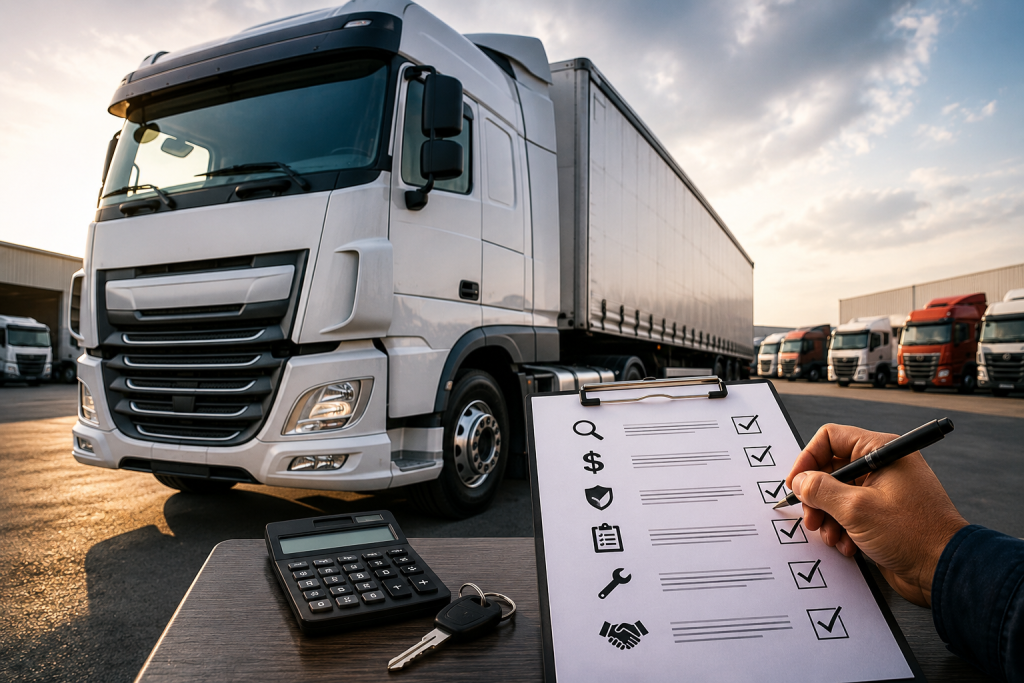
Before you commit to buying, work through this checklist to ensure you have covered the essentials.
Define your operational requirements clearly. What will the truck carry? How far? How often? On what types of roads? In what conditions? The answers will determine the specifications you need.
Set a realistic budget that accounts for not just the purchase price but also on-road costs, insurance, first service, and any required accessories or modifications.
Research the brands and models available in WA that match your requirements. Speak with operators running similar trucks in similar applications to get real-world feedback on performance, reliability, and support.
If buying used, invest in a professional pre-purchase inspection by a qualified heavy vehicle mechanic. Check the PPSR for encumbrances and verify the truck’s identity against the VIN and compliance plates.
Obtain at least two or three quotes from different sources. Compare on a like-for-like basis, ensuring each quote covers the same specifications, warranty terms, and inclusions.
Arrange finance and insurance before finalising the purchase. Having conditional approval gives you clarity on your budget and negotiating confidence.
Confirm parts and service availability in your area. A truck with limited service support in your region will cost you more in the long run, regardless of how attractive the purchase price may be.
If you are looking for trucks for sale in WA and want to explore what is currently available, checking out truck sales WA options is a practical starting point to compare stock, specifications, and pricing.
The Road Ahead: Trends Shaping WA Truck Purchases
Several trends are reshaping the truck buying landscape in Western Australia, and forward-thinking buyers will factor these into their decision-making.
The transition to Euro 6 emission standards under ADR 80/04 is already influencing which models are available and is likely to affect the resale values of older, pre-Euro 6 trucks over time. Buyers should consider the long-term implications of purchasing a truck that may not meet future contract or regulatory requirements.
Telematics and connected vehicle technology are becoming standard features rather than optional extras. These systems provide real-time data on vehicle location, fuel consumption, driver behaviour, and maintenance schedules, enabling more efficient fleet management and better operational decisions.
Alternative fuel and electric truck technology is advancing rapidly at a global level, though infrastructure limitations mean that diesel will remain the primary fuel for WA truck operations for the foreseeable future. However, monitoring developments in this space and planning for eventual transition is prudent, particularly for metropolitan and short-haul operations where electric alternatives may become viable sooner.
Safety technology continues to advance, with newer trucks offering increasingly sophisticated driver assistance systems. As these technologies become more widespread, they are likely to influence insurance pricing, contract requirements, and regulatory expectations.
The permanent $20,000 instant asset write-off provides ongoing incentive for small businesses to invest in productive equipment, though the threshold means its impact on heavy vehicle purchases is limited unless structured carefully with appropriate tax advice.
Frequently Asked Questions
What types of trucks are most commonly sold in Western Australia?
The WA market covers the full spectrum of commercial vehicles. Light-duty cab chassis and vans are popular for urban delivery and trades. Medium-duty tippers and tray trucks serve construction and local freight. Heavy-duty prime movers are the workhorses of linehaul freight and mining support. Specialised vehicles including water carts, concrete agitators, crane trucks, and refrigerated trucks serve industry-specific needs. The mix is influenced by WA’s unique combination of mining, agriculture, construction, and long-distance freight operations.
How do I determine the right size truck for my business?
Start by defining what you will carry, how much it weighs, and where you need to take it. Consider the Gross Vehicle Mass required to accommodate your typical payload plus the truck’s tare weight. Factor in the road conditions, distances, and any regulatory restrictions on the routes you will use. If you are unsure, speak with a qualified supplier who can assess your requirements and recommend appropriate specifications. Overspecifying wastes money on purchase and running costs, while underspecifying results in overloaded trucks, accelerated wear, and potential legal issues.
What should I look for when buying a used truck in WA?
Focus on the service history, overall mechanical condition, chassis integrity, and any signs of accident damage or non-standard repairs. Have the truck inspected by a qualified heavy vehicle mechanic before committing. Check the Personal Property Securities Register for any financial encumbrances. Verify the truck’s identity against the VIN and compliance plates. Ask about the reason for sale and, if possible, speak with the previous operator about the truck’s performance and any issues encountered. Pay particular attention to the condition of the engine, transmission, brakes, suspension, and tyres, as these are the most expensive components to repair or replace.
What financing options are available for truck purchases in Western Australia?
The most common options include chattel mortgage, finance lease, operating lease, hire purchase, and commercial loans. Each has different implications for ownership, tax deductions, cash flow, and balance sheet treatment. Chattel mortgage is popular because it allows you to own the vehicle from day one and claim depreciation and interest as tax deductions. The best structure for your business depends on your financial circumstances, tax position, and operational preferences. Engage your accountant and a commercial finance broker to compare options.
How do I calculate the total cost of owning a truck?
Total cost of ownership includes the purchase price or lease payments, fuel, maintenance and repairs, insurance, registration, tyres, and depreciation. Fuel is typically the largest ongoing cost, followed by maintenance. You should also factor in the cost of downtime when the truck is off the road, and the eventual resale value or residual at the end of your ownership period. Comparing total cost of ownership between two or more options gives a far more accurate picture of value than comparing purchase price alone.
This guide is intended for informational purposes only. Truck buyers in Western Australia should always seek independent professional advice regarding financing, insurance, regulatory compliance, and vehicle suitability before making a purchase decision.
