

Introduction
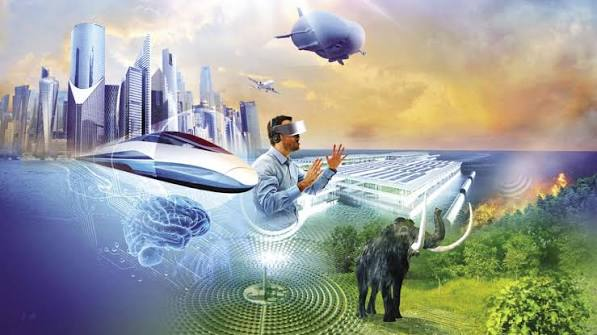
Technology is one of the most influential forces in human history. It has transformed societies, industries, and daily life in ways that were unimaginable a few decades ago. From the invention of basic tools to the rise of artificial intelligence, technology has continuously pushed the boundaries of innovation.
In the modern era, technology is deeply embedded in almost every activity. It drives communication, education, healthcare, transportation, business, and entertainment. As a result, understanding its impact is essential for individuals, organizations, and governments alike.
The Evolution of Human Technology
Human civilization has progressed through continuous technological development. Early humans used simple stone tools for survival, which later evolved into more advanced inventions such as agriculture tools, wheels, and writing systems.
The Industrial Revolution marked a turning point in history, introducing machines that significantly increased productivity. Steam engines, factories, and mechanized production changed the global economy.
In the 20th century, electricity, computers, and telecommunication systems revolutionized human life. Today, we are in the Digital Age, where artificial intelligence, robotics, cloud computing, and big data define modern innovation.
Technology and Global Communication
One of the most powerful impacts of technology is in communication. In the past, communication was slow and limited by physical distance. Letters and telegrams took days or weeks to deliver.
Today, communication is instant and global. Smartphones, emails, messaging applications, and video conferencing tools allow people to connect in real time from anywhere in the world. Social media platforms have also changed how people interact, share information, and build communities.
This global connectivity has made the world more interconnected than ever before.
Technology in Education Systems
Education has been completely transformed by digital technology. Traditional classrooms are now supported by online learning platforms, virtual classrooms, and digital resources.
Students can access thousands of courses online and learn new skills at their own pace. E-learning has made education more flexible and accessible, especially for people in remote areas.
Teachers use smart boards, digital presentations, and AI-based tools to enhance the learning experience. This integration of technology has improved engagement and made education more personalized.
Technological Advancements in Healthcare
Healthcare has benefited greatly from technological innovation. Advanced medical equipment allows doctors to diagnose diseases more accurately and provide effective treatment.
Telemedicine enables remote consultations, making healthcare accessible to people in rural and underserved areas. Artificial intelligence is being used to analyze medical data and assist in early disease detection.
Wearable devices such as fitness trackers and smartwatches help individuals monitor their health in real time, promoting healthier lifestyles and preventive care.
Technology in Business and Industry
Modern businesses rely heavily on technology for growth and efficiency. Automation, artificial intelligence, and data analytics help companies improve productivity and decision-making.
E-commerce platforms have revolutionized the retail industry, allowing businesses to reach global customers without physical stores. Digital marketing, cloud computing, and online payment systems have also transformed business operations.
Technology has created new industries, job opportunities, and economic growth across the world.
Artificial Intelligence and Machine Learning
Artificial Intelligence (AI) is one of the most important technological advancements of the modern era. AI systems can analyze large amounts of data, recognize patterns, and make intelligent decisions.
AI is widely used in healthcare, finance, transportation, education, and customer service. Examples include chatbots, recommendation systems, voice assistants, and self-driving technology.
Machine learning, a subset of AI, allows systems to improve automatically through experience, making technology more adaptive and intelligent over time.
Advantages of Technology
Technology offers numerous benefits that improve human life:
- Faster global communication
- Improved healthcare services
- Better access to education
- Increased business productivity
- Convenience in everyday tasks
- Enhanced global connectivity
- Automation of repetitive work
These advantages have significantly improved living standards worldwide.
Challenges and Risks of Technology
Despite its benefits, technology also brings challenges. Cybersecurity threats, data breaches, and privacy concerns are increasing in the digital world.
Excessive use of digital devices can lead to health issues such as stress, eye strain, and lack of physical activity. Social media addiction is another growing concern, especially among young people.
Automation may also reduce certain job opportunities, requiring workers to adapt and learn new skills to stay relevant in the job market.
Technology in Daily Life
Technology is now deeply integrated into everyday life. People use smartphones for communication, online banking for financial transactions, and GPS systems for navigation.
Smart home devices, IoT systems, and digital assistants make daily tasks more convenient and nhà cái nk88. Entertainment, shopping, transportation, and even cooking have been influenced by technological innovation.
The Future of Technology
The future of technology is expected to be even more advanced and transformative. Innovations such as quantum nk88, 5G and 6G networks, augmented reality (AR), and virtual reality (VR) will reshape industries.
Smart cities, autonomous vehicles, robotics, and fully automated systems may become common in the future. Artificial intelligence will continue to evolve and play a central role in global development.
Technology will also help address major global challenges such as climate change, healthcare accessibility, and education inequality.
Conclusion
Technology has completely transformed human civilization and continues to shape the future. It has improved communication, education, healthcare, and business while creating new opportunities and challenges.
As innovation continues, it is important to use technology responsibly and ethically. By balancing progress with awareness, society can fully benefit from technological advancements and build a more connected, efficient, and sustainable future.
