

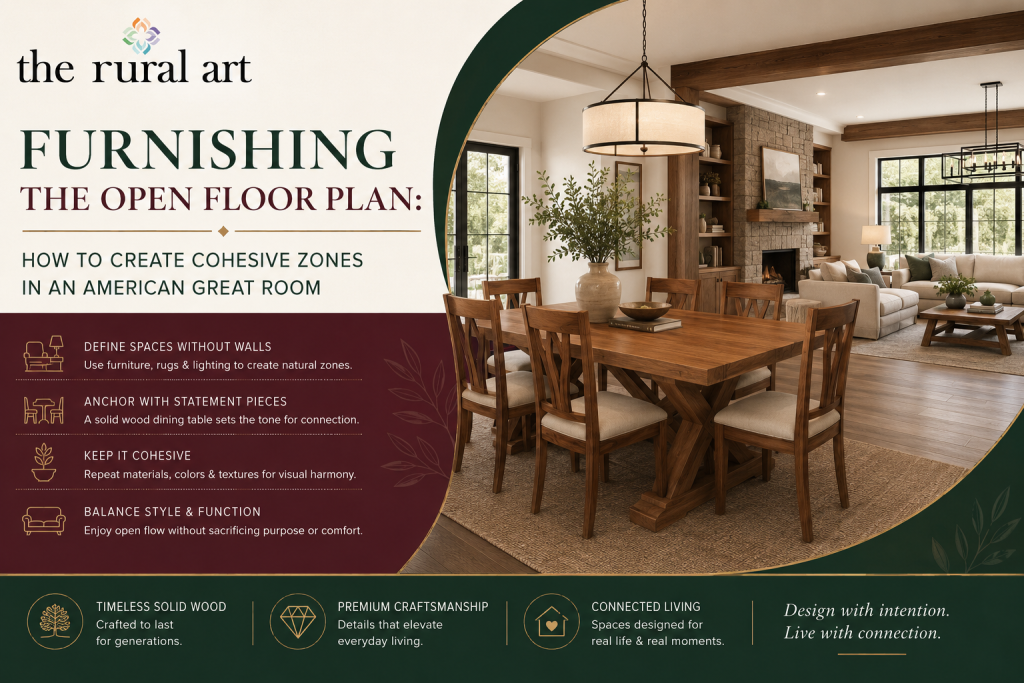
Walking into a beautiful, wide-open living room only to feel a sudden wave of confusion about where your eyes should look or where you should actually sit can be surprisingly frustrating. It is a feeling many homeowners know all too well because while a giant open floor plan looks incredibly bright and airy, it can easily end up feeling cold, chaotic, and a bit like an empty warehouse without a clear layout strategy. For anyone trying to decorate an American great room, furniture is no longer just a basic purchase to fill up empty space. It has become your best tool for carving out cozy, separate zones without building lonely drywall barriers that block out the natural light. Finding that comfortable, sweet spot where your kitchen, dining area, and living room all talk to each other while keeping their own separate purposes is the real secret to turning a house into a welcoming home.
Utilizing a beautiful teak wood dining table can serve as an incredible visual anchor that instantly defines your eating zone while bringing a sense of comfort and natural warmth to the surrounding space. Taking a quick moment to understand these layout zones gives you the perfect foundation to turn a sprawling floor plan into a deeply connected, functional masterpiece where your family can truly relax together.
Key Takeaways
- Open floor plans work best when each area has a clear purpose and visual identity.
- Furniture placement often defines spaces more effectively than walls.
- Consistent materials, finishes, and color palettes help unify large rooms.
- Area rugs, lighting, and furniture scale play a major role in creating balance.
- Well-chosen statement pieces can anchor different zones without making the room feel divided.
- Successful great rooms feel connected while still giving each area its own personality.
Why Open Floor Plans Need Defined Zones
Open-concept homes have become one of the most popular features in American residential design. They create a sense of openness that many homeowners love, allowing family members and guests to move freely between different parts of the home.
The challenge appears when the room begins to feel like one large furniture showroom rather than a comfortable living space.
Every area within a great room should serve a purpose. When furniture is arranged with intention, people naturally understand where to relax, dine, entertain, or gather. The goal is not to separate spaces completely. The goal is to create gentle transitions that help the room feel organized while maintaining the openness that makes these layouts attractive.
Start with the Largest Anchor Piece
Every successful great room begins with one major furniture piece that sets the direction for everything around it. In some homes, that anchor may be the sofa. In others, it is the dining table that quietly becomes the center of daily life.
A substantial dining table works especially well because it naturally creates a gathering space while helping organize the surrounding layout. The Irvine Teak Wood Dining Table is a great example of this. Its generous proportions, rich wood grain, and handcrafted character help establish a clear dining zone without making the room feel divided. In an open-concept setting, a statement table like this provides visual structure while still allowing the space to feel connected and inviting.
When selecting an anchor piece, consider:
- Room size and overall proportions
- Natural traffic flow through the space
- Existing focal points, such as fireplaces or large windows
- Architectural details within the room
- The number of people who regularly use the area
A well-chosen dining table often does more than furnish a room. It creates a natural destination within the layout and helps every surrounding piece feel intentionally placed.
Creating Visual Separation Without Walls
One of the biggest mistakes homeowners make in open floor plans is pushing every piece of furniture against a wall. Large rooms often benefit from furniture floating within the space rather than hugging the perimeter.
Several design elements can help establish distinct zones:
1. Area Rugs
Area rugs create clear boundaries between different functions. A rug beneath a seating arrangement immediately signals that the area is intended for conversation and relaxation.
2. Lighting
Pendant lights above dining tables and floor lamps near seating areas help visually separate spaces while maintaining overall cohesion.
3. Furniture Orientation
The direction furniture faces can naturally guide movement and define how each area is used.
4. Console Tables and Benches
Low-profile pieces create subtle divisions without interrupting sightlines.
These simple design techniques often achieve the same result as walls while preserving the open character of the room.
Why Dining Areas Often Define the Entire Layout
Dining spaces frequently serve as the connecting point between kitchens and living areas. Because of this central position, the dining zone often influences the entire room’s layout more than homeowners realize.
A round pedestal dining table and chair set can work particularly well in open floor plans because its shape encourages movement around the table and softens the straight architectural lines commonly found in modern homes. Rather than creating a visual barrier, the rounded form helps the dining area feel connected to the surrounding spaces while still giving it a clear identity.
Benefits of round dining tables include:
- Improved traffic flow
- Better conversation during meals
- Softer visual appearance
- Greater flexibility in compact layouts
- Balanced proportions within larger rooms
The Scottsdale Round Pedestal Solid Wood Dining Set shows how a well-designed dining set can help define a dedicated gathering space without disrupting the openness of the room. Its pedestal base creates a lighter visual footprint, while the upholstered chairs add comfort and refinement that encourage family and guests to linger a little longer around the table.
Maintaining Consistency Across Multiple Zones
Defining separate areas does not mean each zone should look completely different. The most successful open floor plans share common design elements throughout the room.
Consistency can be achieved through:
- Similar wood finishes
- Coordinated color palettes
- Repeating textures
- Matching hardware details
- Related furniture styles
For example, natural wood tones in the dining area can reappear in coffee tables, shelving, or accent furniture throughout the room.
This visual connection helps the entire space feel intentional rather than fragmented.
A common mistake is treating each area as its own decorating project. When every zone follows a completely different style, the room can quickly feel chaotic.
Using Scale to Keep Large Spaces Comfortable
Large rooms require furniture that feels proportional to the available space. Furniture that is too small can leave a room feeling unfinished. Oversized pieces can make the space feel crowded despite its size.
When furnishing a great room:
| Room Element | Recommended Focus |
| Dining Area | Substantial table with balanced seating |
| Living Area | Appropriately scaled sofa and accent chairs |
| Coffee Tables | Large enough to visually anchor seating |
| Lighting | Fixtures proportionate to ceiling height |
| Accent Furniture | Pieces that support rather than compete |
Scale becomes even more important when using a round pedestal dining table and chair set because the table often serves as a visual centerpiece within the larger room. Balanced proportions help every area feel comfortable and connected.
Creating Natural Flow Between Spaces
A great room should feel easy to navigate. People should be able to move comfortably from one zone to another without weaving around furniture or encountering visual obstacles.
To improve flow:
- Leave clear walking paths.
- Avoid blocking major sightlines.
- Maintain consistent spacing between furniture groupings.
- Position seating to encourage conversation.
- Use furniture placement to guide movement naturally.
The best open floor plans feel effortless because every piece works together to support how people actually use the space.
Visitors may not consciously notice the layout, but they immediately notice how comfortable the room feels.
Conclusion
A successful great room is not defined by its size. It is defined by how naturally each space flows into the next while still serving its own purpose. Thoughtful furniture placement and well-chosen anchor pieces can transform an open floor plan into a home that feels welcoming and comfortable from the moment you walk in.
Many homeowners find that achieving this balance becomes easier when furniture is selected with both craftsmanship and longevity in mind. Collections from The Rural Art showcase how beautifully made furniture can bring warmth and character into open-concept interiors. Exploring pieces designed for dining areas, living spaces, and gathering zones can help homeowners discover ideas that create a stronger sense of connection throughout the home.
FAQs
1. How do you separate spaces in an open floor plan without walls?
Area rugs, furniture placement, lighting, and accent pieces can create clear zones while maintaining an open and connected layout.
2. What type of dining table works best in a great room?
The ideal table depends on room size and layout, but round and rectangular designs often work well because they naturally establish a dining zone within larger spaces.
3. Should all furniture in an open floor plan match?
Furniture does not need to match exactly, but sharing similar finishes, materials, or colors helps create visual unity throughout the room.
4. How do I make a large open room feel more comfortable?
Use properly scaled furniture, define activity zones, incorporate area rugs, and maintain clear traffic paths to create a balanced and welcoming environment.
