

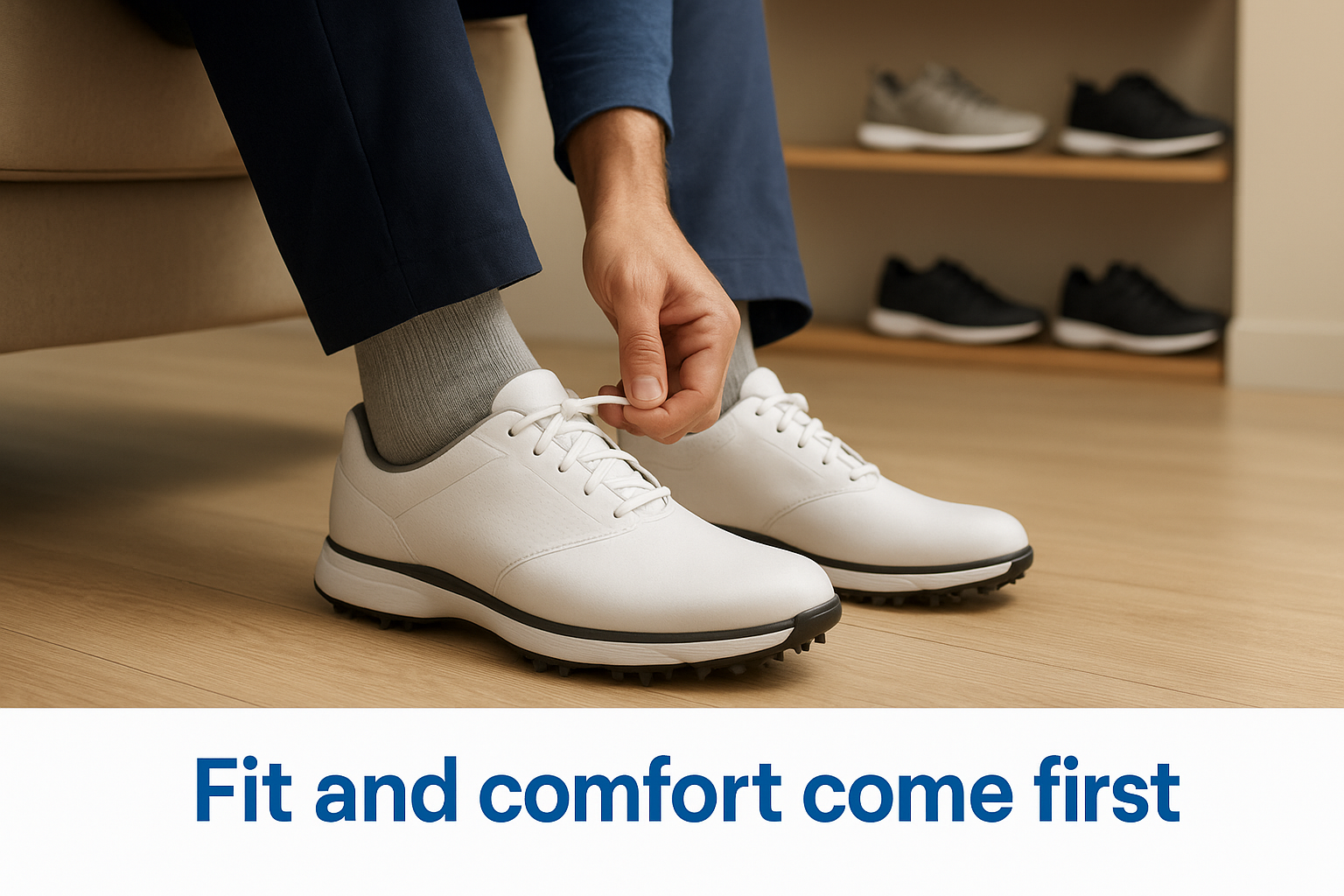
Golf footwear used to be judged mostly by grip, durability and appearance. If a shoe looked traditional and held firmly to the turf, it was considered suitable for the course.
That view is changing.
Modern golfers expect more than a stiff upper and a reliable sole. They want enough room for the toes, cushioning that lasts through a full round and a fit that works when the feet begin to warm or swell. For recreational players, comfort is no longer treated as an optional extra. It has become part of how well the shoe performs.
This shift reflects a wider change in golf itself. More people now play for exercise, social contact and time outdoors rather than competition alone. They may walk eighteen holes, practise for an hour or spend the afternoon moving between the course and the clubhouse. Footwear needs to support all of it.
Golf Places Constant Pressure on the Feet
Golf may look relaxed, but the feet remain active throughout the round.
A player walks across slopes, changes direction, stands while waiting and repeatedly transfers body weight during the swing. The ground may be soft in one area, firm in another and uneven around bunkers or rough.
A shoe that feels comfortable for a few minutes can become irritating after several hours. The forefoot begins to feel tight. The heel rubs. A rigid upper presses across the top of the foot.
This discomfort does not always stop a golfer from playing, but it can change movement. The player may shorten the stride, place more weight on one side or avoid walking when a buggy is available.
Comfort-focused design aims to reduce those small obstacles before they begin affecting the round.
Wider Shapes Are Receiving More Attention
One of the clearest changes in sports footwear is the move away from a single standard foot shape.
Many traditional golf shoes narrow sharply near the toes. This may create a sleek appearance, but it does not suit golfers with broad forefeet, bunions or feet that spread naturally when standing.
Buying a larger size does not always solve the problem. Extra length can leave the heel loose while the sides of the foot remain under pressure.
Purpose-designed wide fit golf shoes provide more room across the forefoot without adding unnecessary space at the front. The goal is not to make the entire shoe loose. It is to match the shape of the foot more accurately.
That distinction matters during the swing. The toes need room, but the heel and midfoot still need to feel controlled.
Cushioning Is Becoming More Balanced
Older golf shoes were often built with relatively firm soles. They provided stability but could feel unforgiving on long walking days.
Newer designs tend to include more cushioning beneath the heel and forefoot. This can soften repeated contact with hard paths, dry fairways and clubhouse flooring.
Yet too much softness creates another problem. A golfer needs to feel stable while shifting weight from one side of the body to the other. A sole that feels overly spongy can make the movement less controlled.
Comfort-focused design therefore does not mean simply adding thicker foam. It means finding a balance between impact protection and a secure connection with the ground.
For everyday players, that balance may be more useful than an aggressively technical design created only for maximum performance.
Uppers Are Becoming Less Restrictive
The upper part of a golf shoe affects how the foot feels as much as the sole.
Stiff materials can hold their shape well but may create pressure across the toes or top of the foot. Softer and more flexible uppers allow the shoe to adapt slightly as the player walks.
This is particularly useful later in the round, when feet may feel larger than they did at the first tee.
Many newer designs use softer, more flexible zones where the foot needs to bend, with firmer support around the heel and sidewalls to keep the shoe steady through the swing. The result is a shoe that feels less like formal footwear and more like something designed for several hours of real activity.
Spikeless Soles Have Changed Expectations
Traditional golf shoes were built mainly for use on the course. Wearing them elsewhere was awkward, particularly when they had prominent spikes.
Spikeless designs have made golf footwear more versatile. Many can be worn while travelling to the course, walking through the clubhouse and completing other casual activities afterward.
This suits recreational golfers who do not want to carry an extra pair of shoes.
Modern spikeless soles use tread patterns and rubber sections to create grip without traditional spikes. The quality varies, and golfers still need to consider wet grass, steep slopes and local course conditions.
For many everyday rounds, however, the convenience and walking comfort of a well-designed spikeless shoe can outweigh the need for maximum traction.
Comfort Can Support Better Movement
No shoe can repair an inconsistent swing. Still, poor fit can make movement harder.
A golfer whose toes are compressed may struggle to feel settled at address. A slipping heel can reduce confidence during rotation. If one area of the foot hurts, the player may unconsciously shift weight away from it.
A well-fitted shoe removes some of that interference.
The golfer can stand naturally, walk without guarding a sore area and complete the swing without thinking about the shoe. That does not guarantee better scores, but it allows the body to move with fewer distractions.
For recreational players, this may be the most useful kind of performance benefit.
Everyday Golfers Have Different Priorities
Professional golfers may choose footwear around tournament conditions and technical preferences. The average club player often has a different set of needs.
Comfort must last through a full round. The shoe should work on the course and around the clubhouse. It should be easy to clean, dependable in changing weather and suitable for the golfer’s actual foot shape.
Appearance still matters, but fewer players are willing to accept pain for a traditional look.
This has encouraged brands to create shoes that resemble walking trainers while retaining golf-specific grip and stability. The change makes the sport more approachable for people who previously found golf footwear too narrow, stiff or heavy.
It also reflects the fact that many golfers play for general activity rather than elite competition.
Fit Still Matters More Than Features
A shoe can include advanced cushioning, modern materials and an impressive outsole, yet still fail if the fit is wrong.
Golfers should try shoes later in the day when the feet may be slightly larger. The socks normally worn for a round should also be used during the fitting.
There should be room around the toes, but the foot should not slide. The heel should remain secure when walking. Pressure across the sides or top of the foot should not be ignored in the hope that the shoe will eventually stretch.
Both feet need checking because one may be slightly wider or longer.
The best technology cannot compensate for choosing the wrong shape.
New Shoes Should Be Tested Gradually
A full eighteen-hole round is not the right place to discover that a new shoe rubs.
Golfers should begin with short periods of wear. A visit to the driving range or a few holes can reveal pressure points before the shoes are used for an entire day.
After wearing them, check for redness around the heel, toes and forefoot. Persistent marks often suggest that the fit is not right.
Breaking in should mean allowing the materials to soften slightly. It should not mean enduring pain until the feet adapt.
This is especially important when switching from a narrow traditional model to wide fit golf shoes, as the new shape may feel different even when it is more suitable.
FAQs About Wide Fit Golf Shoes
Are wider golf shoes less stable?
No, not if the fit is right. A proper wide-fit golf shoe gives the forefoot more room without letting the heel or midfoot move around inside the shoe.
Are spikeless shoes suitable in wet weather?
Most offer enough grip for regular play, although traction still depends on the tread pattern and the condition of the course. Golfers who often play on wet grass, slopes or softer ground may be better off with a more aggressive sole.
Should golf shoes feel tight when new?
They should feel secure, not painful. Strong pressure, pinching or numbness should not be treated as a normal breaking-in period.
Can walking trainers be used for golf?
They may feel comfortable, but ordinary trainers are not always designed for the rotational movement and grip required during a golf swing. A golf-specific walking-style shoe is usually a better compromise.
Comfort Is Becoming Part of Performance
Golf footwear is becoming more realistic about how everyday players use it.
Most golfers are not competing under tournament pressure. They are walking, socialising, exercising and trying to enjoy several hours outdoors. Their shoes need to support that experience rather than merely look appropriate beside a golf bag.
Wider shapes, balanced cushioning, flexible uppers and more versatile soles show how the design priorities are changing.
The best golf shoe is no longer simply the one with the strongest grip or most traditional appearance. It is the one that allows the player to finish the round without thinking constantly about their feet.
For everyday golfers, that is not a minor improvement. It is part of what keeps the game enjoyable.
