

Timber has been a popular choice of building material for Australian homes for centuries and there’s no lack of reason. It provides warmth, character and natural beauty that few other materials can offer. Timber that is not protected, however, does not always remain beautiful particularly in a coastal, sun-drenched climate such as ours. That is where proper staining comes into play, and that is a subject that every homeowner with timber decking, fencing, cladding or furniture should know before their next home maintenance project.
Timber staining Sydney offers a slightly different process than staining timber in cooler and drier climates when you are looking to protect and enhance your timber surfaces. Timber in Sydney is exposed to a variety of factors that are specific to the city, such as the high UV levels, coastal air humidity which causes swelling and moisture and unpredictable rainfall that can also lead to salt air corrosion near the coast. Knowing these local conditions is the first step to selecting the right stain, the right technique and the right time for a finish that will last.
In Sydney’s Climate, Timber Staining Is a Significant Concern That Needs to Be Addressed
Sydney’s weather conditions year-round are a combination of severe summer sun with high humidity and unexpected rainfall, which is not found in inland or temperate areas. This mix is very challenging for exposed wood. If left untreated or if poorly stained, wood can:
- Dry out and grey from the sun’s rays.
- Absorbs and releases moisture causing it to crack, warp, or cup.
- Mould/fungal growth in shaded, damp areas.
- Over time, suffer damage from termites or insects.
A good quality stain not only enhances the look of the wood but also creates an effective water resistant layer by closing the pores of the wood and filters out harmful ultraviolet rays. This protective function is arguably more significant in a city such as Sydney than cosmetic.
Selecting the Appropriate Kind of Timber Stain
There are plenty of different types of stains, and the wrong product will result in needing to repeat the job within a year or two. There are some important categories to understand when it comes to homeowners:
1. Oil-Based Stains
Oil-based stains soak into the grain of the wood providing effective rain and UV resistance. They help to improve the natural grain very well but they do need to be applied more often (usually every 1-3 years in Sydney’s climate) and need dry conditions for longer.
2. Water-Based Stains
Water-based stains are becoming more popular because they dry faster, are easier to clean up and do not contain VOC’s. They are less damaging to the environment and will not yellow as much as the oil-based varieties, but will not be as effective as their oil-based counterparts in deep hardwoods.
3. Solid vs Semi-Transparent vs Clear Stains
- Solid stains provide complete UV protection and conceal imperfections, but they cover up the grain of the wood.
- Semi transparent shades offer a balance of colour and reveal wood grain.
- Clear or natural stains will show the grain of the timber but will provide the least amount of UV protection, thus requiring more maintenance.
For a majority of Sydney homes, a semi-transparent, UV-stabilised, water-based stain is the ideal option regarding protection, appearance and maintenance schedule – but of course, this comes down to the type of timber and how it is exposed to sunlight and weather.
You Need to Prepare Your Timber Before Staining It
Timber must be prepared before staining.
The biggest mistake with most DIY staining jobs is preparation. This is the leading cause of fast fading stains. The right to a good prep process entails:
- Cleaning Use a timber-specific cleaner or sugar soap solution to remove dirt, mould and old flaking finish.
- Sanding Sand lightly so the stain will soak in evenly and the wood grain will be opened up. Sand ALWAYS in the grain direction.
- Drying – Make sure the timber is dry before application. This can take longer in Sydney than it should after rain, as it is humid.
- Repairing – Repair any cracks or rotten boards and treat any fungal rot.
To prepare quickly to obtain a quicker product is always very expensive in the long run in that stains tend to peel off from dirty or damp wood and not last.
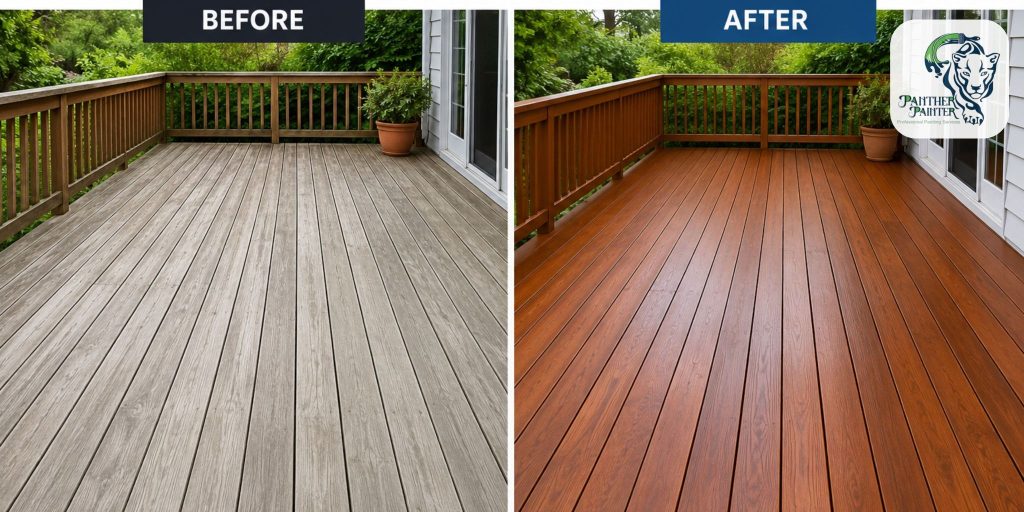
The Best Practices for Applications Will Be Presented
There are many applications of timber once it is prepped and each technique yields a very different result.
- Apply in mild weather conditions – Do not stain in direct sun or high humidity because this will have an impact on both drying times and finish quality. Ideal time to start is early morning or late afternoon.
- Use the proper tools A good brush is ideal for small, detailed areas, and a roller or sprayer is faster for larger flat surfaces, such as decks.
- Use thin, even layers Thick coats may cause uneven drying, tackiness and early peeling.
- Respect recoat times – Always follow manufacturer’s recommended drying and recoating times.
- Test on a small area first – colours will vary between different species of timber so a test patch will prevent any unpleasant shocks to the bank.
Whenever Is the Right Time to Restain Timber Sydney?
In Australia, the sun exposure on decks and other horizontal surfaces in most parts of Sydney means most require restaining every 1-2 years, while vertical surfaces like fences and cladding will generally need to be stained every 2-4 years depending on the quality of the stain and the amount of sun the surface receives. North facing surfaces are the most sun-exposed and usually require more frequent cleanings than south facing or shaded surfaces.
Regular inspection is a must: fading or water no longer beading on the surface or grey wood is a clear sign that it’s time to restain.
Doing It Yourself vs Employing a Professional
Staining a small feature or fence section is a weekend do-it-yourself project, but larger decks, cladding or heritage timber may require professional skills and craftsmanship. Professionals bring:
- Sometimes the commercial grade stains are not readily available in retail stores.
- Appropriate equipment for even, streak-free application.
- Become familiar with putting stains on the right type of timber.
- Efficiency of time especially for larger sites.
If your project involves more than just timber and property maintenance, it will be interesting to note that many of the surface-preparing and surface-finishing ideas are used on other materials as well. When undertaking a larger renovation project, it is common for the property owner to contract in Commercial Painters Sydney teams to perform both the timber staining and other painting work as a combined project to ensure there is a consistent quality and finish throughout the property, whether home, office or retail.
Final Thoughts
Timber staining is one of the most effective ways to protect and enhance your home’s exterior surfaces, but it requires the right product, proper preparation, and correct application technique especially in a climate as demanding as Sydney’s. Whether you tackle it yourself or bring in professional help, understanding these fundamentals will help you make informed decisions and get a finish that truly stands the test of time.
Taking the time to choose quality materials and follow best practices isn’t just about aesthetics it’s an investment in the longevity of your property’s timber features, saving you money and hassle in the years to come.
