

Telegram has become a popular communication tool for users who want fast messaging, cloud-based synchronization, large group conversations, file sharing, and access across multiple devices. Because it is available on desktop computers, smartphones, tablets, and the web, users can move between devices without rebuilding their conversations from scratch.
For new users, however, the setup process can sometimes feel confusing. Different operating systems require different installation methods, language settings may vary, and security options should be configured carefully after installation.
This guide explains how to choose the right Telegram version, install it on common devices, configure basic settings, and use the platform more safely across desktop and mobile environments.
Choose the Right Telegram Version for Your Device
Before installing Telegram, the first step is identifying which version is appropriate for your device.
Telegram is available for several major platforms, including:
- Windows
- macOS
- Android
- iPhone and iPad
- Linux
- Web browsers
Desktop users often prefer a dedicated application because it provides faster access to chats, files, channels, and group conversations while working on a computer. Mobile users, meanwhile, benefit from notifications, contact synchronization, camera access, and the ability to communicate while away from a desktop.
Chinese-speaking users researching telegram 下载 can first determine which operating system they are using and then follow installation instructions specifically designed for that platform.
Choosing the correct version matters because installation procedures, update mechanisms, and security permissions differ between Windows, macOS, Android, and iOS.
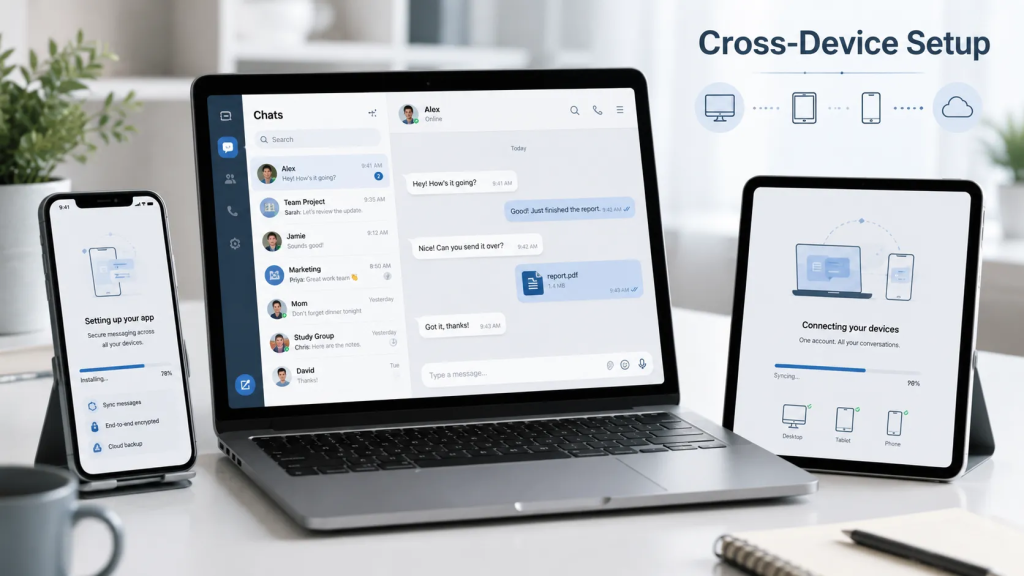
Cross-device setup across desktop, mobile, and tablet environments.
Installing Telegram on Windows
Windows users generally install Telegram through a desktop installer.
After downloading the appropriate installer, users can normally complete setup by opening the installation file, selecting the preferred installation location, and following the on-screen steps.
Once installation is complete, the application can be launched from the Start menu or desktop shortcut.
During the first login, Telegram usually requires a phone number for account verification. Users should enter the number carefully, including the correct international country code.
After verification, existing conversations associated with the account can synchronize automatically.
For people who regularly work from a computer, the desktop version can be useful for:
- Writing longer messages
- Managing large group conversations
- Sending documents
- Downloading shared files
- Searching message history
- Managing channels
- Moving files between mobile and desktop environments
Desktop access can be especially convenient for remote workers, community managers, students, and users who communicate across several devices.
Installing Telegram on macOS
The installation process on macOS is similar, although users should make sure they select a version designed for Apple’s operating system.
After installation, macOS may request permission for notifications or access to certain system features. Users should review these permissions instead of automatically approving every request.
Telegram does not normally need unrestricted access to everything on the computer. Permissions should be granted based on features the user actually intends to use.
After signing in, conversations and cloud-based content associated with the account can become available on the Mac.
Users who switch frequently between an iPhone and Mac can benefit from having conversations available on both devices.
Installing Telegram on Android
Android installation deserves additional attention because applications can sometimes be distributed outside standard app stores.
Users should be cautious with APK files obtained from unknown websites, file-sharing groups, advertisements, or unofficial download pages.
A modified or repackaged application could potentially include unwanted software or altered permissions.
Before installing any Android messaging application, users should check:
- The source of the installation file
- The permissions requested by the application
- Whether the software can receive future security updates
- Whether the package appears to have been modified
- Whether the device displays security warnings during installation
Users looking for information about 电报下载 should also remember that “电报” is a commonly used Chinese name for Telegram. Regardless of the terminology used, the same principle applies: verify the software source before entering a phone number, verification code, or other account information.
Avoid installing unfamiliar modified versions simply because they promise additional features, special themes, or automatic Chinese localization.
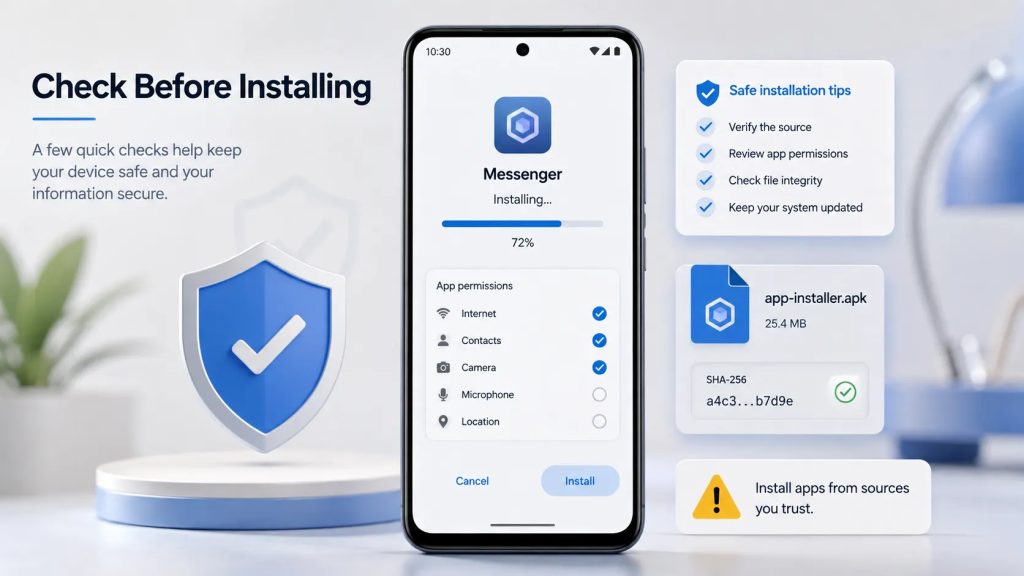
Basic checks can reduce the risk of installing software from an untrusted source.
Installing Telegram on iPhone and iPad
iPhone and iPad users generally install applications through Apple’s software distribution ecosystem.
After installation, Telegram may request access to features such as:
- Notifications
- Contacts
- Photos
- Camera
- Microphone
These permissions serve different purposes.
For example, camera permission is useful for sending photos or scanning content, while microphone permission is necessary for voice messages and calls.
Users who do not need a particular feature can choose not to grant the related permission immediately.
Permissions can usually be reviewed and changed later through the device’s privacy settings.
Complete Account Verification Carefully
Telegram accounts are normally associated with a phone number.
During registration or login, users may receive a verification code through supported verification methods.
This code should be treated as sensitive account information.
Never send a verification code to another person claiming to be:
- Technical support
- A group administrator
- A channel owner
- A friend who suddenly needs account verification
- A service provider offering account recovery
A legitimate login code is intended to confirm access to your own account.
If another person obtains the code, they may be able to attempt unauthorized access.
Users should also avoid repeatedly requesting verification codes within a very short period. Multiple failed attempts can complicate the login process and make troubleshooting more difficult.
Configure Telegram After Installation
Installing the application is only the beginning. New users should spend a few minutes reviewing important account settings.
A useful Telegram 安装与使用指南 can help users understand installation, account configuration, privacy settings, language options, and common Telegram features before they begin using the platform extensively.
Several settings deserve particular attention.
Review Your Profile Information
Users can configure a display name, profile image, username, and biography.
Avoid publishing unnecessary personal information if the account will be used in public groups or large communities.
A public username can make an account easier to find, but it can also increase unsolicited contact.
Check Privacy Settings
Telegram provides privacy controls for different types of account information.
Depending on available settings, users should review who can see or interact with:
- Phone number
- Profile photo
- Last seen status
- Calls
- Forwarded messages
- Group invitations
Privacy preferences depend on how the account is used.
Someone running a public community may choose different settings from someone using Telegram primarily for private communication.
Enable Two-Step Verification
One of the most important account-security measures is enabling an additional password for login protection when the feature is available.
A verification code alone should not be the only security layer protecting an important account.
Two-step verification adds another credential that can make unauthorized account access more difficult.
Users should choose a password that is:
- Unique
- Difficult to guess
- Not reused on other websites
- Stored securely
Avoid using simple passwords based on birthdays, phone numbers, usernames, or common words.
If recovery information is configured, make sure the recovery method is also secure.
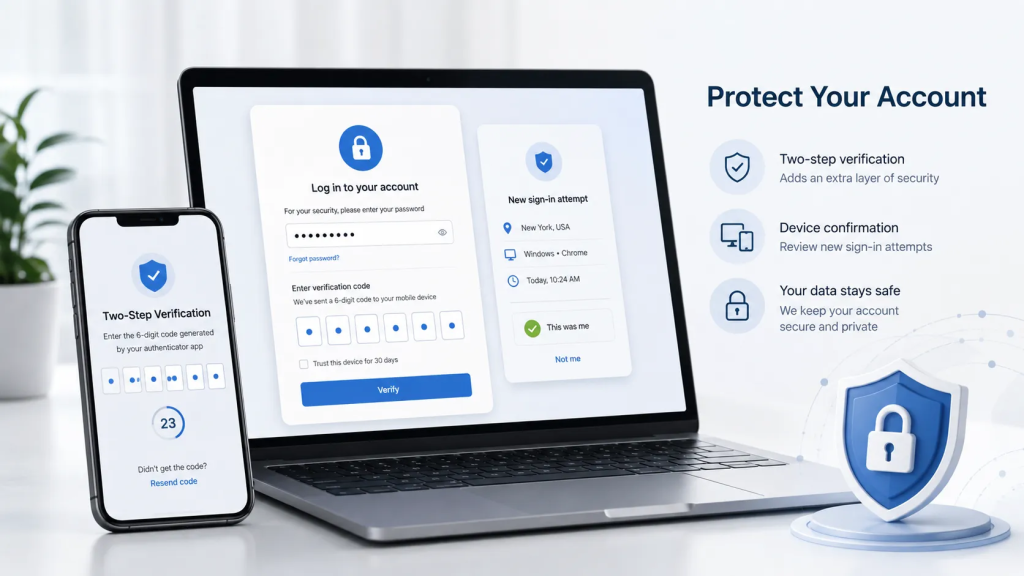
Two-step verification adds an additional layer of account protection.
Review Active Sessions
Telegram can be used on multiple devices at the same time. This is convenient, but it also means users should periodically review which devices currently have access to the account.
Look for unfamiliar sessions, including devices, operating systems, or locations that you do not recognize.
If an unknown session appears, terminate it and review the account’s security settings immediately.
It is also a good idea to remove old devices that are no longer being used.
For example, if you previously logged in on a shared computer, work computer, old smartphone, or temporary device, make sure that session is no longer active once access is no longer required.
Using Telegram Across Multiple Devices
One of Telegram’s most useful characteristics is multi-device access.
A user may communicate from a smartphone during travel, continue the same conversation from a laptop at work, and later access messages from another supported device.
This can improve productivity because users are not limited to one screen.

Messages, files, and conversations can be synchronized across multiple devices.
Common multi-device use cases include:
File Transfers
Users can send documents or media from a phone and access them later from a computer.
This is helpful when working with screenshots, PDFs, photos, or project files.
Group Management
Community administrators may find desktop access easier when reviewing conversations, writing announcements, managing members, or working with longer messages.
Channel Reading
Desktop screens make it easier to browse long posts, documentation, and discussion archives.
Search
Searching large amounts of conversation history can be more efficient with a physical keyboard and larger display.
Be Careful With Third-Party Downloads
Telegram’s popularity has led to many third-party websites, modified applications, unofficial packages, and republished installers.
Not every third-party resource is malicious, but users should not automatically assume that a file is trustworthy because it uses the Telegram name or familiar interface graphics.
Common warning signs include:
- Claims that a modified version is the only way to use Telegram in a certain language
- Requests to disable antivirus software before installation
- Compressed files protected by unknown passwords
- Installers distributed through anonymous file-sharing services
- Applications requesting unrelated permissions
- Websites demanding payment before installation
- Pages asking users to submit verification codes
Users should separate informational guides from the actual software installation process.
A guide can explain installation steps, but users should independently verify where the software itself comes from.
Avoid Fake Support Accounts
Another security issue involves impersonation.
Scammers may contact users while pretending to represent Telegram support, a group administrator, or a technical service.
Users should be suspicious of unsolicited messages requesting:
- Verification codes
- Passwords
- Payment
- Wallet information
- Remote access to a device
- Installation of additional software
Account recovery and login credentials should never be handled casually through unsolicited private messages.
When a technical problem occurs, users should rely on trusted documentation and carefully verify any instructions before following them.
Keep Telegram Updated
Software updates are important because messaging applications continuously evolve.
Updates may include:
- Bug fixes
- Compatibility improvements
- Performance changes
- Security patches
- New privacy controls
- Interface improvements
Running a very old version can create compatibility problems and may prevent users from receiving newer protections.
Users should periodically check whether updates are available for both desktop and mobile versions.
Understand Language Settings
Chinese-speaking users sometimes assume that a separate “Chinese Telegram” application is required.
In many cases, language configuration and software installation should be treated as separate tasks.
The safer approach is usually:
- Choose the correct application for the device.
- Install it from a trustworthy source.
- Complete account verification.
- Review the available language options.
- Configure privacy and security settings.
Users should be cautious of modified applications that advertise themselves primarily as special localized editions while requesting unusual permissions or distributing software through unknown channels.
Final Thoughts
Telegram can be a practical communication platform for users who need messaging, file sharing, communities, channels, and synchronization across several devices.
The installation process itself is relatively straightforward, but users should pay close attention to software sources, account verification, privacy settings, active sessions, and two-step verification.
The most important principle is simple: do not treat downloading, installing, and securing an account as separate concerns.
A safer setup process combines all three.
Choose the correct version for your operating system, verify the source of the software, protect your verification codes, configure privacy settings, enable additional account protection, and periodically review connected devices.
Following these practices can make Telegram easier to use across desktop and mobile devices while reducing many of the common risks associated with unofficial downloads, weak account security, and unfamiliar third-party software.
