

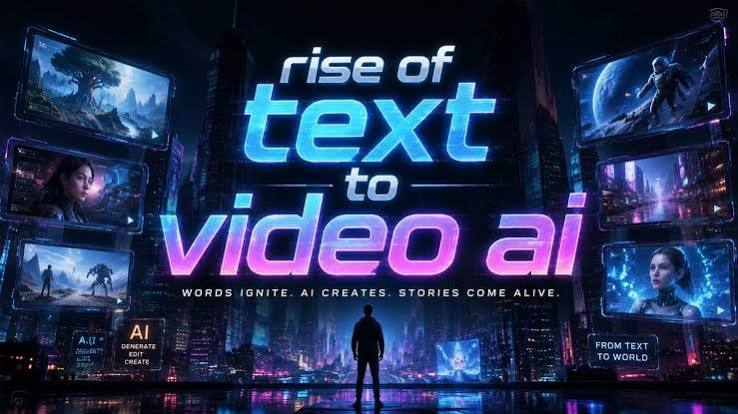
Content teams face a difficult combination of expectations. Audiences want more video, distribution channels demand different formats, and campaigns must move faster without losing quality. Text-to-video technology is changing how organizations respond to that pressure. It allows a written idea, outline, or script to become the starting point for a visual sequence instead of waiting for every element to be produced manually. The result is not an automatic replacement for editors or creative directors. It is a new production layer that helps them explore ideas, build drafts, and deliver useful video with less friction.
From written concepts to visual plans
Every effective video begins with a clear concept. In traditional production, the concept must pass through several translations before viewers see it: a brief becomes a script, the script becomes a storyboard, and the storyboard becomes footage. Each handoff can introduce delay or misunderstanding. Text-to-video workflows shorten this path by turning written direction into an early visual plan. Teams can see whether a sequence makes sense, whether the opening is strong enough, and whether the story fits the intended duration before they invest significant time in polishing it.
This is especially valuable during preproduction. A marketer may have several campaign angles but limited evidence about which one deserves a full treatment. Instead of debating each idea in the abstract, the team can create rough visual drafts and compare them. A product-led opening, a customer-problem opening, and an outcome-led opening can be evaluated side by side. The drafts do not need to be final. Their purpose is to expose differences, improve discussion, and make creative decisions more concrete.
Why structured prompts matter
Text-to-video results depend heavily on the quality of the input. A useful prompt should describe more than an object or scene. It should provide context about the audience, environment, action, camera perspective, visual mood, pacing, and desired outcome. For marketing work, the prompt should also reflect the product truth and brand position. This does not mean every direction must be long. It means the information should be intentional. Clear constraints help the system produce options that are easier to review and less likely to drift away from the campaign goal.
Teams can improve consistency by creating a reusable prompt framework. One section can define the subject, another the action, another the setting, and another the style. Additional fields can specify aspect ratio, duration, movement, brand colors, and elements to avoid. A structured framework makes collaboration easier because writers, designers, and marketers are using the same creative vocabulary. It also makes experiments more meaningful: when the team changes one variable at a time, it can understand which instruction created the difference.
Faster iteration without skipping judgment
The strongest advantage of text to video AI is the ability to iterate quickly while an idea is still flexible. A team can adjust the setting, simplify the scene, test a different pace, or rewrite the opening without rebuilding the entire project. That speed can improve quality when it is paired with careful review. It gives creators more opportunities to find a convincing solution. However, iteration should have a purpose. Producing dozens of random alternatives adds noise; testing clearly defined creative hypotheses produces learning.
Human judgment remains central throughout the process. Reviewers must decide whether the visuals communicate the intended message, whether the scene feels credible, and whether the style fits the audience. They also need to identify technical problems such as distorted details, inconsistent characters, unnatural motion, or unreadable text. A fast draft is valuable only when it leads to a trustworthy final asset. The role of AI is to expand the creative search space, while people remain responsible for selecting and refining the result.
Scaling content across channels
Digital campaigns rarely use a single video. They may require a vertical version for short-form social platforms, a square version for feeds, a landscape version for websites, and a concise cut for advertising. Text-to-video workflows make it easier to treat these versions as related outputs rather than separate projects. The central message can remain consistent while the hook, duration, caption density, and call to action change for each placement. This approach reduces duplication and helps a campaign feel coordinated across touchpoints.
Localization also becomes more manageable. Teams can adapt scripts, on-screen text, examples, and pacing for different markets while preserving the campaign structure. Yet language replacement alone is not enough. Local reviewers should check tone, cultural references, visual appropriateness, and product claims. An efficient system separates global brand elements from market-specific choices. That allows organizations to scale video production without assuming that one creative treatment will work equally well everywhere.
Supporting education and internal communication
The value of text-to-video extends beyond paid marketing. Product teams can turn release notes into feature explainers, support teams can create short answers to common questions, and human resources teams can build onboarding modules from approved documentation. Internal experts often possess the right knowledge but lack the time or production skills to create video. A text-first workflow lets them contribute accurate source material while specialists shape the final presentation. This reduces the distance between subject-matter expertise and accessible communication.
For educational content, structure is particularly important. A good video should introduce the objective, explain one idea at a time, show a useful example, and end with a clear summary or next step. Visuals should support comprehension rather than compete for attention. Short segments, readable captions, and deliberate pacing help viewers retain information. AI can accelerate the assembly of these elements, but instructional design still determines whether the audience actually learns something.
Building safeguards into the workflow
Organizations need clear safeguards before using generated video at scale. Source information should be approved, especially when it includes pricing, performance claims, health or financial topics, or instructions that could affect customers. Generated people, voices, and branded assets may require consent and usage rights. Music and stock elements should also be checked for licensing. Teams should document who reviews each category of content and which issues require legal or compliance approval. These controls are easier to follow when they are part of the workflow rather than an emergency check before publishing.
Transparency matters as well. Viewers should not be misled about whether a scene represents a real event, real customer, or verified product result. When synthetic media could create confusion, teams should use appropriate disclosure and avoid unsupported implications. Responsible production protects the audience and the brand. It also encourages creators to focus on genuine value: clear explanations, useful demonstrations, and honest storytelling instead of visual novelty that hides weak information.
Measuring the right outcomes
Production speed is easy to measure, but it is not the only result that matters. Teams should track how long it takes to move from brief to approved asset, how many revisions are required, and how often outputs meet brand and factual standards. For published content, they can connect creative variables to completion rate, qualified traffic, product engagement, conversions, or learning outcomes. This evidence helps identify where automation is valuable and where additional human work produces better results.
A disciplined testing system labels each variation by its hook, message, format, and audience. If one version performs better, the team can identify what changed instead of treating the result as a mystery. Insights from distribution then inform the next script and prompt. Over time, content production becomes a learning loop in which creative decisions are guided by real response. AI increases the number of options the team can evaluate, while measurement helps it choose which patterns deserve to be repeated.
A practical adoption plan
Teams can begin with a narrow, low-risk use case such as social drafts, internal explainers, or storyboard exploration. They should define success criteria, create an approved prompt template, and establish a review checklist. Early projects can compare the new workflow with the previous process on time, cost, revision count, and output quality. The goal is to understand where the technology genuinely helps, not to automate every task at once. A focused pilot creates evidence that can support broader adoption.
As the workflow matures, organizations can build reusable libraries of brand references, approved language, scene patterns, and channel specifications. They can assign clear ownership for source material, creative review, compliance, and final publication. This operating model prevents tools from becoming isolated experiments. It connects them to the same standards that govern the rest of the content organization.
The future is faster, but still directed by people
Text-to-video AI is transforming production because it makes visual iteration available earlier and more often. It helps teams move from written ideas to testable drafts, adapt stories for multiple channels, and reduce repetitive production work. Its value is greatest when it supports a strong creative process rather than attempting to replace one. Clear briefs, accurate information, brand standards, and thoughtful review remain essential.
In 2026, the most successful teams will not be those that generate the largest number of clips. They will be those that use faster production to learn more quickly, communicate more clearly, and serve audiences more effectively. By combining structured direction with responsible review, organizations can make video a more flexible and accessible part of everyday communication while preserving the judgment that gives content meaning.
