

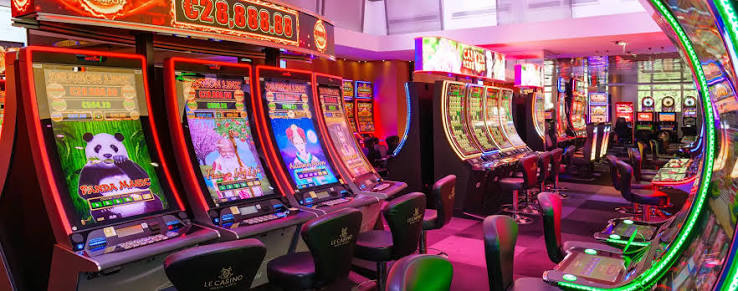
Slot games have changed considerably over the years. What once meant a simple mechanical machine with spinning reels has become a digital experience available on computers, tablets, and smartphones. Today, players can find hundreds of different slot themes, designs, features, and playing styles, each offering something a little different.
But there’s more to slots than colourful graphics and spinning symbols. Understanding how these games work, what determines their results, and how to approach them responsibly can make a real difference. Whether someone is exploring traditional slot machines or learning about modern online versions, knowing the basics helps set realistic expectations.
Let’s look at what makes slot games interesting, how their technology works, and what players should understand before getting involved.
What Is a Slot Game?
A slot is a game of chance in which players activate spinning reels containing different symbols. When the reels stop, the resulting symbol combinations determine whether a prize is awarded according to the game’s rules.
Traditional slot machines were mechanical devices commonly found in casinos. They featured physical reels that rotated when someone pulled a lever or pressed a button. Modern versions have replaced most mechanical components with digital software, but the basic idea remains familiar.
Online slots have made the format more accessible. Instead of visiting a physical casino, players can explore different games through compatible websites and applications.
One reason slots remain popular is their simplicity. Most games don’t require extensive instructions or specialist knowledge. A new player can usually understand the basic controls within a few minutes.
However, simple gameplay doesn’t mean predictable outcomes. Every spin is designed around chance, and understanding that distinction is important.
How Slot Games Work
Modern digital slots rely on software to determine the outcome of each spin. The central technology behind most legitimate online slot games is called a Random Number Generator, commonly shortened to RNG.
An RNG continuously produces numerical values. When a player activates a spin, the software uses the relevant generated value to determine the result based on the game’s programming.
This process happens extremely quickly.
The symbols displayed on the reels represent the result selected by the underlying system. Although animations might make the reels appear to slow down and stop individually, the outcome is generally determined by the game’s software rather than by the visual movement of the reels.
Understanding Random Number Generators
An RNG is designed to produce unpredictable results within its defined mathematical system.
For example, imagine someone plays a slot game and receives three matching symbols. On the next spin, the result is determined independently according to the game’s mechanics. The previous winning combination doesn’t automatically make another win more or less likely.
This is why previous results cannot reliably predict future spins.
A common misunderstanding is that a machine becomes ready to pay after a long losing streak. Random outcomes don’t work that way. Players should avoid treating patterns, timing, or previous results as guaranteed indicators of future rewards.
Different Types of Slot Games
Not every slot game follows exactly the same format. Developers experiment with reel layouts, themes, bonus mechanics, and visual designs to create different experiences.
Some popular categories include:
Classic slots: These games use traditional symbols such as bells, fruits, bars, and sevens. Their straightforward layouts appeal to people who prefer familiar gameplay.
Video slots: Video slots generally feature modern graphics, animations, sound effects, and additional game mechanics. They often include multiple paylines and bonus rounds.
Progressive jackpot slots: These games contribute a portion of eligible wagers to a growing prize pool. The jackpot can increase over time until a qualifying win occurs, subject to the game’s rules.
Megaways-style slots: These games use changing symbol arrangements that can create different numbers of winning ways on each spin.
Branded and themed slots: Some games use storytelling, adventure themes, mythology, or entertainment-inspired designs to create a particular atmosphere.
The important point is that different designs don’t necessarily mean better winning opportunities. Each game has its own mathematical structure and payout rules.
Understanding Slot Features and Mechanics
Modern slots often include features that make their gameplay more varied. While these additions can create interesting visual experiences, players should understand what each feature actually does.
Wild symbols are one common example. They can substitute for other symbols to help complete certain combinations, depending on the game’s rules.
Scatter symbols work differently. They may activate bonus rounds or free-spin features when a specified number appears.
Free spins allow players to play a predetermined number of additional rounds without placing another individual wager for each spin. However, the original conditions and any special restrictions still matter.
Some games also include multipliers. These features increase qualifying payouts by a stated amount when their conditions are met.
Bonus rounds are another familiar feature. They might involve selecting objects, unlocking rewards, or entering a separate game screen.
Here’s something worth remembering: impressive animations don’t necessarily indicate better odds. A game can have exciting bonus features while still having a high level of risk.
Reading the instructions before playing is a sensible habit, particularly when a game includes complicated mechanics.
What RTP and Volatility Mean
Two important terms appear frequently in discussions about slot games: Return to Player and volatility.
Understanding them provides a more realistic picture of how slot games are designed.
Return to Player (RTP)
RTP represents the theoretical percentage of total wagers that a slot game is designed to return to players over an extremely large number of game rounds.
For example, a slot with a theoretical RTP of 96% has an expected long-term return of 96 units for every 100 units wagered across a sufficiently large sample.
This doesn’t mean someone wagering 100 units will receive 96 units back.
Individual results can vary dramatically. A player might experience several consecutive losses or receive a larger payout during a short session.
RTP is a mathematical expectation, not a personal guarantee.
Slot Volatility
Volatility describes how frequently and how significantly a game may produce winning results.
Low-volatility games generally have smaller, more frequent payouts. High-volatility games may produce less frequent wins, with potentially larger differences between individual outcomes.
Medium-volatility games sit somewhere between these general characteristics.
Neither category guarantees a particular result. Volatility simply helps explain the type of outcome pattern associated with a game’s mathematical design.
Understanding both RTP and volatility can help people make more informed decisions instead of relying on attractive promotional descriptions.
Mobile Slots and Modern Technology
Smartphones have significantly influenced how digital slot games are designed and accessed.
Years ago, many online games were developed primarily for desktop computers. Today, developers often use responsive interfaces that adjust automatically to different screen sizes.
This means the same game can often operate on a laptop, tablet, or smartphone without requiring a completely different experience.
Mobile compatibility has also encouraged simpler menus, larger controls, faster loading times, and clearer game instructions.
Imagine someone browsing a gaming website during a break. They might want to check a game’s rules, understand its features, and navigate the interface without dealing with complicated menus. A well-designed mobile experience makes those basic tasks easier.
However, convenience shouldn’t be confused with safety. Mobile access can make it easier to spend more time playing than originally intended.
It’s worth setting personal limits regardless of which device is being used.
Choosing a Safe and Reliable Slot Platform
The platform hosting a slot game matters just as much as the game itself.
Not every website offering online slots operates with the same standards. Some platforms provide clear information about their operators, game providers, security practices, and applicable licensing arrangements. Others may offer very little transparency.
Before considering any online gaming service, it’s important to examine its background.
Start by checking whether the operator has appropriate authorization for the location where it provides services. Licensing requirements vary between jurisdictions, so a legitimate-looking website shouldn’t automatically be considered legally authorized.
Security is another important consideration. Websites handling personal information should use appropriate encryption and explain how customer information is collected, stored, and protected.
Players should also look for clear terms and conditions. Information about account requirements, payment arrangements, withdrawal restrictions, and promotional conditions should be understandable.
Independent game testing and published information about RTP can also provide useful context.
Be particularly cautious of websites advertising guaranteed wins, completely risk-free gambling, or unrealistic returns. Slot outcomes involve chance, and no trustworthy platform can guarantee a profitable result from ordinary play.
Finally, consider the quality of customer support. A transparent service should make it reasonably easy to find contact information and understand how complaints are handled.
Responsible Slot Gaming
Responsible gaming deserves more attention than it sometimes receives.
Slot games involve financial risk, and there is no reliable strategy that removes the house advantage or guarantees consistent profits. Even people who understand the mathematics can experience unexpected losses.
The first step is recognizing that gambling should never be treated as a dependable source of income.
A sensible approach involves establishing personal limits before any gambling activity begins. These limits should cover both money and time.
For example, someone might decide in advance that they will spend no more than a small amount on entertainment. Once that amount is gone, the session ends. They shouldn’t increase their spending simply because they want to recover previous losses.
Chasing losses is particularly dangerous because it can turn an occasional activity into a financially stressful habit.
Other practical precautions include:
- Never use borrowed money for gambling.
- Avoid gambling with money needed for rent, food, bills, or savings.
- Take regular breaks rather than playing continuously.
- Don’t gamble when feeling angry, stressed, or emotionally overwhelmed.
- Stop if gambling begins affecting relationships, work, or everyday responsibilities.
If gambling becomes difficult to control, taking a break and seeking support from an appropriate professional or gambling-support organization can be important steps.
Local laws also matter. Online gambling may be restricted or prohibited depending on the country and jurisdiction. Anyone considering these services should understand the applicable rules before participating.
The Future of Slot Games
Slot technology continues to evolve as software development and digital entertainment improve.
One noticeable development is the increasing use of advanced graphics and animation. Developers can now create detailed environments, interactive bonus sequences, and more elaborate visual themes.
Artificial intelligence and data analytics may also influence how gaming platforms manage customer support, detect unusual account activity, and improve accessibility.
Another important area is security. Stronger authentication methods, improved payment protection, and independent software testing can help establish greater confidence in legitimate gaming services.
However, technological improvements don’t change the basic mathematics of chance.
A slot game with better graphics or more complicated features still relies on its underlying rules and probability model. Players should evaluate games based on transparent information rather than assuming newer technology means better winning opportunities.
The most useful developments will be those that improve fairness, security, accessibility, and responsible gaming protections.
Final Thoughts
Slot games have developed from simple mechanical machines into sophisticated digital entertainment experiences. Their appeal comes from accessible gameplay, changing themes, visual features, and the unpredictability of each round.
Still, understanding the technology behind them is only part of the picture. RTP, volatility, random number generators, platform security, and responsible gaming practices all deserve attention.
The smartest approach is to stay informed, understand the risks, and never confuse entertainment with a reliable way to make money. A little knowledge and sensible decision-making can help people approach the subject with much clearer expectations.
