

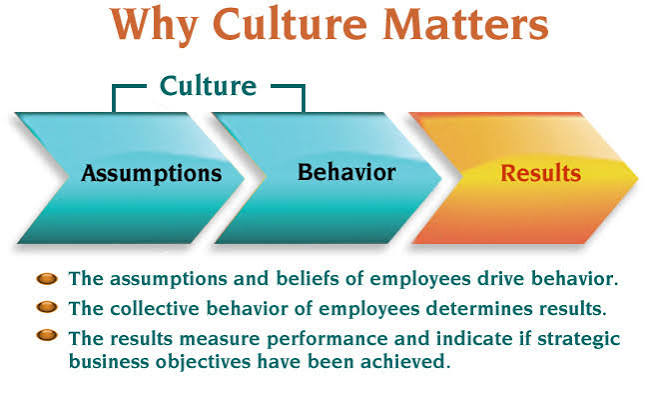
Growth can change an organisation in ways that are not immediately visible in financial results. As teams expand, new managers join, responsibilities become specialised, and employees work across different locations, the culture that once felt natural can become harder to maintain. A cultural competence assessment tool can help organisations examine these changes and understand whether their workplace environment is evolving in a healthy direction.
Measuring culture is not simply about finding out whether employees are satisfied. It is about understanding whether the behaviours, relationships, and working practices within an organisation continue to support its goals as it grows.
Growth Can Create Culture Drift
When a company is small, employees often have direct access to leadership and a shared understanding of how things work. Communication can happen informally, decisions may be made quickly, and new employees can easily understand the organisation’s working style.
Growth changes this. New teams, managers, locations, and processes can create different interpretations of the same organisational values. What leadership considers collaborative, for example, may not feel collaborative to a newly formed team.
This gradual difference between the culture an organisation intends to create and the culture employees actually experience can lead to culture drift.
Regular measurement can help identify these differences before they become deeply established.
Culture Measurement Can Support Expansion
Organisational growth often involves entering unfamiliar territory. A company may open a new office, acquire another business, introduce new leadership, or significantly increase its workforce.
Each transition can bring different expectations and working styles.
Cultural insights can help leaders understand how employees are adapting instead of assuming that existing practices will transfer automatically.
They can reveal whether employees understand changing priorities, whether teams are adapting to new processes, and whether organisational values are being experienced consistently.
This becomes particularly important as the distance between leadership and employees increases.
Identifying Cultural Strengths Matters Too
Culture measurement should not focus exclusively on problems.
Organisations can also discover behaviours that contribute positively to performance. One team may demonstrate strong collaboration, innovative problem-solving, or effective knowledge sharing.
These strengths can provide useful examples for other parts of the organisation.
Instead of introducing entirely new initiatives, leaders can examine what is already working and consider how successful practices can be encouraged elsewhere.
This makes cultural measurement useful for identifying organisational strengths, not just weaknesses.
Culture Can Influence Employee Retention
Employees do not decide whether to stay based only on salary or job titles. Their experiences with leadership, recognition, career development, workload, autonomy, and workplace relationships can also influence retention.
Cultural measurement can help organisations identify concerns before they become visible through rising attrition.
For example, employees may understand their responsibilities but feel uncertain about their future within the organisation. This could point towards limited career development rather than a general engagement problem.
Another team may report strong development opportunities but low trust in leadership. These situations require different responses.
The value of measurement is that it helps organisations investigate specific patterns rather than treating employee turnover as one broad problem.
Are Organisational Values Reflected in Everyday Behaviour?
Many organisations communicate values such as transparency, innovation, accountability, or collaboration.
The more important question is whether employees actually see these values reflected in everyday decisions.
A company may promote collaboration while departments operate in isolation. It may encourage innovation while employees feel uncomfortable suggesting new ideas. It may value transparency while important decisions are communicated without enough context.
These gaps can weaken the credibility of organisational values.
Culture measurement allows organisations to compare their intended culture with the experienced culture and identify where the two differ.
Leadership Alignment Becomes More Important With Growth
As organisations become larger, culture is shaped by more than senior leadership. Managers across different teams increasingly influence how employees interpret organisational expectations.
This can create inconsistencies.
One manager may encourage experimentation, while another may prefer highly controlled processes. One team may receive regular recognition, while another may rarely receive it.
Looking at cultural patterns alongside leadership practices can help organisations identify where greater consistency is needed.
A cultural competence assessment tool can support this analysis by providing a structured way to examine cultural behaviours and employee experiences across different parts of the workforce.
Culture Data Can Support Change Management
Employees rarely respond to organisational change in the same way.
Some may welcome new processes, while others may be concerned about uncertainty, workload, role changes, or reduced autonomy.
Instead of simply treating resistance as an obstacle, organisations can use cultural insights to understand what may be driving it.
For example, employees may understand the reason for a transformation but lack confidence in the organisation’s ability to execute it. In that situation, communication alone may not solve the problem. Leadership may need to address resources, capabilities, or decision-making processes.
Understanding the underlying concern makes the response more relevant.
Connecting Culture With Business Strategy
Culture data becomes more useful when considered alongside organisational priorities.
Suppose a company wants to improve innovation. Rather than launching a generic creativity programme, leaders could examine whether employees feel comfortable challenging existing ideas, whether managers support experimentation, and whether teams have enough autonomy.
If collaboration is a strategic priority, leaders could examine how effectively information moves between departments.
This creates a stronger connection between people insights and business strategy.
Culture measurement does not mean every business decision should be based on employee data. Instead, cultural insights provide another useful perspective when leaders evaluate important organisational choices.
What Should Culture Measurement Reveal?
An effective assessment should provide more than one overall score.
Useful insights may reveal:
- Differences in experiences between teams
- Behaviours that strengthen the workplace
- Gaps between organisational values and everyday practices
- Employee readiness for change
- Potential retention risks
- Variations in leadership practices
- Cultural strengths that could be adopted more widely
These findings can give leaders a clearer starting point for improvement.
Why Measuring Culture Over Time Matters
One assessment provides a snapshot. Repeated measurement can reveal whether the organisation is moving in the desired direction.
This can be particularly useful after leadership development initiatives, restructuring, policy changes, or significant periods of growth.
Instead of asking only, “What is our culture like?”, organisations can begin asking, “How is our culture changing, and what is influencing that change?”
That makes culture measurement a continuing strategic activity rather than a one-time exercise.
Final Thoughts
Organisational growth can change the culture that helped a company succeed. Measuring workplace culture can help leaders recognise cultural drift, preserve valuable strengths, understand changing employee expectations, and keep organisational values connected to everyday behaviour.
EnCulture’s culture assessment approach focuses on generating structured insights into organisational culture, helping businesses understand their cultural environment as they navigate growth and change.
For organisations comparing 360 feedback software suppliers, culture assessment can complement broader leadership and employee-development efforts. Ultimately, the value lies in turning these insights into a clearer understanding of the organisation and more informed decisions about its future.
